September 7, 2026 • Celeste Morrow • 11 min reading time • Prices verified June 6, 2026
How Real Buyers Are Using Artificial Flowers for Graves, Urns, and Memorial Spaces
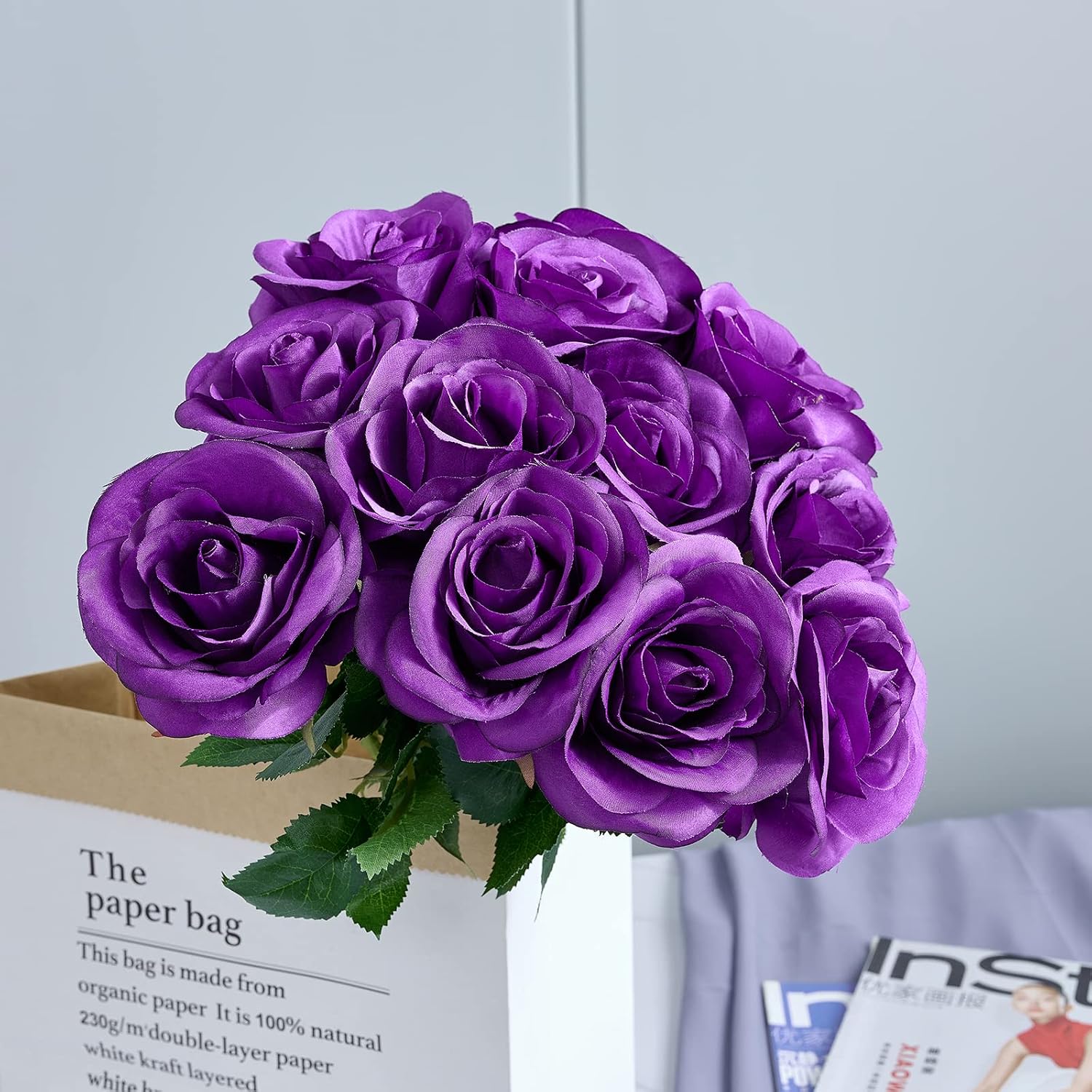
Memorial purchases are among the most quietly significant decisions in the faux-floral market. People rarely talk about it openly, and product pages almost never address it — but when you read through aggregated buyer reviews across widely purchased artificial flower bundles, a clear pattern emerges: a meaningful share of buyers are placing these arrangements at gravesites, in mausoleum vases, beside urns at home, and in memory corners built around a loved one’s photograph. These aren’t decorating decisions in the ordinary sense. The stakes are higher, the tolerance for disappointment is lower, and the purchasing criteria — outdoor durability, specific flower identity, color fidelity over time — matter in ways that a generic “home décor” product description simply doesn’t prepare you for.
This guide synthesizes what real buyers report across those contexts, translates the material and durability terminology that determines whether a tribute holds up through a full season outdoors, and ends with clear decision rules for the most common memorial-placement scenarios.
Why Faux Florals Make Sense in Memorial Contexts — and What Buyers Actually Say
The instinct to place fresh flowers at a gravesite or beside an urn is nearly universal. The practical problem is that fresh flowers die within days, and for many people — those who live more than an hour from a burial site, those grieving on a budget, those who want a permanent visual anchor in a memory corner — a fresh arrangement isn’t sustainable as a long-term tribute.
Across aggregated reviews of white peony bundles and mixed wildflower bouquets, buyers describe this calculation in plain terms. Buyers of sunflower bouquets describe building a seasonal swap system at a grave marker: one arrangement for spring and summer, a warmer palette for fall. That’s a considered, ongoing practice — not a one-time compromise. Mixed wildflower and sunflower bundles have drawn reviews from buyers who replaced gifted real arrangements that had died near a loved one’s urn at home. The framing in those reviews is striking: buyers describe the faux arrangement as emotionally equivalent to the fresh one. What matters is that something is there, that it looks right, and that it continues to look right.
That equivalence is the emotional logic driving this category. Brides.com, in its coverage of faux florals (“Silk vs. Latex Flowers: What’s the Difference?,” 2025), notes that the gap in perceived realism between premium silk and fresh-cut has narrowed considerably — a shift that matters especially in tribute settings where the goal isn’t impressing a guest but honoring a person.
Eucalyptus oval-leaf bundles have generated reviews where buyers specifically chose eucalyptus because it was the deceased parent’s favorite plant. Specific flower identity — the exact species or variety — carries emotional weight in tribute settings that it rarely carries in a tablescape context. This is worth building into your selection criteria.
Material Decisions: What Survives Outdoors and What Doesn’t
This is where the practitioner-level decision-making lives. Most faux florals are designed for indoor use. Outdoor durability — specifically, resistance to UV fading, rain, and wind — requires either specific materials or a deliberate management strategy.
The core material hierarchy for outdoor memorial use:
| Material | UV Resistance | Rain Tolerance | Realism | Best For |
|---|---|---|---|---|
| PE (polyethylene) | High | High | High | Permanent grave placements |
| Real-touch latex | Moderate | Low–Moderate | Very High | Short visits; covered niches |
| Polysilk / fabric | Low | Very Low | Moderate–High | Indoor urns; memory corners |
| Preserved (dried) | Very Low | None | High at first | Indoor only |
The Spruce, in its guide “Best Artificial Flowers for Outdoors” (2025), flags UV stabilization as the single most important spec for any arrangement left in direct sunlight — and notes that most product listings use the terms “UV-resistant” and “weatherproof” inconsistently, which creates real confusion. Good Housekeeping, in “How to Choose Outdoor Artificial Flowers That Last” (2024), reinforces this distinction: “UV-resistant” means the colorants include inhibitors that slow fading; “weatherproof” typically refers to water resistance in the stem and base materials, not color protection. A stem can be weatherproof — it won’t rust or rot — while the petals fade dramatically within a single summer. You want both specs called out explicitly, or you’re making an assumption.
Buyers of white peony bundles placed in mausoleum settings report satisfaction with outdoor durability over multiple seasons. That’s meaningful field data. Peonies in polysilk or PE construction are among the more durable fabric-flower formats because the petal surface area is large enough that minor fading reads as “soft” rather than “washed out.”
Complaints about bouquet thinness relative to product photos are a practical warning in this context. At a gravesite, a sparse-looking arrangement reads differently than it would on a kitchen shelf — it can feel like underinvestment in a tribute. The decision rule: when ordering for memorial placement, size up on stem count. If the listing shows 12 stems and the product photo looks full, assume the realistic result is 8–10 stems of effective visual volume.
Anchoring, Placement, and the Wind Problem
Outdoor grave vases — the standard cone or cylinder inserts common in cemetery markers — are not designed to grip faux stems the way water holds fresh ones. Wind is a real enemy. Buyers in multiple review threads describe returning to find arrangements scattered or tipped.
Wirecutter, in “What to Look for in Faux Florals” (2024), recommends one of three anchoring approaches:
- Floral foam or dry foam block cut to fit the vase interior, with stems pushed firmly into the foam. This is the most secure method and allows you to control the arrangement’s shape.
- River stones or decorative gravel packed around the stem bundle after insertion. Heavy enough to resist most wind, and visually clean if the vase has any transparency.
- Waterproof floral tape wrapped around the stem cluster before insertion, creating a wider base that wedges into the vase mouth.
For mausoleum niches with enclosed vases, the wind problem is largely eliminated — which is part of why buyers of white peony bundles report better longevity in that setting than open-grave buyers typically do.
A note on stem gauges: Faux stems vary significantly in wire gauge — the thickness of the internal wire that gives the stem its shape. Thicker gauge wire, typically in the 18–20 gauge range (though this is rarely called out in consumer listings), holds an anchored position in foam much better than the thin wire found in budget bundles. If a product listing mentions “bendable stems” or “flexible wire stems,” that usually signals thinner gauge. The Spruce, in its outdoor faux floral overview, notes wire gauge as a meaningful realism and stability differentiator worth checking before purchasing.
Stem Counts for Memorial Settings: The Practical Math
This is a question buyers ask in reviews constantly, and it almost never gets a direct answer.
By the numbers:
- Standard grave cone vase (2–3” opening): 6–10 stems for a full look; 12+ stems if mixing foliage with blooms
- Small memorial urn (tabletop, 4–6” opening): 5–8 stems; supplement with a filler like eucalyptus or baby’s breath to avoid a sparse center
- Large floor urn (8–12” opening): 15–25 stems; consider a foam anchor block to maintain shape
- Mausoleum bud vase (narrow neck, 1–1.5” opening): 3–5 single stems; look for slim-profile varieties like tulips or ranunculus rather than full-headed peonies
These numbers assume you want the arrangement to look intentional and complete — not sparse. For a tribute setting, erring toward the higher end of each range is almost always the right call.
The seasonal swap approach described by sunflower-bundle buyers is worth modeling here: buy two bundles per placement — one warm palette, one cooler or neutral — rotate by season, and store the off-season bundle in a dry indoor space. Cost-per-year math favors this approach significantly over repeated fresh purchases, and it gives you consistent visual upkeep with minimal effort.
Indoor Memory Corners: Different Criteria, Different Products
A home memory corner — flowers placed near an urn, a photograph, a candle arrangement — operates under entirely different constraints than a gravesite. UV and weather resistance become irrelevant. Tactile realism and specific flower identity move to the top of the priority list.
This is where real-touch latex and high-grade polysilk arrangements earn their place. A wildflower bundle in this context makes sense: it’s not being asked to survive UV or rain, it’s being asked to look like it could have been given as a gift — which is exactly what grieving buyers describe needing it to replace. The Floral Design Institute, in its published curriculum on sympathy and tribute florals, identifies the flower varieties most commonly associated with remembrance in Western contexts as white peonies, white lilies, eucalyptus, roses, and sunflowers. If the person you’re honoring had a specific affinity for a flower — the way eucalyptus buyers have described a parent’s attachment to that plant — that identity matters more than any realism marker.
Brides.com, in “Silk vs. Latex Flowers: What’s the Difference?” (2025), notes that real-touch latex petals read as fresh from across a room and hold up under close inspection in a way polysilk rarely does — which is the relevant benchmark for a memory corner that family members will stand near, not just glance at.
Frequently Asked Questions
How long will faux flowers last outdoors at a gravesite through sun and rain? It depends heavily on materials. PE (polyethylene) florals from brands that specifically advertise outdoor use typically hold color for one to two full seasons in direct sun before fading becomes noticeable. Standard polysilk arrangements may fade visibly within a single summer. Buyers of white peony bundles placed in shaded mausoleum niches report multi-season durability; open-grave placements in full sun typically show more rapid color shift.
Is there a difference between UV-resistant and weatherproof for outdoor memorial flowers? Yes — and it’s an important distinction. UV-resistant refers to colorfast pigments that resist sun-induced fading. Weatherproof refers to the structural materials — stems, bases — resisting water damage and rust. You want both. A weatherproof stem with non-UV-stabilized petals will hold its shape but fade. Check whether both terms appear in the product description, and when in doubt, prioritize UV-resistant for color longevity. Good Housekeeping’s guide to outdoor artificial flowers (“How to Choose Outdoor Artificial Flowers That Last,” 2024) is the clearest published breakdown of this distinction.
How do I anchor a faux bouquet in a grave vase so it doesn’t blow away? Three reliable methods: dry floral foam cut to fit the vase interior with stems pushed firmly in; river stones or decorative gravel packed around the stem cluster after insertion; or waterproof floral tape wrapped around the stem bundle before insertion to widen the base. The foam method provides the most secure hold and best shape control.
Can I use indoor faux arrangements outdoors temporarily for a memorial visit? Yes, for short visits — a few hours in mild weather. Avoid leaving indoor-rated polysilk or real-touch latex arrangements in direct sun or rain for extended periods. Color degradation can be irreversible, and latex petals are particularly vulnerable to moisture if the surface coating is compromised.
What stem counts do I need for a full-looking bouquet at a grave marker versus a small urn? For a standard grave cone vase: 8–12 stems for a complete look. For a small tabletop urn: 5–8 stems, supplemented with foliage filler. When in doubt, round up — memorial settings reward visual fullness, and the cost difference between 8 and 12 stems rarely exceeds a few dollars per bundle.
The Decision Framework
If you’re making a purchasing decision right now, here’s the if/then logic that synthesizes everything above:
- If the placement is outdoor, long-term, in direct sun → prioritize PE construction or explicitly UV-resistant labeling over aesthetic realism; size up on stem count to account for visual thinning; use foam anchoring.
- If the placement is a covered niche or mausoleum → realism and specific flower identity can move up the priority list; polysilk and real-touch options are viable; white peonies and eucalyptus perform well in multiple verified owner reports.
- If the placement is an indoor memory corner beside an urn → real-touch latex or premium polysilk wins; choose the specific flower variety that meant something to the person, not just what photographs well.
- If you want a low-maintenance seasonal system → buy two bundles, rotate by season, store the off-season arrangement indoors. Cost-per-year is lower than repeated fresh purchases and the tribute stays consistently maintained.
The emotional weight of this purchase is real. The product decisions that serve it are practical, learnable, and worth getting right.