September 19, 2026 • Celeste Morrow • 8 min reading time • Prices verified June 6, 2026
Bulk Silk Roses for DIY Weddings: The Stem-Count Math That Saves Your Budget
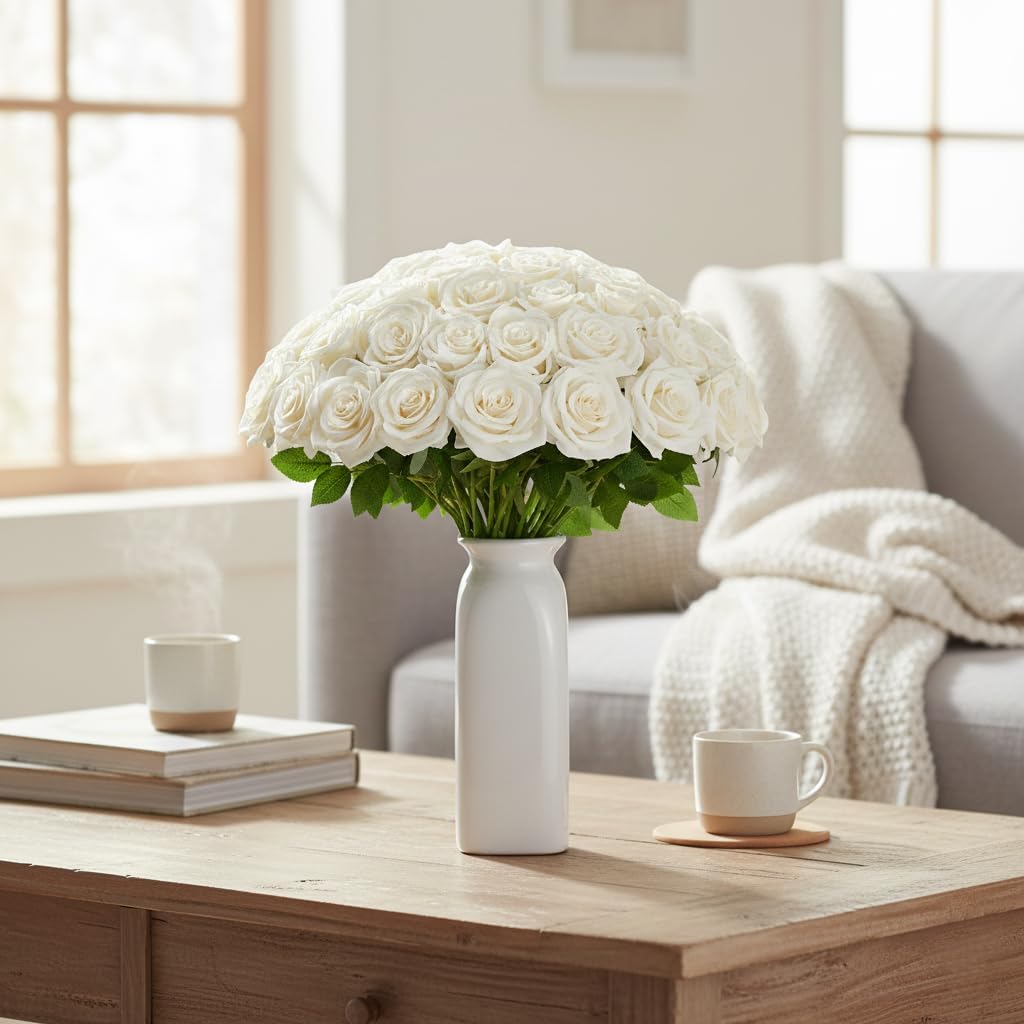
If you’ve ever typed “how many flowers do I need for a wedding” into a search bar and closed the tab more confused than when you opened it, you’re not alone. Wedding floral math sounds simple until you realize that “how many roses” depends on what you’re making, how large it is, and whether you’re using silk roses on their own or mixing them with filler stems (accent greenery and smaller blooms used to fill visual gaps between focal flowers). Silk roses — the fabric-and-wire artificial roses sold in stem bundles — have become a serious option for DIY couples precisely because they can be bought in bulk, assembled weeks ahead, and reused or resold after the event. This article gives you a repeatable stem-count formula, walks through where the math most commonly breaks down, and ends with a clear decision framework so you can finalize your order without second-guessing every number.
| EDITOR'S PICK100 Pcs White Rose Artificial F… | Mid-tierTifuly 12pcs Red Roses Artifici… | Budget pickFloroom Artificial Flowers 25pc… | |
|---|---|---|---|
| Stem count | 100 | 12 | 25 |
| Flower color | Ivory | Burgundy red | Ivory |
| Material | Silk | Silk | Foam |
| Stem type | Long stem | Long stem | With stems |
| Bulk pack | ✓ | ✗ | ✗ |
| Price | $64.99 | $17.99 | $12.99 |
| See on Amazon → | See on Amazon → | See on Amazon → |
Why Stem-Count Math Matters More With Silk Than Fresh
With fresh flowers, your florist absorbs the waste buffer — they over-order by 15–20%, cull damaged stems on arrival, and build the difference into their labor quote. When you’re buying bulk silk roses direct, that buffer becomes your problem. Order short and you’re gap-filling three days before the wedding. Order long and you’re sitting on $200 worth of stems you don’t need.
There’s a second wrinkle specific to silk: stem diameter. A high-quality silk rose — think a PE (polyethylene, a plastic molded to mimic real petal texture and translucency) or real-touch latex head on a wrapped wire stem — is typically bulkier at the calyx (the green base where petals meet stem) than a fresh rose. Reviewers on aggregated product pages for brands like Nearly Natural and Afloral consistently note that PE-head roses “fill space faster” than expected, which means your fresh-flower stem counts will overestimate what you actually need for silk. The general rule cited in the Floral Design Institute’s published curriculum on focal-flower ratios: reduce your fresh-flower count by roughly 10–15% when switching to high-quality silk heads, because each stem reads larger in an arrangement.
The inverse is true for budget-grade polysilk (a thinner, woven fabric used in entry-level artificial flowers): stems run narrower and flatter, so they pack less visual weight, and you may need to nudge counts up 10% to compensate. Material quality isn’t just a realism question — it changes your arithmetic.
The Core Formula: Arrangement by Arrangement
The cleanest way to avoid over- or under-ordering is to build your stem count from the arrangement up, not from a per-guest rule down. Per-guest rules (“one stem per guest”) are shorthand that professionals use to sanity-check a quote, not to actually spec an order.
Start with your arrangement inventory. List every distinct item that needs flowers:
- Bridal bouquet
- Bridesmaid bouquets (count each one)
- Ceremony arch or backdrop
- Guest table centerpieces (×number of tables)
- Head table or sweetheart table arrangement
- Cake flowers (if any)
- Aisle markers or pew cones
Then apply per-arrangement benchmarks. Brides’ editorial guide to wedding flower quantities and Martha Stewart Weddings’ DIY flower planning guide both converge on the following baseline ranges for rose-forward arrangements:
| Arrangement | Focal roses (silk) | Filler stems |
|---|---|---|
| Bridal bouquet (medium, ~10” diameter) | 18–24 | 10–15 |
| Bridesmaid bouquet (smaller, ~7” diameter) | 10–14 | 6–10 |
| Centerpiece, low (round, ~12” diameter) | 12–18 | 8–12 |
| Centerpiece, tall (pedestal, ~24” head) | 20–30 | 12–18 |
| Ceremony arch (6’×6’ full coverage) | 80–120 | 50–80 |
| Aisle marker / pew cone | 4–6 | 3–5 |
These are focal-rose counts only. They assume you’re mixing in greenery and filler — if you’re going roses-only (a popular choice for editorial-style monochromatic setups), increase focal counts by 25–35% and expect tighter, more structured silhouettes.
Add your buffer. Even with silk, add 8–10% to your final count for: stems that arrive with bent wire armatures (the internal wire structure that holds the stem’s pose), color variation in dye lots (more on this below), and any arrangements you need to rebuild on-site after transport. Round up to the nearest bundle size your supplier sells — most bulk silk rose listings come in 12-stem, 24-stem, or 48-stem units.
The Dye-Lot Problem (And Why It Hits Silk Harder Than Fresh)
Fresh roses from a single farm harvest are color-matched by nature. Silk roses manufactured in separate production runs — even in the same SKU from the same brand — can vary by half a shade. The Spruce’s guidance on making silk flower arrangements look realistic specifically flags “buying across multiple dye lots” as one of the most common reasons DIY arrangements look inconsistent in photos.
The practical rule: order all stems for any single arrangement from the same shipment. If you’re ordering 200 stems of blush pink roses for 20 centerpieces, order all 200 in one cart transaction, not two orders placed a week apart. Brands like Afloral and Winward Silks publish lot-control policies — it’s worth a one-line email to customer service confirming that a bulk order ships from the same production batch.
If you must reorder, request a sample stem first and compare it in natural light against what you already have. Reviewers across aggregated silk flower forums consistently report that ivory and blush are the shades most prone to dye-lot drift; saturated colors (deep burgundy, forest green) tend to be more stable batch to batch.
By the Numbers: A 100-Guest Wedding Worked Example
Here’s how the formula plays out for a typical 100-guest indoor reception with 12 round guest tables, a sweetheart table, four-person wedding party, and a simple ceremony arch:
Bridal bouquet (1 × 24 focal roses) = 24 stems Bridesmaid bouquets (3 × 12 focal roses) = 36 stems Ceremony arch, partial coverage (60 focal) = 60 stems Guest table centerpieces (12 × 15 focal) = 180 stems Sweetheart table arrangement (1 × 20 focal) = 20 stems Aisle markers (8 × 5 focal) = 40 stems SUBTOTAL = 360 stems
- 10% buffer (round up) = 36 stems TOTAL TO ORDER = 396 stems
At a mid-range bulk price of $0.85–$1.20 per stem (the range reviewers and buyers consistently report for quality PE-head silk roses from brands like Nearly Natural and Afloral as of early 2026), 396 stems runs $337–$475 in materials before filler greenery. That is the number to pressure-test against your floral budget, not a vague “silk saves 60% vs. fresh” headline figure.
Where DIY Planners Lose Budget Anyway
Running the stem-count math correctly is necessary but not sufficient. Three budget leaks show up repeatedly in aggregated reviews and community planning discussions:
1. Underestimating assembly time — and tools. Silk stems require wire cutters, floral tape (a stretchy, self-adhesive tape used to bind stems into a bouquet or arrangement), and in many cases hot-glue guns for arch installations. If you’re hiring day-of setup help, their labor time scales with stem count. Budget $1.50–$2.50 per finished stem in labor if you’re outsourcing assembly.
2. Skimping on the filler ratio. The math table above lists focal roses plus filler as separate line items for a reason. Cutting filler to save money produces arrangements that look sparse and “poky” — reviewers use that exact word. The Floral Design Institute’s published proportion guidance recommends a filler-to-focal ratio of roughly 1:2 by stem count for rounded, lush silhouettes. Ignore this and your 18-rose centerpiece looks like 18 roses in a vase rather than a designed arrangement.
3. Forgetting the vessel spend. Vases, foam rings (circular foam structures used as a base for wreath or table arrangements), and arch frames can easily match or exceed the silk spend. A 12-table centerpiece order with mid-range bud vases runs $96–$180 in vessels alone at current retail.
The Supplier Decision: Bundle Size vs. Per-Stem Price
Most bulk silk rose listings are structured so that per-stem price drops at higher bundle tiers — 12-stem bundles at $1.20/stem, 48-stem bundles at $0.90/stem, 144-stem “case” pricing at $0.72–$0.80/stem. The math almost always favors buying at the largest bundle size your stem count supports, with one caveat: don’t buy a larger bundle in a color you haven’t sampled.
For weddings where color accuracy is load-bearing (blush, champagne, dusty rose), the standard workflow reported by experienced DIY planners is: order one sample bundle ($8–$15), evaluate it in your venue’s lighting, then place the bulk order. The two-week lead time is worth the color certainty.
For saturated or neutral shades (white, red, deep burgundy), reviewers broadly report that ordering direct from a single bulk listing without sampling carries acceptable risk — those dye lots run more predictably.
Decision Rules: If X, Then Y
If your total stem count is under 100, buy standard bundles at retail — bulk case pricing won’t save enough to justify the excess inventory.
If your stem count is 100–300 and color accuracy is critical (blush, ivory, champagne), sample first, then place one consolidated bulk order. Do not split across two order dates.
If your stem count exceeds 300, contact the supplier’s wholesale or event-planning desk directly before ordering. Brands like Afloral publish event-planner inquiry forms; at this volume, you can often negotiate lot-matched fulfillment and confirm shipping timeline in a single conversation.
If you’re building a ceremony arch and the arch is your visual hero piece, allocate at minimum 30% of your total stem budget to that structure alone — it’s the item guests photograph and it reads flat if under-stemmed.
If you’re choosing between PE/real-touch heads and standard polysilk at a significant price difference, run the cost-per-arrangement math rather than the per-stem math. PE stems go further per arrangement (larger visual weight), so the per-stem premium often narrows or disappears when you account for the lower count you actually need.
The stem-count formula isn’t glamorous, but it’s the single variable you can control completely before you spend a dollar. Get that number right and the rest of the budget decisions get easier.