August 21, 2026 • Celeste Morrow • 9 min reading time • Prices verified June 6, 2026
DIY Wedding Filler Flowers: Eucalyptus, Baby's Breath, and the Greenery Math Nobody Tells You
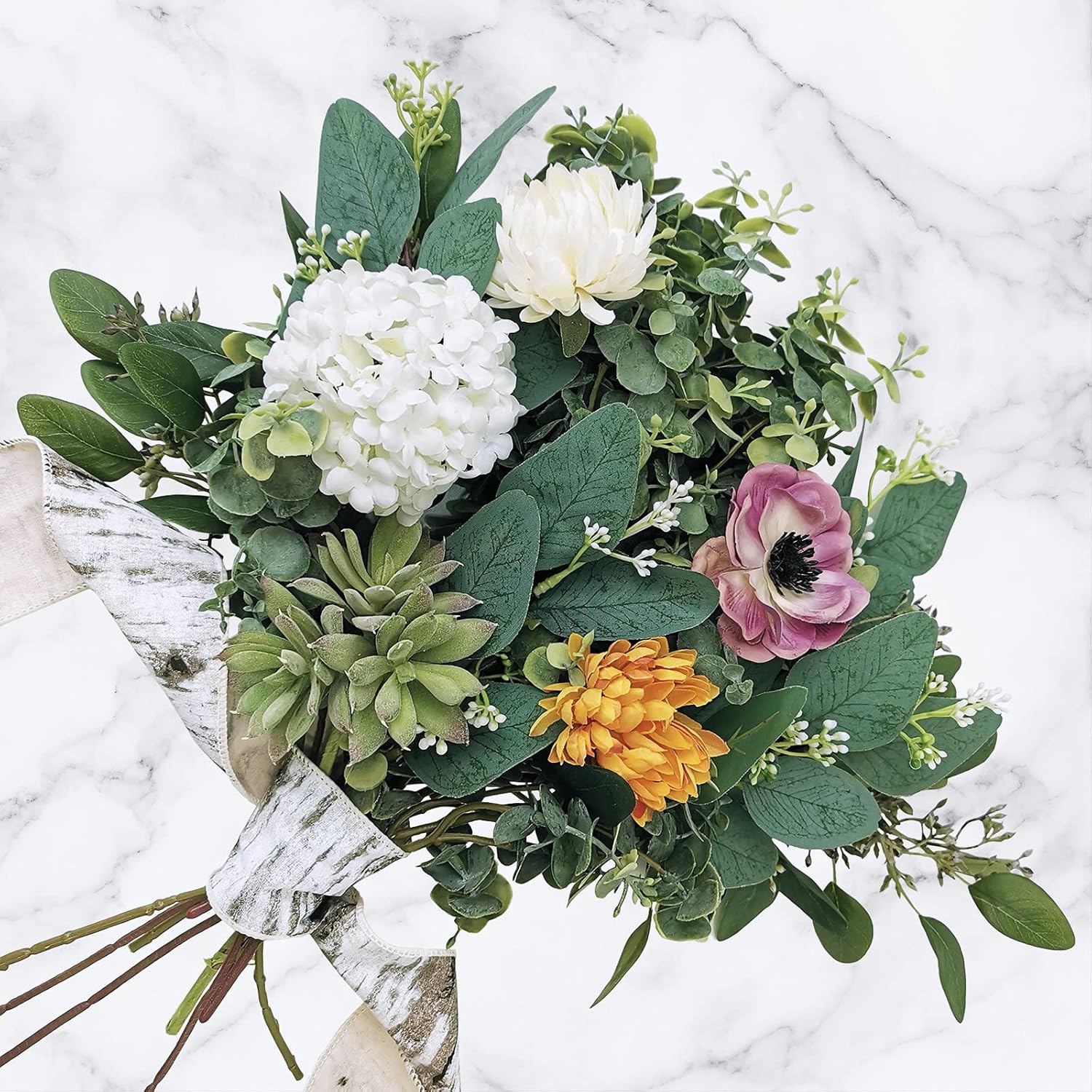
If you’ve ever tried to budget a DIY wedding and hit the greenery line item, you already know the sticker shock. “Filler flowers” — the term for secondary blooms and foliage that surround, support, and add volume to the showier focal flowers in an arrangement — are the unsung workhorses of any wedding tablescape or arch. Think of the delicate white clusters of baby’s breath, the silvery-green trailing sprigs of eucalyptus, or the airy stems of wax flower that fill in the gaps between roses and peonies. They’re not the stars, but pull them out and the arrangement collapses visually. The problem: fresh filler adds up fast, it wilts under venue heat, and for DIY planners assembling arrangements days before the event, it’s a logistical nightmare. That’s exactly why faux filler — silk, polyethylene (PE), and real-touch latex versions of these stems — has gone from craft-store afterthought to a serious design tool. This guide gives you the stem-count math, the material trade-offs, and the brand decision framework you need to get it right.
| EDITOR'S PICKMISSPIN Artificial Flowers with… | Mid-tier6 Pcs 27" Eucalyptus Stems Gree… | Budget pickYastouay Babys Breath Artificia… | |
|---|---|---|---|
| Stems | 13 | 6 | 6 |
| Height | — | 27" | — |
| Flower type | Hydrangea | Eucalyptus | Baby's breath |
| Material | — | Silk, plastic | — |
| Color | — | Green | White |
| Real touch | — | — | ✓ |
| Price | $41.99 | $19.99 | $7.99 |
| See on Amazon → | See on Amazon → | See on Amazon → |
Why Filler Flowers Do More Work Than You Think
In floral design, the structural logic goes: focal flowers (roses, peonies, ranunculus) provide color payoff; secondary flowers (lisianthus, spray roses) add texture at mid-scale; filler and greenery create the volume, movement, and negative-space contrast that make the whole thing read as “lush” rather than “expensive stems jammed in a vase.”
Brides.com’s budget flower guide notes that greenery and filler can account for 30–50% of arrangement volume while representing as little as 15–20% of floral budget — which is exactly why getting the filler math wrong is so costly. Over-order and you’ve wasted money on stems that don’t fit. Under-order and you’re scrambling the week before the wedding, paying rush shipping on whatever’s left in stock.
For faux materials specifically, the math compounds because you’re buying by the stem or bundle, not by the pound. A “bundle” of artificial eucalyptus might contain 6 stems at one retailer and 12 at another, and the stems themselves can range from 18 inches to 28 inches — which changes how many you need per arrangement completely.
The Spruce’s overview of artificial flower buying flags this as one of the most common beginner mistakes: comparing bundle prices without accounting for stem count, stem length, and branch density. Two bundles priced the same can yield wildly different coverage.
The Greenery Math: A Working Formula for DIY Weddings
Here’s the framework professional event florists use, translated for DIY planners sourcing faux stems.
Start with your arrangement count, not your budget.
List every arrangement: centerpieces (how many tables?), ceremony arch or backdrop, aisle markers, head table, cake table, cocktail hour, bridal party bouquets if applicable. Be specific — “10 centerpieces, 1 arch, 6 aisle cones, 1 sweetheart table.”
Apply the filler ratio by arrangement type.
For low arrangements (bud vases, small compotes under 8 inches): 60–70% focal flowers, 30–40% filler and greenery. For medium arrangements (standard centerpiece, 10–16 inch vase height): 50% focal, 50% filler and greenery — sometimes more greenery depending on the style. For large or organic/garden-style arrangements and arches: greenery can run 60–70% of total stem count, with florals woven in.
Translate ratio to stems.
A standard medium centerpiece in an 8-inch vessel typically uses 18–24 total stems. At a 50/50 split, that’s 9–12 filler/greenery stems. At 10 tables, you need 90–120 filler stems for centerpieces alone, before you touch the arch or bouquets.
By the numbers — filler stem estimates for a 100-guest wedding:
| Element | Stem Count (filler + greenery) |
|---|---|
| 10 centerpieces (medium) | 90–120 stems |
| 1 ceremony arch (6×8 ft) | 80–120 stems |
| 6 aisle markers | 30–48 stems |
| Head table garland (8 ft) | 40–60 stems |
| Total estimate | 240–350 stems |
That range — 240 to 350 stems — is why sourcing strategy matters. At $2–4 per stem for quality faux eucalyptus, you’re looking at $480–$1,400 in greenery alone depending on unit pricing, which makes bulk bundle math essential.
Eucalyptus vs. Baby’s Breath: The Trade-Off Nobody Spells Out
These two dominate faux filler sales for good reason, but they solve different design problems.
Eucalyptus (most commonly the seeded or silver-dollar varieties in faux form) provides structural volume. Its stems are semi-rigid, hold their shape under manipulation, and read as intentional — particularly in organic, boho, or garden-style aesthetics. Martha Stewart Weddings’ greenery guide identifies seeded eucalyptus as the single most versatile wedding greenery for this reason: it works cascading from tall arrangements, wired into arches, or laid flat in garland form.
The trade-off: eucalyptus has a strong visual identity. In a tightly styled tablescape, it can dominate. If your florals are the focal story and you want greenery to recede, eucalyptus can compete.
Baby’s breath (gypsophila) does the opposite. It’s an airiness agent — it creates the visual impression of more space, more lightness, and more “bloom” without adding visual weight. In faux form, it comes in two main constructions: individual wire-and-fabric floret clusters on a single stem (budget, $0.50–$1.50/stem), and multi-branch sprays with realistic branching and subtle petal texture (mid to premium, $2–$5/stem).
Architectural Digest’s coverage of faux botanicals in interior design specifically flags baby’s breath as the category where quality variation is most visible: cheap versions look like cotton swabs; premium versions (reviewers of Afloral’s and Nearly Natural’s baby’s breath lines consistently note) have irregular floret sizing and translucent petal overlays that read as fresh from three feet away.
The trade-off: baby’s breath adds volume but not structure. For arches or anything that needs to hold a shape, you need eucalyptus or a structural foliage alongside it.
Wax flower, Italian ruscus, and dusty miller occupy the middle ground — structural enough to shape, fine enough to blend. For a practitioner building a reliable faux filler toolkit, stocking one structural green (eucalyptus), one airy filler (baby’s breath), and one medium-texture blender (wax flower or ruscus) covers 95% of wedding application needs.
Material Tiers: What You’re Actually Buying at Each Price Point
Faux filler flowers are made from several different materials, and the terminology on product pages can be confusing. Here’s what the labels mean in practice.
Polyester / fabric florals are the most common in the $8–$20 bundle range. Stems are typically wire-wrapped in green floral tape; leaves are cut from dyed polyester fabric. The tell is a slightly uniform, matte appearance — fine for volume fill in large arches viewed from six feet, less convincing in centerpieces where guests are leaning in over dinner.
PE (polyethylene) foliage is molded rather than fabric-cut, meaning each leaf has a three-dimensional form with embossed veining. PE eucalyptus in the $25–$60 stem bundle range (brands like Nearly Natural and Afloral source PE-heavy lines) reads significantly more realistic in close-contact settings. Reviewers across aggregated listings for Nearly Natural’s eucalyptus garlands frequently cite the leaf texture as the primary reason they repurchased.
Real-touch latex is the premium tier for florals, though it’s less common in greenery/filler specifically (it’s more prevalent in focal flowers like roses and peonies). Where it appears in filler — certain orchid foliage, tropical leaf accents — it commands $4–$10 per stem and is overkill for most wedding filler applications unless you’re working in a luxury installation context.
Preserved botanicals — actual dried-and-glycerin-treated plant material — are a separate category from artificial entirely. Preserved eucalyptus (a staple at Venus ET Fleur and Primrose London’s range) retains the natural leaf structure, color, and slight flexibility of living eucalyptus for 1–3 years with proper care. For high-end residential installs or boutique hotel lobby work, preserved greenery outperforms any manufactured faux at close range — but at $15–$40 per stem, it’s not a volume-wedding-DIY play. It’s a “six centerpieces in a private dining room” play.
The Decision Framework: Which Filler, How Much, From Where
If you’re a DIY wedding planner or event stylist with a current project in planning, here’s the if/then:
If your arrangement style is organic, boho, or garden-party: Lead with seeded eucalyptus (PE, mid tier), supplement with baby’s breath spray stems. Budget 60% greenery to 40% filler florals by stem count. At 100-guest scale, you’re likely in the 280–350 stem range; buy in bundles of 10–12 stems at Afloral or a comparable specialty retailer for per-stem pricing under $2.50.
If your style is classic/formal (white-and-green, roses-forward): Baby’s breath is your primary filler. Prioritize multi-branch spray construction over single-stem. Greenery is accent only — Italian ruscus or dusty miller in small quantities. Stem count runs lower (you’re relying on florals more), but quality per stem matters more; step up to PE or multi-layer fabric construction.
If you’re outfitting a ceremony arch or stage backdrop at volume: You need structural greenery in bulk. Polyester fabric eucalyptus at the $8–$15 bundle range is defensible here — it’s viewed at distance, and coverage matters more than petal texture. Mix in trailing vines (ivy, jasmine) for movement. For a 6×8 ft arch, plan for 100–140 stems minimum; under-stuffed arches are the most common fixer-upper in post-wedding review threads.
If you’re working in a luxury context (boutique hotel, high-end residential install, editorial shoot): Preserved eucalyptus or premium PE sourced through Winward Silks or similar trade-grade suppliers is the right call. Per-stem cost is justified by the realism differential; cost-per-use math over a 12–18 month installation makes the premium negligible. The Architectural Digest note on faux botanicals in design contexts is instructive here: at the luxury tier, the question isn’t “does it look real?” — it’s “would a botanist pause?”
One Last Number Worth Remembering
Order 15–20% more stems than your formula says. Not because the math is wrong — because faux stems break at wire joints during handling, color lots vary slightly between reorders, and you will redesign at least one arrangement on-site. Experienced event florists, per aggregated professional forum commentary cited in the Floral Design Institute’s curriculum resources, consistently flag over-ordering filler (not focal flowers) as the single highest-ROI buffer purchase in DIY wedding planning. Filler stores flat, ships cheap, and doesn’t wilt in your garage. Buy the extra bundle.