September 20, 2026 • Celeste Morrow • 12 min reading time • Prices verified June 6, 2026
Faux Baby's Breath and Ranunculus: The Underestimated Filler Flowers That Complete Any Arrangement
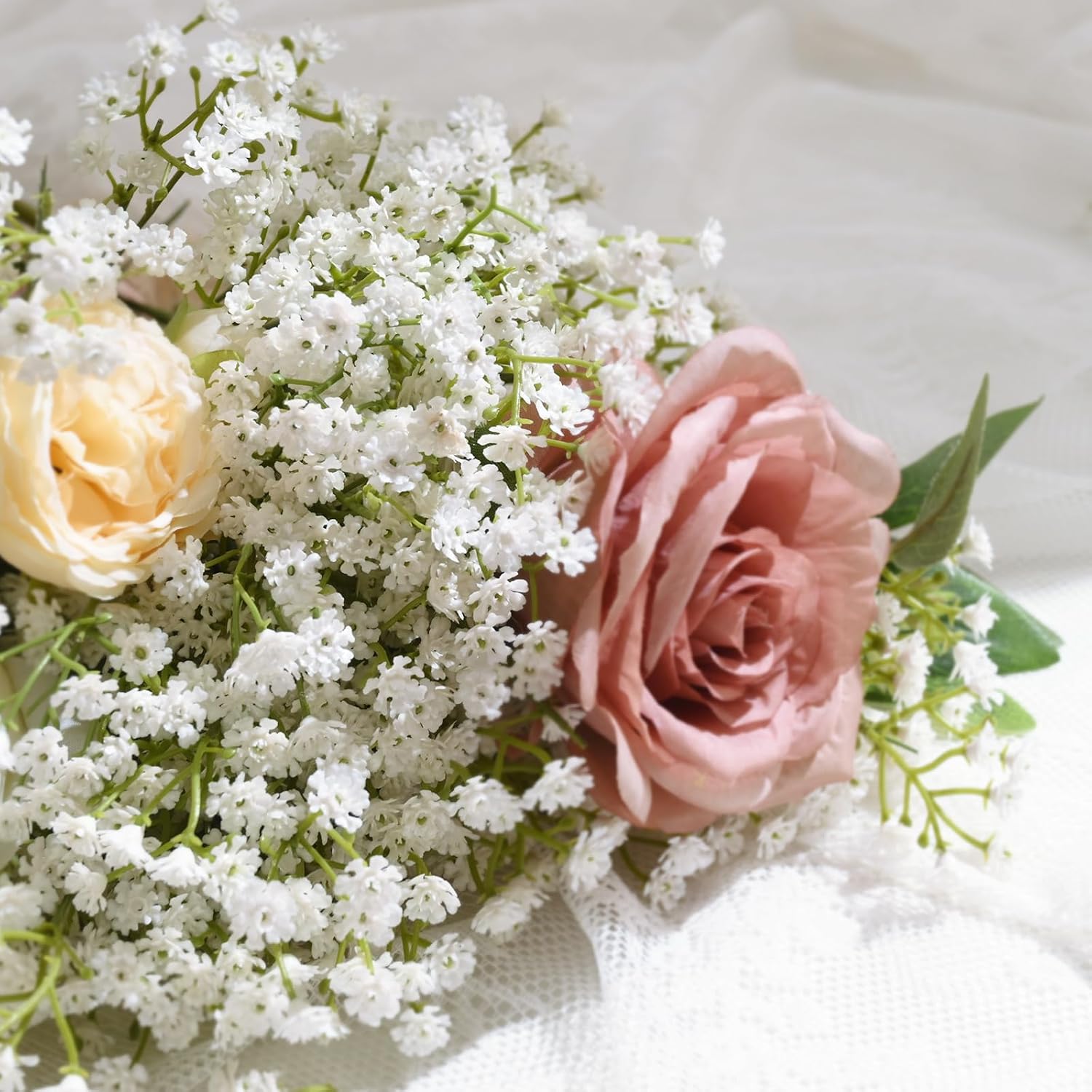
If you’ve ever finished arranging a vase of silk roses or a faux hydrangea centerpiece and felt like something was still missing — a little airiness, a little softness around the edges — you’ve already identified the problem this article solves. Filler flowers are the smaller, secondary blooms and sprays that surround your focal flowers (the big, statement blooms like roses, peonies, or hydrangeas). Two fillers come up again and again in artificial arrangements: baby’s breath, the cloud-like clusters of tiny white florets most people recognize from grocery-store bouquets, and ranunculus (ran-UHN-cue-lus), a tightly layered, rose-like bloom that lands somewhere between a peony and a buttercup in appearance. Both come in high-quality faux versions today, and both are chronically underestimated — and underordered. This guide will help you choose the right product, buy the right quantity, and handle these stems so they hold up through a wedding weekend or a year of display without falling apart.
| EDITOR'S PICKAlupssuc 30Pcs Ranunculus Artif… | Mid-tier5 Stems Artificial Silk Ranuncu… | Budget pick20pcs Eucalyptus Stems Artifici… | |
|---|---|---|---|
| Flower type | Ranunculus | Ranunculus | Eucalyptus |
| Stem count | 30 | 5 | 20 |
| Height | — | 23" | — |
| Material | Faux silk | Silk | — |
| UV resistant | — | ✓ | — |
| Bendable stems | — | ✓ | — |
| Price | $19.99 | $14.99 | $7.58 |
| See on Amazon → | See on Amazon → | See on Amazon → |
Why Filler Flowers Deserve Serious Budget Attention
Here’s the pattern that repeats across aggregated buyer reviews: someone builds a beautiful arrangement, feels like it needs more body, orders more filler, and thinks “I should have bought twice as much the first time.” Brides (brides.com), in their DIY bouquet planning guides, consistently reinforces that filler stems are where new arrangers most often run short. The Floral Design Institute, in their published principles on filler flower placement, notes that visual fullness in a finished arrangement typically traces back to filler density rather than focal flower count.
The stakes are higher than they look. In a $400 wedding arch or a hotel lobby installation, underfilling reads as sparse and unfinished in photographs — which is ultimately how these arrangements are judged. Getting the filler right is not a finishing touch; it’s structural. Faux baby’s breath and ranunculus both serve this structural role, but they do it differently, and choosing the wrong one (or the wrong size) for your project creates problems that are genuinely hard to fix mid-install.
By the numbers — filler stem math:
- A 10-inch hand-tied bouquet with 6 focal roses typically needs 8–12 baby’s breath stems for visible cloud coverage
- A 24-inch centerpiece arrangement needs roughly 15–20 baby’s breath stems if used as the primary filler
- Mini ranunculus (roughly 1–1.5 inches bloom diameter) suits boutonnieres, bud vases, and garland work; full-size (2–3 inch diameter) anchors centerpieces and bouquets
Faux Baby’s Breath: Choosing Between Budget and Mid-Tier Options
Silk baby’s breath is sold in a wide quality range, and the difference between an entry-level bundle and a more considered product shows in two places: petal retention and stem articulation (how well individual branches hold their position after you bend and shape them).
Budget Pick: High-Volume Visual Coverage
The Yastouay baby’s breath collects consistently positive reviews on visual realism — buyers note it photographs well and reads as genuinely cloud-like in mixed arrangements. The recurring flag in aggregated reviews, though, is fragility: owners report that petals come off with rough handling, and the consensus recommendation is to work with these stems gently, shape them before placing rather than adjusting repeatedly mid-arrangement, and avoid high-traffic locations where they’ll get bumped frequently. That’s not a dealbreaker for a wedding centerpiece that will be set, photographed, and cleared — it matters more for a permanent living-room installation where someone reaches past it twice a day.
Martha Stewart Weddings (marthastewartweddings.com), in their coverage of faux flowers for weddings, emphasizes that the best artificial fillers earn their keep by reducing the visual gap between “real” and “faux” in mixed or all-artificial arrangements — and stem structure is what makes that integration work. For event-only installs where you need maximum visual density at accessible price points, this product performs.
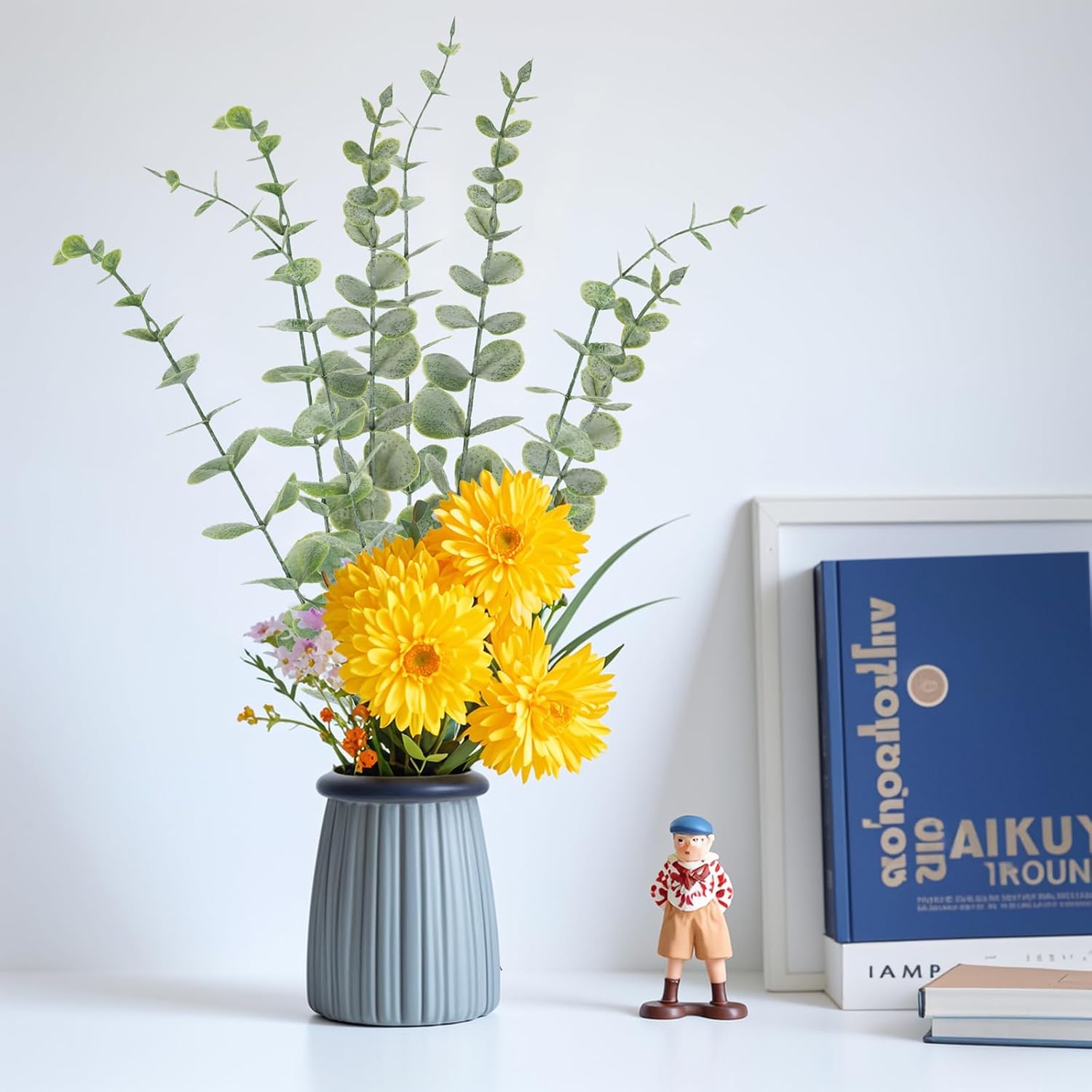
20pcs
$7.58
In stock on Amazon
Check price on AmazonMid-Tier Pick: Florist-Grade Stem Structure
The Sukh baby’s breath earns a different kind of praise. Reviewers with florist backgrounds specifically call out two things: stem length that accommodates real cutting-to-fit (the stems are long enough that you’re not automatically committed to one scale), and the way it integrates with hydrangeas. That last point matters because hydrangeas — with their large, flat flower heads — create visual gaps that baby’s breath fills better than almost any other filler. One florist-experienced reviewer noted these arrived vacuum-sealed and needed fluffing before use, which is a normal shipping method for faux botanicals and not a quality flag. Plan 15–30 minutes of gentle branch-spreading before your first use.
The Spruce (thespruce.com), in their guide “How to Arrange Faux Flowers So They Look Real,” specifically recommends starting with stem structure when evaluating faux fillers, because it determines how naturally branches fall and integrate with surrounding blooms. Sukh’s longer stems and more articulated branch structure meet that standard at a price point accessible to serious hobbyists and wedding DIYers alike.
5
$14.99
In stock on Amazon
Check price on AmazonFaux Ranunculus: Mini vs. Full-Size Across Three Project Scales
Ranunculus is having a moment in both real and faux floral design. Its layered, paper-thin petals in tight concentric circles read as high-craft in a way that roses, which everyone recognizes, sometimes don’t. In faux form, quality varies enormously based on petal material and how the center is constructed.
Budget Pick: Mini Scale for Detail Work
The Alupssuc mini ranunculus has become something of a repeat-purchase signal product — meaning buyers come back for more, which is a more meaningful quality indicator than first-purchase enthusiasm. One reviewer documented buying them three times for a vow renewal across multiple planning rounds, and the consistent praise centers on realism at small scale.
The critical caveat from reviewers: size descriptions matter enormously with mini ranunculus. “Mini” in faux florals can range from about 1 inch to 1.75 inches in bloom diameter depending on the brand, and Alupssuc buyers specifically flag that you need to read the size spec carefully before ordering, because what reads as “mini” to one buyer reads as “tiny” to another. If you’re using them in a garland or a compact boutonniere, that distinction changes the whole build. At their price point, however, these deliver a level of petal realism that outperforms similarly priced alternatives, making them the accessible entry point for ranunculus work.
20pcs
$7.58
In stock on Amazon
Check price on AmazonMid-Tier Pick: Full-Size for Centerpiece and Bouquet Work
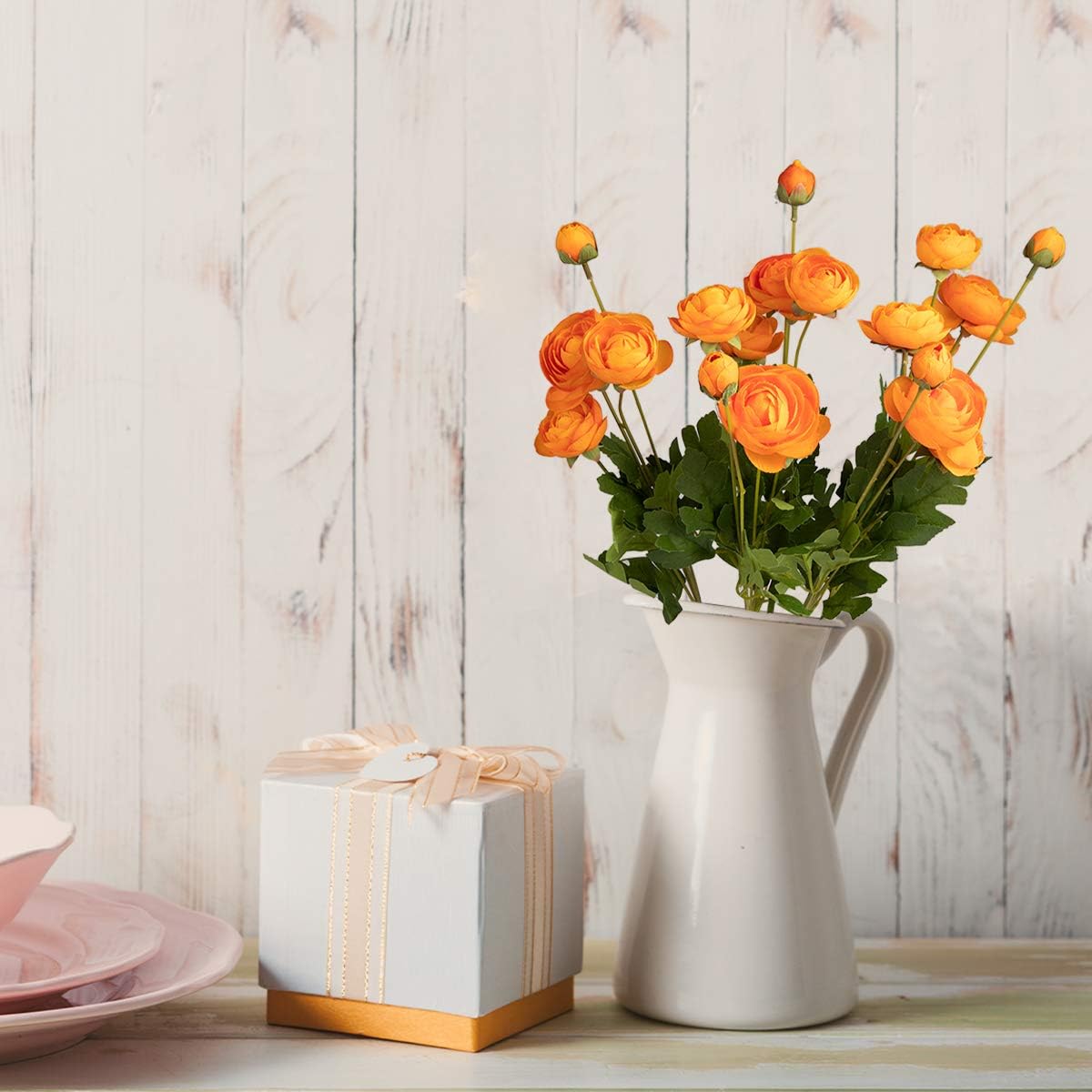
The 5-stem orange ranunculus attracts a noticeably different buyer profile: wedding designers. The orange colorway is specific enough that buyers planning it into a palette are committed to the look, and reviewers in this product’s aggregated feedback include buyers who specifically mention steaming and reshaping petals before use.
This is worth flagging as standard practice for faux ranunculus with real-touch or PE (polyethylene) petal construction. The Spruce (thespruce.com), in their faux flower arrangement guide, consistently recommends a low-steam pass as a finishing step for realistic-touch silk and PE blooms — it relaxes petals that arrived slightly compressed in shipping and allows you to open or close the bloom to your preferred diameter. For a full-size ranunculus intended to read as a design feature rather than background texture, that extra 10 minutes of preparation makes a visible difference in the finished arrangement.
5
$14.99
In stock on Amazon
Check price on AmazonPremium Pick: Long-Stem Statement Ranunculus
For installations where ranunculus needs to carry visual weight from a distance — stage backdrops, ceremony arches, large-scale lobby displays — full-size ranunculus on long, cuttable stems represents the premium tier of this filler category. Blooms in the 2.5–3 inch diameter range, constructed with PE or latex petal materials and wire-reinforced stems, allow for the kind of confident stem placement that shorter, lighter stems cannot achieve. Apartment Therapy (apartmenttherapy.com), in their coverage of faux botanicals in home styling, notes that scale mismatches — putting undersized blooms in large-scale arrangements — are the most common reason an otherwise thoughtful artificial arrangement reads as off. Premium-tier ranunculus eliminates that problem by giving you genuine diameter and stem length to work with at installation scale.
When evaluating premium ranunculus options, prioritize: bloom diameter of at least 2.5 inches, stem length of at least 16 inches before cutting, and petal material described as PE, latex, or “real touch” rather than standard polyester. These three specs separate stems that read as genuine design choices from stems that disappear into the arrangement.
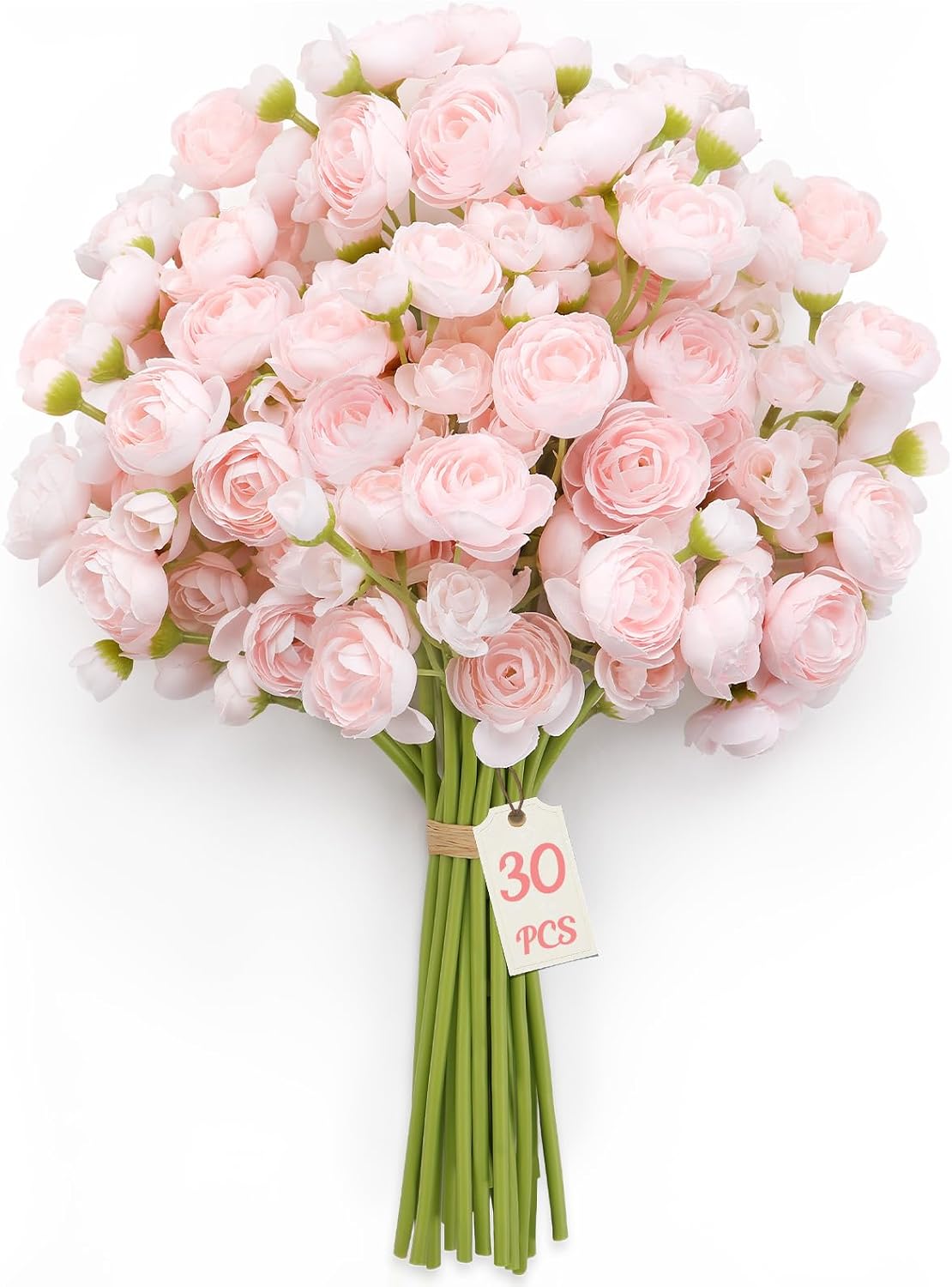
Alupssuc
$19.99
In stock on Amazon
Check price on AmazonComparison by Use Case
| Use case | Mini ranunculus (1–1.75”) | Full-size ranunculus (2–3”) | Baby’s breath |
|---|---|---|---|
| Boutonniere / corsage | ✓ primary bloom | too dominant | ✓ cloud accent |
| Garland / greenery runs | ✓ ideal scale | ✓ if spaced | ✓ primary filler |
| Hand-tied bouquet filler | ✓ 3–5 stems | ✓ 2–3 as accent | ✓ 8–12 stems |
| Centerpiece arrangement | secondary accent | ✓ primary position | ✓ 15–20 stems |
| Stage or arch backdrop | ✓ in dense clusters | ✓ dominant at distance | ✓ volume filler |
Handling, Cutting, and Longevity: What to Know Before You Install
Cutting stems: Both baby’s breath and ranunculus in faux form have wire cores running through their stems. You can absolutely cut them shorter — wire cutters or heavy floral shears handle this cleanly. Household scissors will work in a pinch but dull quickly on wire. The key risk with cutting is fraying at the cut point: if the stem has a fabric or paper wrapping (common on better-quality stems), a clean diagonal cut followed by a small wrap of floral tape keeps the end tidy and prevents unraveling. You lose a small amount of length to the tape wrap — typically 0.5 to 1 inch — so factor that into your measurements before cutting.
Petal loss prevention: Across aggregated reviews, the pattern is that petal loss on baby’s breath specifically is almost always a handling issue rather than a manufacturing defect. The petals on faux baby’s breath are small enough that the adhesive bond between petal and calyx (the small green cup the petal sits in) has less surface area than on a larger bloom. Minimize repositioning after initial placement, avoid high-humidity environments if your product uses water-soluble adhesives (check manufacturer specs — better brands will note this), and store unused stems with their heads loosely covered rather than compressed.
Vacuum-sealed shipping and fluffing: This is standard practice for dense or delicate faux florals. Expect 15 to 30 minutes of branch-spreading for a full bunch of baby’s breath, slightly less for ranunculus since the blooms hold their structure better. Work from the base of each stem upward, gently separating branches before addressing individual flower clusters.
Steaming for ranunculus: A low-steam pass before final placement relaxes compressed petals and allows you to adjust bloom diameter. Keep the steamer or iron on a low-moisture setting and work 4–6 inches from the bloom — closer risks distorting PE petal material. The Spruce (thespruce.com) recommends this as a standard finishing step for any realistic-touch faux bloom.
Decision Rules: If X, Then Y
If your arrangement is event-only (wedding day, gala, one-night install): Prioritize visual impact over durability. Yastouay baby’s breath and Alupssuc mini ranunculus both deliver strong on-camera realism. Buy 20% more than you think you need — the universal reorder pattern suggests your instinct will be to under-fill.
If your arrangement is permanent (lobby install, display home, long-term retail): Upgrade your handling discipline. Sukh baby’s breath with its sturdier stem structure is worth the fluffing time. Steam the ranunculus before final placement and set them once — don’t rearrange repeatedly.
If you’re mixing with hydrangeas specifically: Sukh baby’s breath is the reviewed match. The scale and stem structure integrate in a way that reviewers with professional floristry experience specifically call out.
If ranunculus is a focal accent (not background filler): Go full-size. Mini ranunculus disappears in arrangements larger than a compact bouquet. If the bloom needs to register as a design choice rather than texture, it needs to be at least 2 inches in diameter.
If you’re cutting stems to fit: Budget wire cutters into your kit, plan for a 0.5–1 inch floral tape wrap at cut points, and buy stems slightly longer than your final target length to preserve flexibility.
The honest summary: faux baby’s breath and ranunculus are easy to undervalue and easy to underorder. The Floral Design Institute’s published placement principles confirm that filler density is the primary driver of whether an arrangement reads as full or sparse. The math almost always favors buying more than your first instinct suggests, and the quality spread between products is real enough to make the choice matter. Get the scale right, handle gently, and these two fillers will carry more visual weight in your finished work than any single focal flower you’ve agonized over.
Frequently Asked Questions
How many baby’s breath stems do I need to fill out a bouquet with roses or hydrangeas? For a standard hand-tied bouquet built around 6–8 roses, plan on 8–12 baby’s breath stems to achieve visible coverage around the focal blooms. For hydrangea-centered arrangements, where the large flat flower heads create more visual gaps at the edges, 10–15 stems is a more realistic minimum. The Floral Design Institute, in their published filler flower placement principles, notes that filler density is the primary driver of whether an arrangement reads as “full” or “sparse” — erring toward more is rarely a mistake.
Do faux baby’s breath petals fall off, and how do I prevent it? Yes — petal loss is a documented pattern in aggregated reviews, and it’s almost always a handling issue. The small petal-to-calyx bond area is the weak point. Shape your stems before placing them in an arrangement, minimize repositioning after placement, and avoid compressed storage. Reviewers of Yastouay baby’s breath specifically recommend gentle handling as standard practice.
What is the difference between mini and full-size faux ranunculus for bouquet work? Mini ranunculus (roughly 1–1.75 inch blooms) functions as texture and filler — it adds visual complexity without competing with focal flowers. Full-size ranunculus (2–3 inch blooms) reads as an intentional design element and works alongside roses or peonies as a co-feature. In a compact boutonniere or garland, mini is the right call; in a centerpiece or bridal bouquet where ranunculus is meant to be noticed, go full-size.
Can I cut faux ranunculus and baby’s breath stems shorter without damaging the wire? Yes, but use wire cutters or heavy floral shears rather than household scissors. After cutting, wrap the cut end with floral tape to prevent stem wrapping from fraying. Account for the tape wrap in your target length — it typically adds 0.5 to 1 inch at the cut point.
Do these filler stems come vacuum-sealed, and how long does fluffing take? Some do — the Sukh baby’s breath is one product reviewers specifically flag as arriving vacuum-sealed. This is a standard shipping practice, not a quality issue. Plan 15–30 minutes to gently separate branches on a full bunch of baby’s breath, working from the stem base upward. Ranunculus holds its bloom structure better through vacuum sealing and typically needs less fluffing time, though a low-steam pass helps restore any compressed petals to their intended shape.