September 10, 2026 • Celeste Morrow • 10 min reading time • Prices verified June 6, 2026
Faux Greenery as a Design Foundation: Eucalyptus Stem Types, Counts, and Styling Strategies
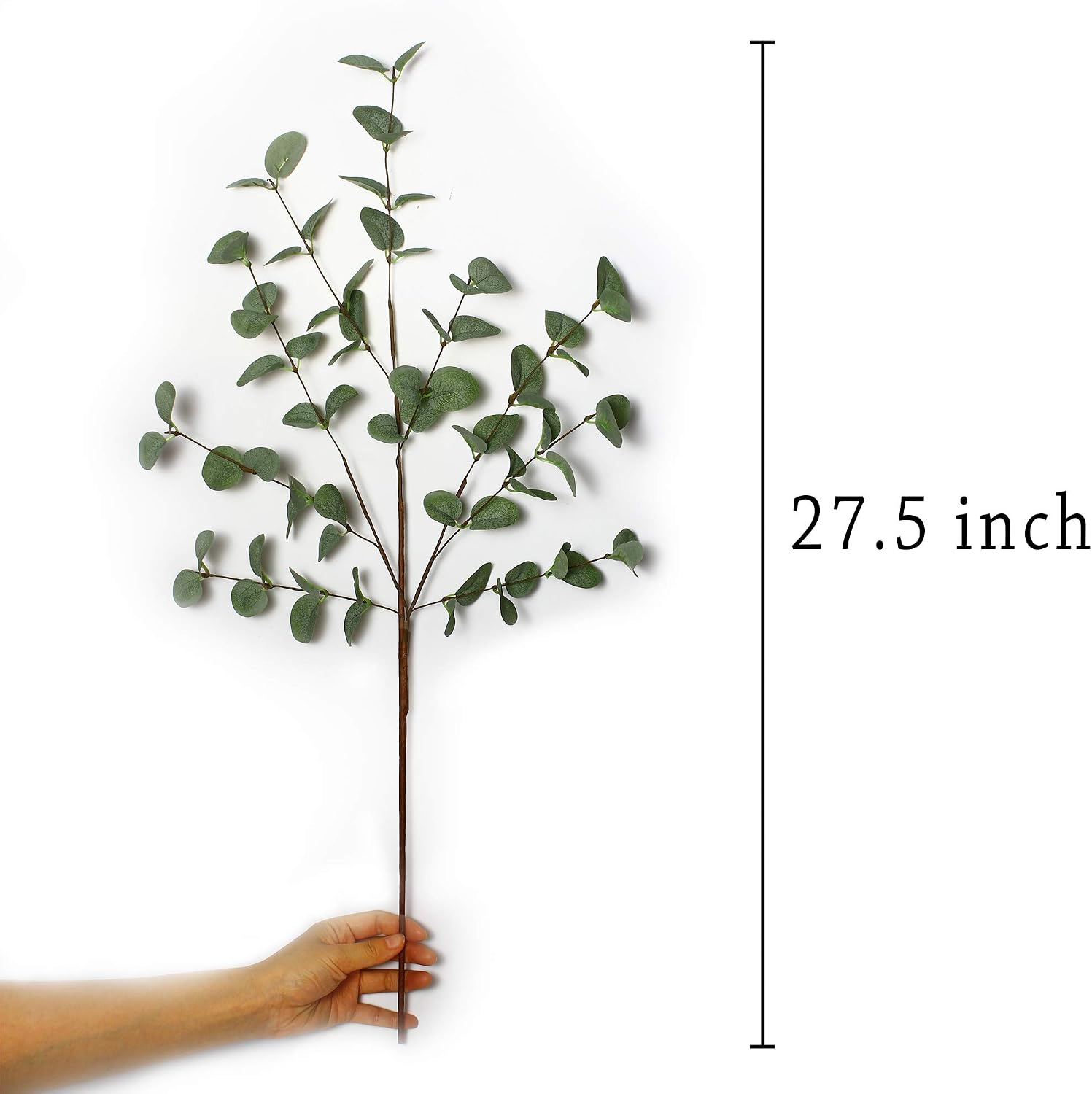
If you’ve ever looked at a finished floral arrangement — whether at a hotel check-in desk, a wedding reception table, or a beautifully styled living room shelf — and wondered what makes the greenery look so effortlessly natural, the answer is almost always eucalyptus. Eucalyptus (say it: you-kah-LIP-tus) is a genus of silvery-green foliage with small, rounded or elongated leaves that has become the dominant structural greenery in contemporary design. In its faux (artificial) form, it’s available as silk or polyester fabric leaves, PE (polyethylene, a semi-rigid molded plastic that captures fine vein detail), or real-touch latex, which has a slightly waxy, flexible surface that mimics fresh foliage. This guide is built for designers who already know the vocabulary but are still sharpening their instincts — how to pick the right stem type for a specific install, how to count stems accurately before ordering, and how to mix product lines without creating a visual mismatch.
| EDITOR'S PICKMISSPIN Artificial Flowers with… | Mid-tier6 Pcs 27" Eucalyptus Stems Gree… | Budget pick20pcs Eucalyptus Stems Artifici… | |
|---|---|---|---|
| Stem count | 13 | 6 | 20 |
| Stem length | — | 27 in | — |
| Material | — | Silk, plastic | — |
| Plant type | Hydrangea | Eucalyptus | Eucalyptus |
| Vase ready | ✓ | — | — |
| Price | $41.99 | $19.99 | $7.58 |
| See on Amazon → | See on Amazon → | See on Amazon → |
Why Eucalyptus Works as a Foundation, Not Just a Filler
The distinction matters for how you order. A filler is something you reach for after your hero blooms are placed — a gap-plugger. A foundation is what you set first, because it defines the silhouette, the color temperature, and the visual rhythm of an arrangement. Eucalyptus earns foundation status for three structural reasons.
Color neutrality with warmth. The characteristic blue-grey-green of silver dollar or seeded eucalyptus reads as neither warm nor cool in isolation, which means it bridges the color temperature gap between ivory peonies and blush ranunculus, or between deep burgundy dahlias and soft lavender sweet peas, without pulling either direction. Apartment Therapy’s guide to styling faux greenery notes that blue-toned foliage consistently tests as the most “arrangement-stable” bridge color because it doesn’t compete with either warm or cool hero stems.
Texture contrast without visual noise. Eucalyptus leaves are matte, small to medium in scale, and relatively uniform in shape — which means they create texture contrast against a large velvet rose or a ruffled garden peony without fragmenting the eye. The Spruce’s tutorial on making faux arrangements look real identifies this as the “quiet complexity” principle: foliage that adds texture at the leaf scale while remaining neutral at the arrangement scale.
Wire-stem malleability. Most faux eucalyptus stems are wire-wrapped, meaning the internal wire armature lets you bend individual branches into custom curves. For an arch install or a cascading centerpiece, this is non-negotiable — it’s the difference between a stem that drapes naturally and one that juts at a 90-degree angle because it shipped in a box.
The Four Stem Types You’ll Encounter (and When to Use Each)
Silver dollar eucalyptus (round leaves, 1–2cm diameter). The most recognizable profile. Its coin-shaped leaves photograph beautifully in flat lays, making it the dominant choice for styled shoots, bridal bouquets, and tablescapes where editorial photography matters. Realism benchmark: the leaves should have a visible central vein and slight color variation leaf-to-leaf, ranging from grey-green to sage. Pure uniform green reads as synthetic.
Seeded eucalyptus (elongated leaves with small berry-like seed clusters). More textural complexity, slightly more organic silhouette. Preferred for wedding arches and wreath bases because the seed clusters add visual mass without the stiffness of filler flowers. The clusters also break up negative space in a loose, asymmetrical way that silk or PE flowers can’t replicate on their own.
Willow eucalyptus (narrow, elongated leaves on trailing branches). The cascading specialist. Its narrow-leaf profile and naturally drooping branch habit make it ideal for hanging installations, long garlands, and table runners where you want foliage that appears to spill over the edge. Reviewers across multiple product lines note that willow-style stems hold their bent position well after shaping — a useful quality confirmation before you commit to a large order.
Baby eucalyptus / spiral eucalyptus (tighter, more compact leaf clusters, small overall scale). Used for boutonnieres, bud vases, cake table accents, and any context where a full-scale stem would overwhelm the composition. If you’re doing centerpieces in 4-inch bud vases, this is your stem.
By the Numbers: Stem Counts for Common Applications
| Application | Container / Scale | Eucalyptus Stems (standalone or supporting) |
|---|---|---|
| Bud vase, 4–5” | Solo eucalyptus | 3–5 stems |
| Standard vase, 8–10” | Supporting role (mixed arrangement) | 5–8 stems |
| Standard vase, 8–10” | Solo eucalyptus, full look | 10–14 stems |
| Wedding centerpiece, 12–16” urn | Mixed arrangement | 12–18 stems |
| 6-foot wedding arch, one-sided | Foundation coverage | 40–60 stems |
These counts assume 18–24” stem lengths. Scale down proportionally for shorter stems; scale up for maximalist density or if the stems are slender willow-type rather than full silver dollar.
Spotting Realism Markers (and Red Flags) from a Product Photo
This is the skill that separates confident buyers from regretful ones, and it’s almost entirely learnable from image analysis alone.
The matte-leaf test. Fresh eucalyptus has a distinctly matte, slightly chalky surface — it doesn’t catch light the way a glossy leaf does. In product photos, look at how the leaves render under light. If you see a visible sheen or a uniform highlight across the leaf surface, the material is almost certainly low-grade polyester or coated PE without texture treatment. Multiple reviewers across eucalyptus product lines cite the word “plasticky” specifically in connection with glossy leaf surfaces. Matte finish is the single most reliable realism marker visible in photos.
Leaf-to-leaf color variation. In natural eucalyptus, individual leaves vary slightly in hue — some lean more silver, some greener, some slightly yellowed at the edges. In product photos, scroll to the close-up shots and look for this micro-variation. Stems where every leaf is identical in color were likely manufactured with a single dye batch applied uniformly, which reads as flat and artificial in person. Per Architectural Digest’s roundup of realistic artificial plants, this color variation is one of the top five visual authenticity cues professionals look for.
Stem wrapping detail. Look at the main stem in product images. High-quality stems wrap the wire core in a textured, brown-green material that mimics actual woody bark. If the main stem appears smooth, uniformly colored, or green-plastic, that’s a cost-reduction signal that often correlates with lower leaf quality as well.
Vacuum-sealing as a quality signal — and a first-open surprise. One reviewer on a seeded eucalyptus product nearly returned the item because it arrived completely flat, vacuum-sealed inside the packaging. This is actually a premium manufacturing artifact, not damage: some higher-quality stems are vacuum-sealed for shipping protection to prevent crushing and moisture transfer. The leaves reshape within a few hours of being released and gently bent open. If you’re ordering at volume for an event install, flag this in your receiving checklist so your team doesn’t mistake it for a defect report.
Mixing Eucalyptus From Different Brands and Batches
This is a question with a real operational answer for event designers ordering across multiple vendors. The short version: mixing is usually safe on color, risky on scale, and manageable on texture — if you know what to check.
Color: Eucalyptus color ranges from blue-grey to silver-green to warm sage, and these hue variations exist even within a single “silver dollar eucalyptus” category. Brides magazine’s artificial flower guide recommends ordering samples before committing to multi-vendor bulk orders for this reason — a grey-toned stem from one supplier can look starkly different from a sage-toned stem in the same vase, especially under warm event lighting.
Scale: Leaf diameter and stem density vary significantly between manufacturers. A 3cm silver dollar leaf from a premium supplier placed next to a 1.5cm leaf from a value supplier reads as two different species. In mixed arrangements this can work intentionally, but in tight floral clusters it creates an incoherence that’s hard to hide.
Texture: Mixing PE and latex stems in the same arrangement is generally undetectable to guests; the surface variation can actually read as natural species variation. Mixing high-quality real-touch stems with low-grade glossy polyester stems in the same bundle, however, will make the glossy stems look worse by comparison.
The practical rule: within a single arrangement or centerpiece cluster, match stem type and scale. Across a larger install (arch, backdrop, multiple table arrangements), variation in stem density is acceptable and often desirable. Martha Stewart Weddings’ feature on greenery-forward wedding decor notes that professional floral stylists deliberately introduce two or three eucalyptus varieties within a single large-scale install to avoid the “artificial regularity” that reads as fake at a distance.
A Note on Memorial and Emotional Use Cases
Not every eucalyptus order is for a wedding arch or a hospitality lobby. Reviewers on eucalyptus product pages consistently surface a quieter use case: grave vases and memorial arrangements, where buyers are seeking something that holds up through weather and seasons without requiring replacement. One reviewer purchased a set of faux seeded eucalyptus stems specifically because her mother had loved the plant in life, wanting the arrangement at the grave to reflect something personal rather than generic. For these buyers, the qualities that matter most shift: UV resistance, wire durability in outdoor temperature swings, and a color that stays true over months rather than weeks. If you’re advising clients on memorial-use faux botanicals, flag PE stems with UV-stabilized coating as the more durable choice over silk for outdoor settings.
Frequently Asked Questions
What types of faux eucalyptus stems are there and how do they differ visually? The main categories are silver dollar (round leaves), seeded (elongated leaves with berry clusters), willow (narrow, trailing), and baby/spiral (compact, small-scale). Silver dollar photographs most dramatically; seeded adds the most textural complexity; willow is the cascading specialist; baby eucalyptus works for small-scale or accent applications.
How many eucalyptus stems do I need to fill a standard vase on its own? For a standalone eucalyptus arrangement in a standard 8–10” vase, plan on 10–14 stems of 18–24” length to achieve a full, naturalistic look. Fewer stems — 5–8 — work if eucalyptus is playing a supporting role alongside other blooms.
What makes faux eucalyptus look plasticky and how do I avoid it? Glossy leaf surfaces and uniform leaf color are the two primary culprits. Look for matte leaf finishes and visible leaf-to-leaf color variation in product photography. Avoid stems where every leaf appears identical in hue and surface sheen.
Can I mix eucalyptus from different brands in the same arrangement? Yes, with care. Color-matching is the biggest risk — sample first when possible. Mixing leaf scales in a tight cluster creates visual incoherence; mixing textures (PE and latex together) is generally fine. For large installs, intentional variety across stem types reads as naturalistic.
Do these stems hold their shape after bending, or do they droop? Wire-core stems hold their shaped position well; reviewers across multiple product lines confirm that bent positions maintain their curve after shaping. Stems without internal wire armature cannot be meaningfully shaped. Check product descriptions for “bendable wire” or “flexible wire stem” before ordering for arch or cascade applications.
Are vacuum-sealed flat eucalyptus stems damaged when they arrive compressed? No — vacuum sealing is a shipping method used by some manufacturers to protect stems in transit. Leaves will appear completely flat upon opening. Gently separate and bend the branches; they reshape within hours. Flag this in event-day receiving checklists to prevent your team from filing unnecessary damage reports.