August 7, 2026 • Celeste Morrow • 11 min reading time • Prices verified June 6, 2026
Faux Flowers as Thoughtful Gifts: Preserved Roses, Eternal Dome Roses, and Boxed Sets Compared
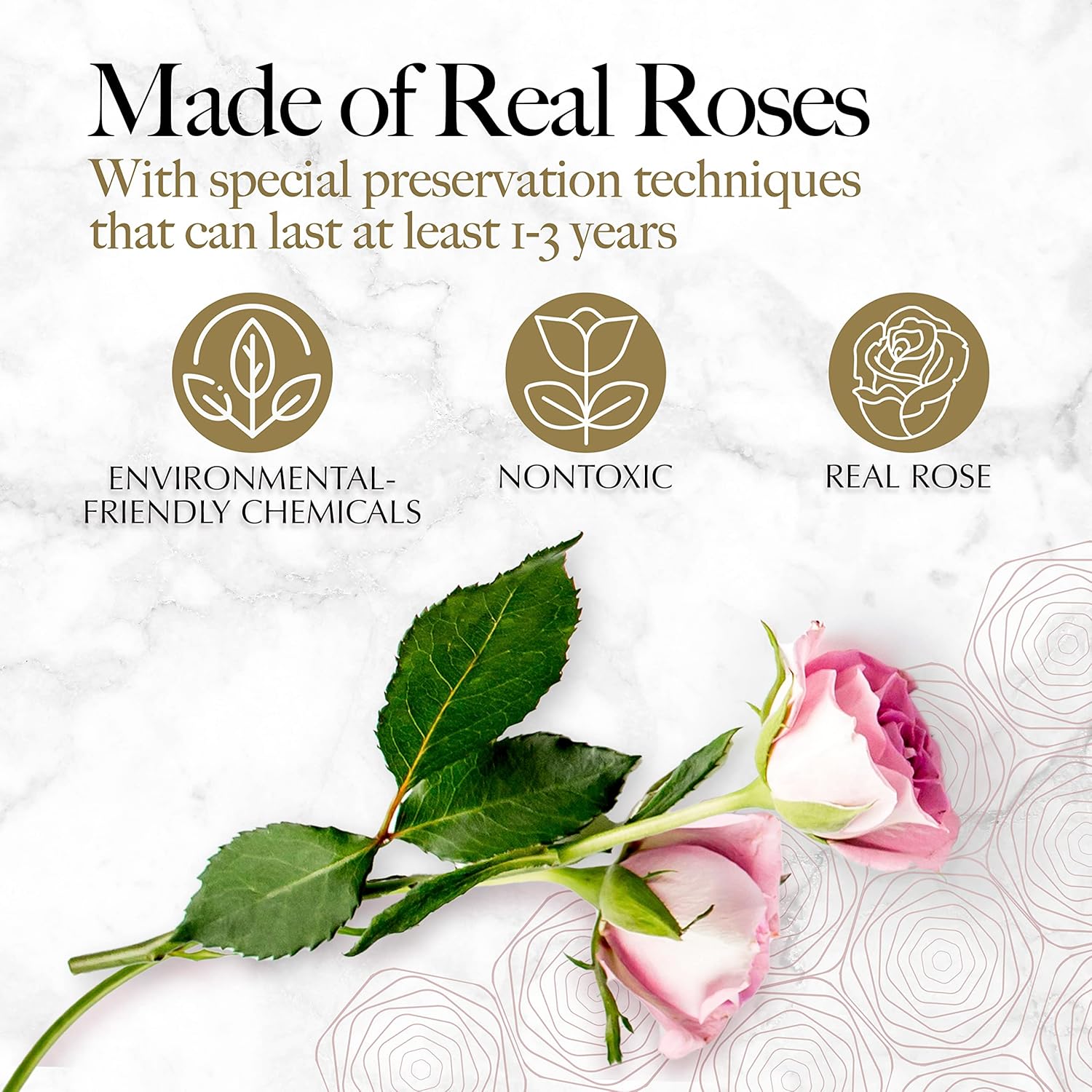
If you’ve ever searched for a flower gift that won’t wilt by Thursday, you’ve probably run into the terms “preserved rose,” “eternal rose,” and “forever rose” used almost interchangeably — sometimes on the same product page. Here’s the short version: these are all real roses that have been chemically treated — typically with a glycerin-based solution — to halt the drying process, locking in their texture, color, and softness for months or years. They are not silk, not plastic, not dried in the traditional sense. The result looks and feels like a fresh bloom, but it lasts far longer without water or sunlight management. What differs between products in this category is the presentation format — a glass dome, a velvet heart box, a round gift box — and that format choice is almost the entire decision for gift-givers. This article compares the three main formats, surfaces the real tradeoffs reviewers have identified, and gives you a clear framework for matching product to occasion.
| EDITOR'S PICKGLAMOUR BOUTIQUE 27 Flower Fore… | Mid-tierForever Preserved Rose - Eterna… | Budget pickImpouo 16-Piece Preserved Rose… | |
|---|---|---|---|
| Flower Count | 27 | — | 16 |
| Container | Heart Box | Glass Dome | — |
| Height | — | 9 in | — |
| Price | $54.98 | $39.99 | $36.99 |
| See on Amazon → | See on Amazon → | See on Amazon → |
Preserved vs. Eternal vs. Forever: Same Product, Different Marketing
Let’s settle this once and for all because the terminology confusion is real and it costs buyers time.
Preserved rose: A rose treated with glycerin or a similar humectant solution to replace the plant’s natural moisture. The bloom retains its shape and softness. No watering needed. This is the base category term — everything else is a subset or a brand interpretation.
Eternal rose / forever rose: Marketing language, not a separate product category. Brands use these terms to signal longevity and emotional permanence. Good Housekeeping, in their article “What Are Preserved Flowers and How Long Do They Last?”, notes that the underlying preservation chemistry is essentially the same across nearly all branded versions — glycerin-based, sometimes with added dyes for color enhancement.
The practical takeaway: When you’re comparing products, ignore the name tier and look instead at (a) the preservation method noted in the listing, (b) the stated lifespan, and (c) the presentation format. Two products both called “eternal roses” can have meaningfully different shelf lives depending on manufacturer quality controls and the dyes used.
The Spruce, in their article “The Difference Between Silk, Dried, and Preserved Flowers,” notes that glycerin-preserved botanicals typically quote a one-to-three-year lifespan under normal indoor conditions — no direct sunlight, no high humidity. Some premium brands claim up to five years. Those longer claims are plausible but depend heavily on how the recipient stores and handles the product.
Format Comparison: Three Presentations, Three Different Gifting Registers
This is where the actual purchase decision lives. The preservation quality across reputable brands at comparable price points is broadly similar. What you’re really choosing is how the gift lands — the unboxing experience, the display footprint, and the symbolic register the product occupies. The three formats below each occupy a distinct tier in terms of occasion fit, visual impact, and practical considerations.
The Glass Dome Rose
The glass dome format — a single preserved rose displayed under a clear cloche — carries the heaviest symbolic weight per rose count of any format in this category. Reviewers consistently invoke the Beauty and the Beast narrative, sometimes explicitly, and that cultural shorthand does real work in the gifting moment. One reviewer documented gifting a dome rose to a recipient recovering from surgery as a hospital-flower alternative: it required no vase, no water, no maintenance, and wouldn’t trigger fragrance sensitivities the way fresh arrangements sometimes do. That’s a genuinely practical use case that the format’s fairy-tale aesthetics can obscure.
Tradeoffs to name explicitly:
- Symbolic density is high but narrow. The dome reads romantic or whimsical. It works beautifully for Valentine’s Day, anniversaries, and milestone birthdays — less naturally for workplace recognition, sympathy, or casual friendship gifting.
- Display footprint is specific. The dome needs a shelf or nightstand surface and looks intentional in that context. It doesn’t work as a table centerpiece or as part of a larger arrangement.
- Shipping fragility is a real concern. Glass domes are inherently more vulnerable in transit than boxed formats. Reviewers across dome products note that well-packaged units arrive intact the vast majority of the time, but the risk is nonzero — particularly for gifts being shipped directly to a recipient rather than hand-delivered. Brides, in their article “Forever Roses and Preserved Flower Gifts, Explained,” recommends confirming return and replacement terms before purchasing any glass-enclosed format as a shipped gift. If you’re drop-shipping to an address you can’t monitor, the velvet box formats carry lower breakage risk.
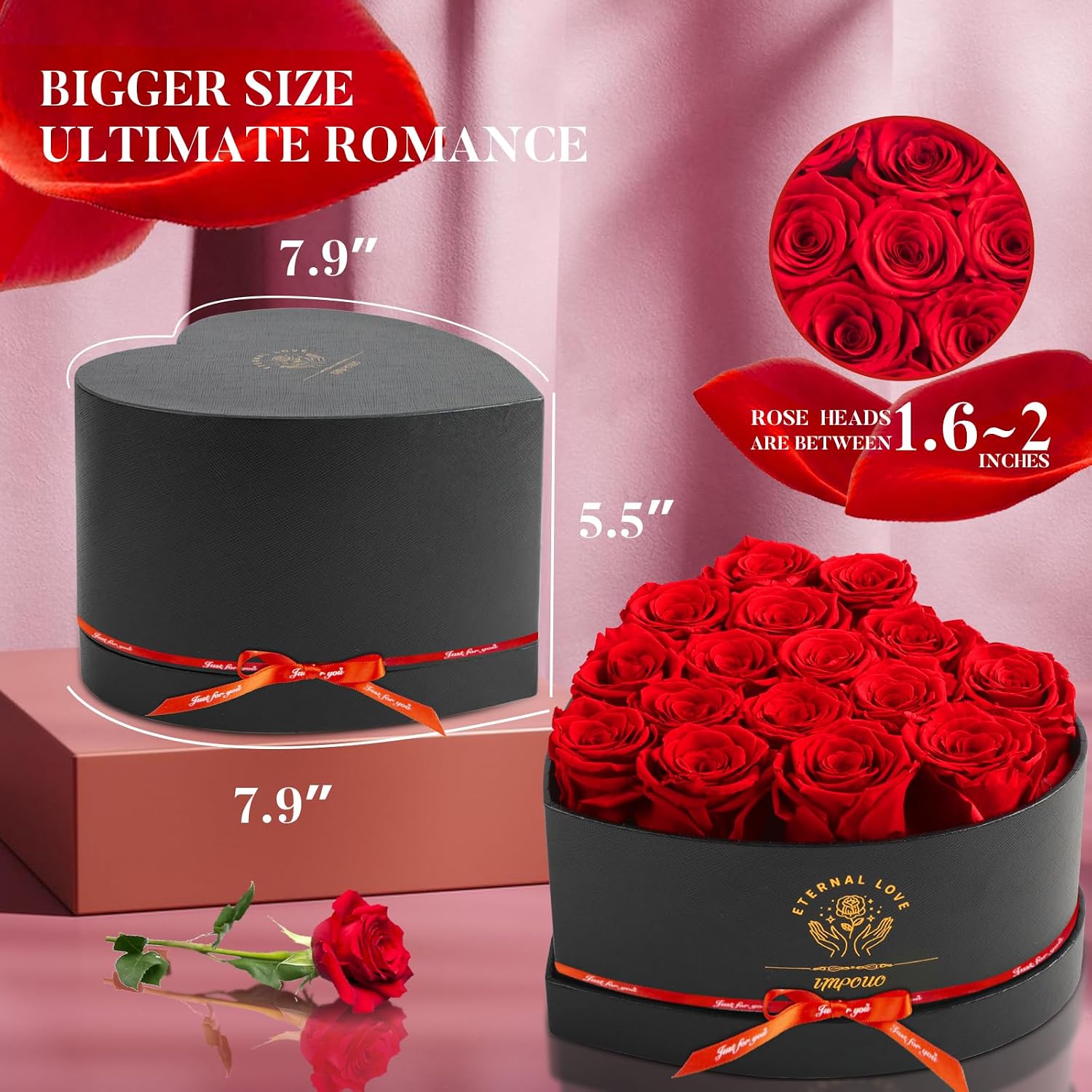
Impouo
$36.99
In stock on Amazon
Check price on AmazonThe Heart Box: 16-Count and 27-Count
Heart-shaped velvet or rigid boxes containing a grid of individual preserved roses are the format that generates the most “exceeded expectations” language in aggregated reviews. Reviewers describe recipients’ genuine surprise at the presentation quality, which suggests the product photographs below its in-person impact — a meaningful differentiator in a gifting category where the recipient often can’t preview what they’re receiving before the moment arrives.
The 16-count vs. 27-count question is worth addressing directly because it comes up constantly among buyers deciding between box sizes. The size difference is meaningful but not primarily about more roses — it’s about visual register. A 16-count box reads as a considered, personal gift. A 27-count box reads as a grand gesture. If the gifting occasion has any performance dimension — a proposal, a significant anniversary, a moment the recipient will photograph and share — the larger count earns its price premium. For a warm but lower-stakes occasion, the 16-count is not a downgrade; it’s appropriately scaled.
The Spruce’s article “The Difference Between Silk, Dried, and Preserved Flowers” notes that the no-maintenance aspect of preserved roses makes them particularly appropriate for recipients who travel frequently or don’t have space or time to manage fresh arrangements — a point worth keeping in mind when sizing up whether the intimate 16-count or the statement 27-count better fits a recipient’s lifestyle and living space.
The 16-count heart box suits personal gifts where intimacy matters more than spectacle: a desk display, a bedside token, or a gift between close friends where a maximalist presentation would feel out of register with the relationship.
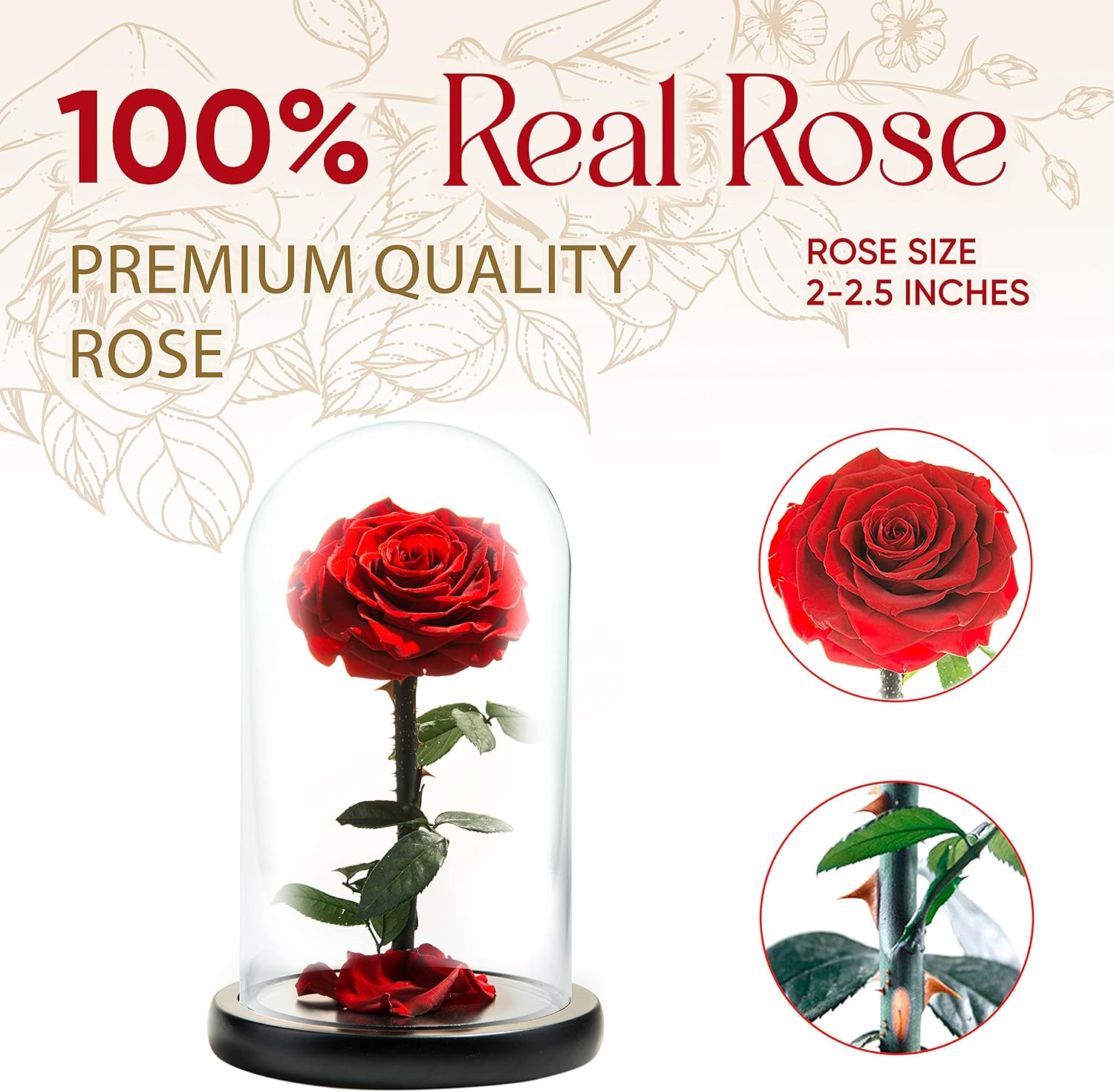
Forever
$39.99
In stock on Amazon
Check price on AmazonThe 27-count heart box is the right scale for milestone occasions. It creates a moment that photographs well and reads as abundant on arrival. Reviewer aggregation shows consistent praise for this format’s ability to outperform its listing photography — the product looks better in person than it does in the product image, which is the opposite of the disappointment most online shoppers dread.
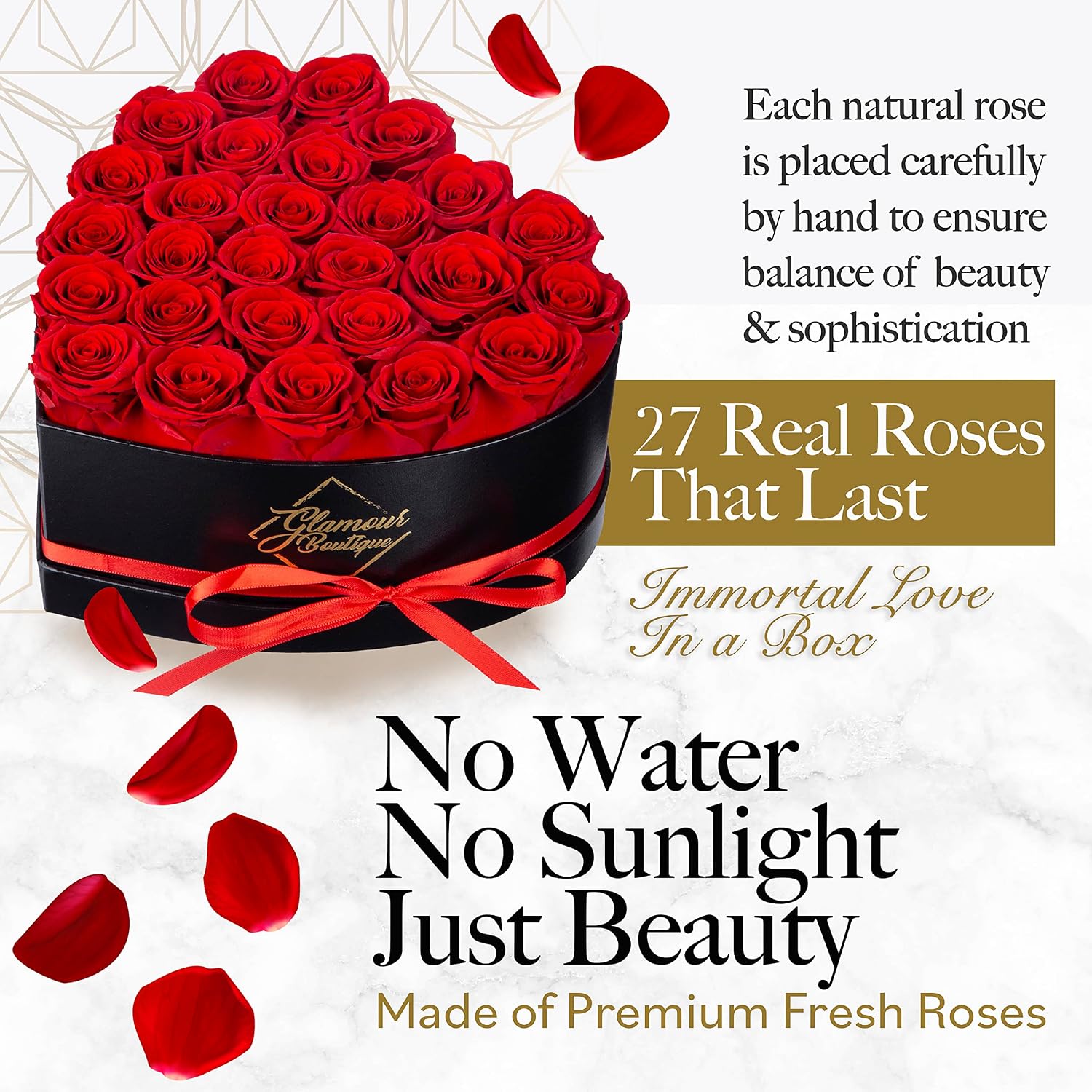
GLAMOUR
$54.98
In stock on Amazon
Check price on AmazonThe Round Velvet Box: 50-Count
The large-count round velvet box occupies a different tier entirely: it’s less about intimate symbolism and more about sheer visual abundance. The format reads luxurious and maximalist. One detail from reviewer aggregation stands out as genuinely unexpected: a buyer who shipped this format to her sister reported that the fragrance filled a room upon unboxing. For preserved flowers — which are sometimes criticized for smelling like nothing or faintly chemical — this is a meaningful differentiator worth flagging to recipients or buyers who have encountered scentless preserved roses before and been disappointed.
The round format also generates strong repeat-purchase behavior in its smaller 16-count configuration: one reviewer notes she has purchased the product repeatedly to give to loved ones across multiple occasions. That kind of repeat gifting behavior is a strong signal that the product survives the first impression and becomes a reliable go-to for volume gifting situations like bridesmaid gifts or client appreciation.
Apartment Therapy, in their article “How to Care for Preserved Roses So They Actually Last,” notes that most preserved rose products are rated for one to three years under standard indoor conditions — away from direct sunlight, high humidity, and heat sources. A humid bathroom display will shorten lifespan significantly; a cool, shaded shelf will extend it. These environmental considerations apply across all formats but matter most for a large investment like a 50-count box, where the recipient is more likely to display it prominently and permanently.
GLAMOUR
$54.98
In stock on Amazon
Check price on AmazonBy the Numbers
| Format | Rose Count | Typical Lifespan | Fragrance Noted | Shipping Risk | Tier |
|---|---|---|---|---|---|
| Glass dome | 1 | 1–3 years | Minimal | Moderate (glass) | Impouo — $36.99 |
| Heart box, small | 16 | 1–3 years | Low | Low | Forever — $39.99 |
| Heart box, large | 27 | 1–3 years | Low | Low | GLAMOUR — $54.98 |
| Round velvet box | 50 | 1–3 years | Notably present | Low | GLAMOUR — $54.98 |
Decision Framework: If X, Then Y
This is a practitioner article, so let’s compress the decision tree.
If the occasion is romantic and you want maximum symbolic resonance with minimal occasion ambiguity → Glass dome rose. The format does the interpretive work for you. Just solve for the shipping method and confirm the retailer’s fragility policy.
If the recipient will display the gift prominently and you want the unboxing to land hard → Large heart box, 27-count. The “exceeded expectations” pattern in reviews suggests this product regularly outperforms its photography. The larger count creates a moment that photographs well and scales to milestone occasions.
If you’re gifting to someone who has encountered preserved roses before and been underwhelmed by scentlessness → Large round velvet box. The fragrance report from aggregated reviews is the differentiator here. Set the expectation in advance, or let it be a pleasant surprise.
If you’re buying repeatedly for multiple recipients — office gifting, bridesmaid gifts, client appreciation → 16-count round box. Repeat-purchase behavior in reviews indicates consistent quality across units, which matters when you’re ordering at volume and can’t inspect each box individually before it ships.
If the recipient is in a recovery setting → Glass dome or any boxed format over fresh flowers. No pollen, no water management, no vase required, and no fragrance that might conflict with medical sensitivities — unless the recipient specifically enjoys scent, in which case the large round velvet box’s noted fragrance could be a welcome detail.
Frequently Asked Questions
What is the difference between a preserved rose, an eternal rose, and a forever rose — are they the same thing?
Functionally, yes. All three terms describe a real rose treated with a glycerin-based solution to halt biological decay. “Eternal” and “forever” are brand and marketing language intended to emphasize longevity and emotional significance. Good Housekeeping, in their article “What Are Preserved Flowers and How Long Do They Last?”, confirms that the underlying preservation process is consistent across reputable manufacturers. When comparing products, focus on stated lifespan, preservation method, and presentation quality rather than the name.
How long do preserved roses in a box actually last before they deteriorate?
Apartment Therapy, in their article “How to Care for Preserved Roses So They Actually Last,” notes that most products are rated for one to three years under standard indoor conditions — away from direct sunlight, high humidity, and heat sources. Some premium brands quote up to five years. Real-world longevity varies based on the recipient’s environment: a humid bathroom display will shorten lifespan significantly; a cool, shaded shelf will extend it. These are not maintenance-free indefinitely, but they are substantially lower-maintenance than any fresh flower arrangement.
Do preserved roses in a velvet or gift box have a scent, or do they smell like nothing?
It varies by product and batch. Many preserved roses have little to no scent — the preservation process displaces the plant’s natural aromatics. However, reviewer aggregation for the large round velvet box format includes a notable report of fragrance filling a room upon unboxing, which suggests at least some products in this category retain or are enhanced with scent. If fragrance matters to the recipient — positively or as a sensitivity concern — check recent reviews for the specific product rather than assuming one way or the other.
Is the glass dome rose fragile enough to be a shipping concern?
It can be. Reviewers report that well-packaged dome products arrive intact in the majority of cases, but glass cloche formats carry inherently more transit risk than boxed formats. If you’re hand-delivering, fragility is a non-issue. If you’re shipping directly to a recipient, confirm whether the recipient will be available to receive the package and review the retailer’s damage and replacement policy. Brides, in their article “Forever Roses and Preserved Flower Gifts, Explained,” specifically recommends confirming return terms before purchasing any glass-enclosed preserved flower format as a shipped gift.
What occasions are preserved rose gifts appropriate for beyond Valentine’s Day?
The category is broader than its Valentine’s Day association suggests. Reviewers document gifting preserved rose boxes for: anniversaries, milestone birthdays, Mother’s Day, bridesmaid proposals, housewarming gifts, client appreciation, post-surgery recovery as a hospital-flower alternative, and sympathy acknowledgment. The glass dome skews most narrowly romantic; the boxed formats travel across occasion types more naturally. The Spruce, in their article “The Difference Between Silk, Dried, and Preserved Flowers,” notes that the no-maintenance aspect makes preserved roses particularly appropriate for recipients who travel frequently or don’t have space or time to manage fresh arrangements.
Is the 16-count or 27-count heart box a meaningful size difference for a gift recipient?
Yes, but the difference is about visual register, not simply rose count. A 16-count box reads as a warm, considered personal gift. A 27-count box reads as a grand gesture — appropriate when the occasion has some performative or milestone dimension. If the recipient will photograph and share the gift, the larger count creates a more striking image. If the occasion is intimate rather than celebratory, the 16-count is not a lesser gift; it’s appropriately scaled and often the smarter choice.