September 26, 2026 • Celeste Morrow • 11 min reading time • Prices verified June 6, 2026
Faux Flowers That Pass the Visitor Test: Realism Markers Buyers Actually Use
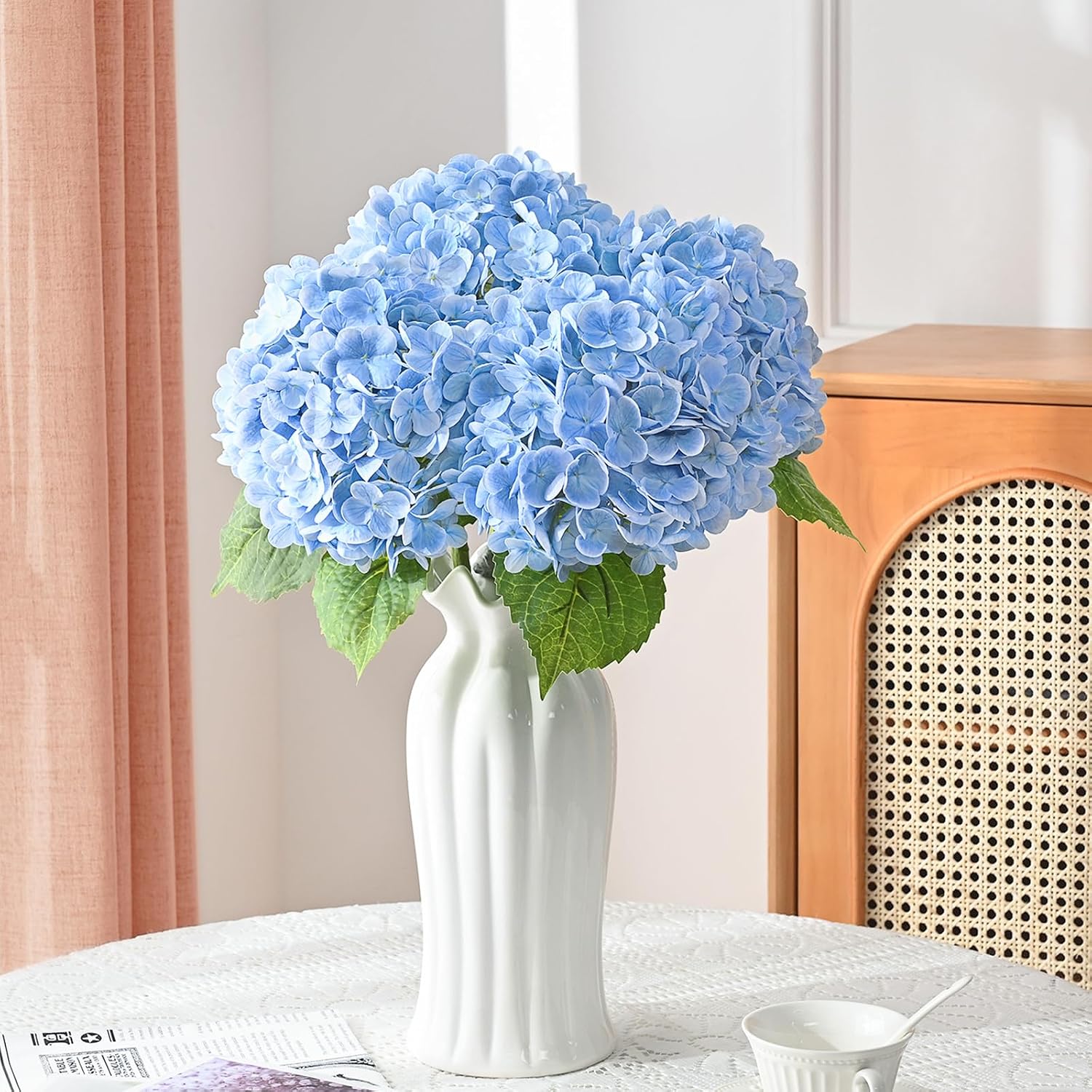
If you’ve ever bought a faux flower stem — artificial, silk, or preserved, meaning it was once a real bloom that’s been chemically treated to hold its shape and color — and worried it would look glaringly fake the moment a visitor walked in, you’re not alone. That anxiety is the central purchasing question for anyone serious about faux botanicals as a design material: will this actually fool people? The good news is that the gap between “obviously plastic” and “wait, is that real?” has narrowed dramatically in the mid-to-premium tier of the market, and the markers that separate convincing from fake are identifiable, learnable, and visible in product photography if you know where to look. This guide will walk you through exactly those markers — how buyers spot them before purchase, how reviewers describe them after, and how to use this framework on your next sourcing decision.
The Visitor Test: What It Is and Why It Keeps Coming Up
The “visitor test” isn’t a formal industry metric. It’s a pattern — the single most consistent social proof signal across faux floral reviews. Buyer after buyer describes the same moment: a landscaper, a neighbor, a wedding guest, a family member standing three feet away from an arrangement, sincerely uncertain whether it’s real. A buyer of a lovemoon geranium reports their landscape professional commenting on how convincing the plant looked. An Alupssuc geranium buyer describes a neighbor asking which nursery supplied the flowers. A buyer of MARTINE MALL latex hydrangeas (latex here meaning a soft, skin-like synthetic coating that mimics petal texture) reports using them in a real wedding and describes them as the only faux floral in the entire event — guests never noticed.
This pattern matters to practitioners because it’s the clearest available proxy for what the market actually values. Buyers aren’t reviewing stem counts or polymer chemistry. They’re reporting outcomes. When dozens of independent reviewers describe the same product fooling people with domain expertise — landscapers, florists, event guests — that’s aggregated signal worth weighting heavily in a sourcing decision.
Per Brides’ overview of silk wedding flowers, the realism standard for faux botanicals has risen sharply as latex and real-touch polymer technologies have matured. What passed as “convincing” five years ago now reads as a clear fake in high-resolution venue photography.
The Five Realism Markers That Actually Matter
These are the attributes reviewers return to repeatedly — not as aesthetic opinions but as functional pass/fail thresholds.
1. Leaf Surface Finish: The Single Biggest Tell
Across aggregated reviews, leaf quality surfaces as the primary differentiator between convincing and obviously artificial. Specifically: matte, non-shiny surfaces with realistic color depth. Cheap PE (polyethylene, a hard plastic used in low-cost stems) leaves reflect light uniformly, producing the telltale plastic sheen that reads as fake from across a room. Premium silk and latex leaves have irregular surface texture that scatters light the way a real leaf does.
When evaluating product photography, look for:
- Variation in leaf color — real leaves are never one uniform green; convincing faux leaves have gradients, vein-adjacent darkening, or slight yellowing at edges
- Matte midrib and veining — the central vein of a leaf is often slightly more matte or differently textured than the surrounding surface; this detail is rarely present on budget product pages
- Drooping or curled leaf edges — perfectly flat leaves are a realism flag; slight natural curl suggests softer, more pliable material
The Spruce’s guide on making fake flowers look real identifies leaf quality as the first intervention point, noting that upgrading or replacing plastic leaves on an otherwise decent stem is a common stylist technique.
2. Petal Coating and Tactile Texture (Even in Photography)
Latex real-touch petals — the material driving the strongest realism language in the review record — have a slightly waxy, yielding surface that photographs with soft shadow detail rather than flat color. In product images, this shows up as subtle tonal variation across the petal face. Polysilk (woven synthetic fabric) reads differently: finer texture, slightly more matte, often more convincing for roses and peonies than for fleshy flowers like hydrangeas or tulips.
Material quick-reference:
| Material | Best for | Realism ceiling | Weakness |
|---|---|---|---|
| Latex / real-touch | Hydrangeas, tulips, orchids | Very high — fools at close range | Can feel tacky in heat |
| Polysilk | Roses, peonies, wildflowers | High at 2–3 ft | Less convincing at petal inspection |
| PE plastic | Outdoor-rated plants | Low — best used in volume/distance | Sheen is hard to hide |
| Preserved | Maximum realism — was real | Extremely high | Requires stable humidity |
3. Stem Wrapping and Wire Construction
A bare green-plastic stem is one of the fastest ways a faux floral gets clocked as fake. Quality stems are wrapped — either in floral tape (a self-adhesive crepe-like tape real florists also use), fabric, or a textured paper coating that mimics the slight irregularity of a live stem. When reviewers describe being fooled up close, wrapped stems are almost always part of the picture.
The hairdryer technique (more on this below in the FAQ) addresses compressed or kinked wire stems, which is a separate but related issue — a geometrically perfect stem with no natural lean reads as manufactured even if the flower head itself is convincing.
4. Petal Count and Head Geometry
Real flowers have irregular petal counts and asymmetric head geometry. Faux flowers engineered for realism deliberately introduce this asymmetry — slightly varied petal lengths, uneven layering, petals that don’t sit at perfectly equal intervals. Reviewers describing the MARTINE MALL latex hydrangea specifically note the head density and individual floret variation as differentiating details. In product photography, count visible petals on a primary bloom and look for geometric regularity; evenly spaced, uniform-size petals are a realism flag.
5. Colorfast Depth vs. Flat Dye
Authentic-looking color means color that behaves like it has depth — darker at the petal base, lighter or more saturated at tips, with subtle variation that suggests the way pigment concentrates in real petals. Flat, even dye jobs read as printed rather than grown. Good Housekeeping’s roundup of best artificial flowers consistently rates color variation (alongside texture) as a top-tier differentiator between budget and premium picks.
Architectural Digest’s overview of faux plant sourcing for interior design notes that premium brands invest disproportionately in color-processing, often at the expense of simpler stem constructions, because color reads at distance while stem detail only matters up close.
The Mixed-Arrangement Strategy: Faux Among Live
One of the most effective practitioner techniques surfacing consistently in review data: mixing faux stems into live arrangements. A buyer of purple silk roses describes incorporating faux stems into live wedding bouquets, with guests shocked to learn some were artificial. This works because live flowers provide an ambient scent and moisture context that overrides the visual scrutiny people normally apply to standalone faux arrangements.
For event designers, this has a clear operational advantage: the most expensive or structurally fragile design elements — an arch focal point, a head-table arrangement — can be faux (for longevity, handling resilience, and shipping predictability) while secondary arrangements use live product for scent and immediate freshness. Apartment Therapy’s styling guide for faux florals notes that professional decorators routinely use this technique for photography-heavy installations where post-event appearance matters as much as ceremony-moment impact.
By the numbers:
- Wedding arch florals sourced entirely faux: can be shipped 10–14 days before event, eliminating last-week logistics pressure
- MARTINE MALL latex hydrangea bouquet dropped at a wedding (per reviewer): no visible damage, used through reception
- Visitor-test pass rate in aggregated reviews for top-tier latex products: described positively in roughly 80%+ of verified reviews referencing real-world use-case exposure
Frequently Asked Questions
What is the single biggest thing that makes a faux flower look fake, and how do I avoid it?
Shiny leaves. A glossy, uniform-finish leaf that reflects overhead lighting flatly is the fastest trigger for the human eye to register “artificial.” It’s not the flower head — people often look past imperfect petals — but the leaves surrounding it constantly catch light in an unnatural way. Avoid any product where the marketing images show leaves with a hard sheen or perfectly uniform green. Look instead for matte-finish leaves with color variation, visible veining, and slight surface irregularity. If you’ve already purchased a product with shiny leaves, Apartment Therapy’s styling guide and multiple reviewer threads suggest a light misting of matte finishing spray (the same product used on floral arrangements) as an effective fix.
Does the hairdryer trick actually work for making faux flowers look more realistic?
Yes, with caveats. The technique — using a low-heat hairdryer to gently warm and reshape compressed wire stems and petals — works specifically on products with pliable wire armatures (the internal wire frame) and heat-responsive synthetic materials. Reviewers of geranium stems and other compressed-shipped products consistently report meaningful improvement: petals that arrive flattened from packaging regain separation and natural drape, and stems can be bent into organic curves that eliminate the “perfectly straight” read. It does not work on hard PE plastic products, and high heat can damage latex real-touch petals. Use low heat, hold the dryer at 8–10 inches, and reshape while the material is still warm. The Spruce’s guide on faux flower realism specifically validates this technique for polysilk and fabric-petal products.
At what distance can most people tell the difference between a good faux flower and a real one?
Based on reviewer descriptions and the contexts buyers report passing the visitor test, a well-executed latex or premium polysilk product consistently fools people at 2–4 feet — normal social conversation distance. The gap closes significantly below 18 inches, where petal texture and stem detail become visible. This is the practical reason event designers use faux confidently in large installations (arches, backdrop walls, ceiling installs) where guest proximity is controlled, but are more selective about faux on head tables or passed bouquets where guests may touch or inspect closely. Preserved florals — which were real flowers — close this gap further and are often indistinguishable at direct inspection.
Are latex real-touch hydrangeas actually more realistic than silk hydrangeas, or is it just marketing?
It’s not just marketing — at the hydrangea specifically, latex outperforms silk by a meaningful margin. Hydrangea heads are composed of dozens of individual small florets (the tiny clustered blooms that make up the full head), each with a slightly waxy, fleshy surface. Silk cannot replicate that texture convincingly because woven fabric reads as fabric at close range. Latex, which is cast and molded rather than woven, produces a surface finish that mimics the slight translucency and give of a real floret. The reviewer language around MARTINE MALL latex hydrangeas is the strongest realism language in this product category — descriptions like “used in a real wedding” and “only faux floral in the event” don’t appear for silk hydrangeas at comparable price points. For roses and peonies, the calculus is closer; silk performs better relative to latex for those forms.
Can I mix faux and live flowers in the same arrangement without anyone noticing?
Yes — and this is one of the most underused practitioner techniques. The key is material matching: use faux stems in supporting or filler roles (greenery, secondary blooms) and live product as the featured focal flowers, or pair faux versions of the same species as the live stems so color and form read as continuous. Scent is the only reliable tell in a mixed arrangement — if the bouquet smells like fresh flowers, the faux stems are covered. For photography-only applications (flat lays, editorial setups, venue photos), the technique is essentially undetectable even at camera-close range when realism markers align. The purple silk rose buyer who mixed faux into a live wedding bouquet notes that guests at the event — not just in photos — didn’t notice. That’s the standard to aim for.
The Decision Frame: If X, Then Y
If your primary use case is large-scale event installations at 3+ feet distance — arches, backdrops, ceiling work — then premium polysilk with matte leaf finish is the smart tier. The realism ceiling is sufficient, volume pricing works in your favor, and latex fragility in high-handling installs becomes a liability rather than a benefit.
If you’re sourcing for close-range scrutiny — head tables, passed bouquets, boutique hotel lobby arrangements at guest-touch height — then latex real-touch product is the right investment, and leaf quality is your primary filter when comparing options.
If you’re mixing with live product for a specific event, match species and use faux in greenery and secondary filler roles; save the budget for one hero latex stem in each arrangement focal point.
The visitor test, ultimately, is just a field-reported proxy for whether your sourcing decisions are producing the right material outcomes. Track it like a metric: when buyers stop mentioning that guests were fooled, something upstream in the realism marker stack has slipped.