September 20, 2026 • Celeste Morrow • 10 min reading time • Prices verified June 6, 2026
Faux Flowers Out of the Box: The Fluffing, Reshaping, and Smell Guide Nobody Writes
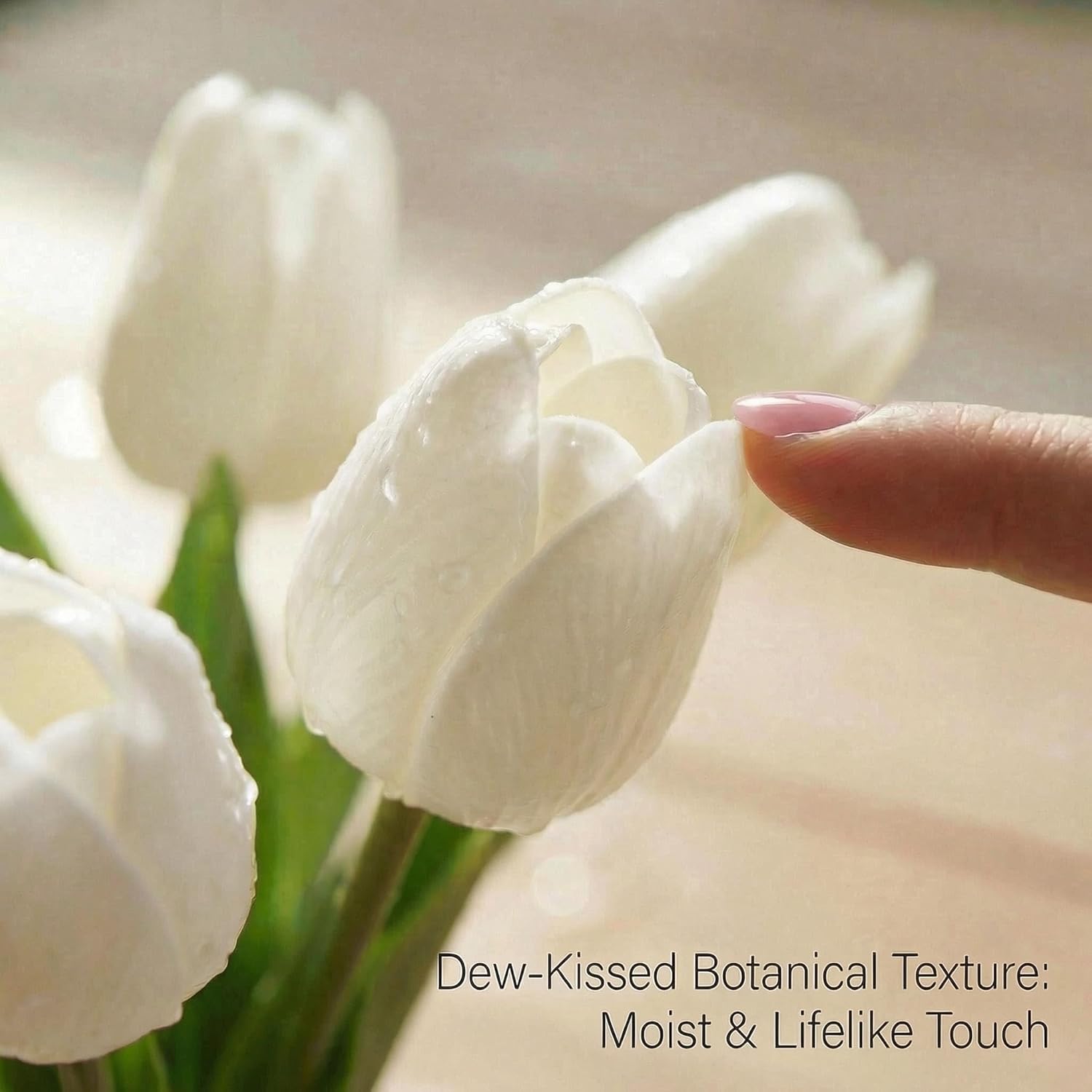
You ordered a box of faux flowers — artificial blooms made from silk, polyester, latex, or a rubber-like compound called PU (polyurethane, the same material used in soft-touch phone cases) — and what arrived looks nothing like the product photo. The petals are crushed flat. The stems are kinked. And there’s a chemical smell that has no place in your living room or event venue. If any of that is your situation right now, you’re not alone and the flowers are almost certainly not defective. Nearly every artificial stem goes through some version of this, because box compression, static packing, and off-gassing from synthetic coatings are structural facts of how these products are manufactured and shipped. This guide collects what owners across dozens of product lines consistently report working, so you can go from “what did I just receive” to “this looks exactly like the photo” in an afternoon rather than a week of guessing.
One up-front caveat worth naming: every technique below is drawn from aggregated owner and reviewer accounts, not site-verified instruction. Materials vary by manufacturer. When in doubt, test any method on the least-visible stem in your order first.
| EDITOR'S PICKGLAMOUR BOUTIQUE 16 Flower Fore… | Mid-tierMARTINE MALL 3Pcs 21in Hydrange… | Budget pickMandy's White Artificial Tulips… | |
|---|---|---|---|
| Flower type | Preserved roses | Hydrangea | Tulips |
| Stem count | 16 | 3 | 20 |
| Height | — | 21in | 13.5" |
| Material | — | Latex | PU |
| Real touch | — | ✓ | — |
| Container | Heart box | ✗ | ✗ |
| Price | $45.95 | $21.99 | $19.99 |
| See on Amazon → | See on Amazon → | See on Amazon → |
Why Every Box Arrives the Same Way (and What You’re Actually Dealing With)
The three problems owners report almost universally — compression damage, stem stiffness, and chemical odor — aren’t random. They’re downstream of three specific manufacturing and logistics realities.
Compression damage happens because faux botanicals are packed volume-efficiently, not shape-efficiently. Petals are layered flat against each other, buds are pressed into tight bundles, and multi-bloom heads like hydrangeas or delphiniums arrive with their individual florets matted together. The longer the transit time (international freight, warehouse holds, last-mile delays), the more set that compression becomes.
Stem stiffness is partly intentional — wire-core stems are designed to hold a bend once you set it — but the factory-default shape is almost never the shape you want for your specific arrangement. Stems often arrive in a single rigid configuration that reflects how they were packed, not how a natural flower grows. This is especially true for branching stems like cherry blossom (the kind with multiple offshoots from a central trunk) and delphinium (a tall spike with many individual florets along its length).
Chemical odor comes from the coatings used to achieve realistic petal texture. Real-touch and PU materials — the ones that actually feel like a soft petal when you brush them — require a chemical coating process that leaves residual off-gassing, sometimes for days. This is not a quality defect. It’s a byproduct of the same process that makes those materials worth buying.
Knowing which problem you’re solving changes which fix you reach for first.
The Hair Dryer Technique: What Owners Report, and Where It Works
The single most consistently reported fix for compression damage is heat — specifically, a hair dryer on a medium or low setting, held several inches from the bloom while you gently work the petals open with your free hand. Owners of silk tulips report pulling out a hair dryer on medium heat to coax crushed petals back into their natural cup shape. Hydrangea owners report fluffing entire heads this way, separating individual florets that had been matted together in transit. Delphinium buyers have noted that some brands now include this instruction directly in the box — which is a useful signal that the technique has moved from owner hack to manufacturer acknowledgment.
By the numbers — hair dryer technique at a glance:
| Material | Heat tolerance (owner-reported) | Notes |
|---|---|---|
| Polysilk / polyester | Medium heat, 6–8 inches | Most forgiving; widely reported safe |
| PE (polyethylene) | Low heat, 8–10 inches | Softens quickly; watch for shine change |
| PU / real-touch latex | Low heat only, move constantly | Can melt or discolor if held still |
| Preserved florals | Avoid heat entirely | Heat accelerates brittleness and color fade |
The risk zone is PU and real-touch latex. These materials are specifically engineered to mimic the soft, slightly waxy texture of a real petal, and that engineering involves a heat-sensitive coating. Owners of real-touch tulips and roses consistently report that low heat, kept moving, is fine — but that holding the dryer in one place risks visible surface damage. When in doubt, start cooler and farther away than you think you need to.
What heat does not fix is a stem that’s been kinked at a sharp angle for long enough that the wire inside has taken a permanent set. For those, you need the reshaping approach below.
Reshaping Stems: Fully Wired vs. Hard-Core vs. No-Wire
This is where material knowledge pays off, and where a lot of intermediate buyers hit a wall because product listings don’t always specify what’s inside the stem.
Fully wired stems — where wire runs not just through the main trunk but through every branch and even individual flower stalks — are the gold standard for reshaping. Owners of cherry blossom branches consistently highlight full wire construction as what makes them easy to adjust into natural-looking arcs, drapes over vases, or cascades for ceremony arches. Delphinium owners report the same: once you understand that every floret stalk is individually poseable, you can create the gentle S-curve that makes a tall spike look grown rather than manufactured.
The technique owners describe is simple: bend slowly and in multiple small increments rather than one dramatic reshape. Trying to move a wire-core stem from straight to a 90-degree bend in one motion risks snapping the interior wire or, worse, pulling the stem wrap loose and exposing raw wire through the decorative covering.
Hard-core stems — a single rigid wire or plastic rod running through an otherwise flexible outer — are common on budget latex hydrangeas and some PE roses. These reshape less precisely, and the resistance can be surprising. Owners cutting into latex hydrangea stems specifically flag that the stem material itself (not just the wire) is very hard to cut through with standard scissors. The reported workaround: use wire cutters or heavy-duty floral shears rather than household scissors, and cut at a slight angle so the interior wire is sheared rather than bent-and-snapped, which can cause the outer material to split up the stem.
No-wire or thin-gauge wire stems are common at the lower price tier and in some preserved-floral products. These don’t reshape meaningfully — the stem will spring back. If your arrangement requires a specific curve or drape, this is the material category where a secondary support (a floral stake, a strategically placed vase lip, a foam anchor) does the work instead of the stem itself.
The Spruce’s guide to arranging artificial flowers notes that matching your stem type to your intended use case before purchase is more reliable than trying to engineer around a mismatch after delivery — a point that’s easy to overlook when shopping from photos alone.
The Chemical Smell Problem: Airing Out New Faux Stems
PU real-touch tulips are the most consistently cited offenders in owner reviews. The smell is variously described as “chemical,” “rubbery,” and “like a new shower curtain.” Owners report that leaving them in an open garage or well-ventilated outdoor area for one to two days is the most reliable fix. Enclosed spaces — a bedroom, a vase on a shelf — trap the off-gassing and extend the smell significantly.
A few owner-reported approaches that show up repeatedly in aggregated reviews:
- Outdoor airing for 24–48 hours is the most commonly cited fix for PU stems. Moving air accelerates off-gassing faster than still indoor air.
- Baking soda proximity (a small open bowl placed near the stems, not touching them) is mentioned by some owners as a supplemental odor absorber. Good Housekeeping’s guides on managing household odors consistently support this mechanism — baking soda adsorbs airborne compounds without requiring direct contact.
- Unscented fabric softener wipe-down, diluted in water, appears in a handful of owner reports for polysilk and polyester stems. It doesn’t address the chemical compound causing the smell, but it can mask it while off-gassing continues. Not recommended for PU or real-touch materials, where any moisture contact can affect the surface coating.
- Patience with PE and polysilk — these materials typically off-gas within hours, not days, and most owners report no noticeable smell by the time they’ve finished fluffing and arranging.
One data point worth flagging: a subset of SITUMEIZI tulip owners specifically cite the absence of chemical odor as a notable positive — something they call out because it’s unusual enough to mention. This suggests either a different coating process or a longer factory airing period before shipment. If odor is a decision factor for your project (hotel lobby install, enclosed residential space with sensitive occupants), it’s worth treating owner odor reports as a product differentiator, not just a setup inconvenience. Brides.com’s coverage of artificial wedding flowers notes that enclosed venue spaces — particularly tented events — amplify any off-gassing smell in a way that outdoor ceremonies don’t, which makes pre-airing a non-negotiable for that use case.
Apartment Therapy’s styling guides consistently recommend a 48-hour “new product” staging period for any synthetic décor item in a bedroom or living space, specifically to let off-gassing stabilize before the item enters daily-use proximity.
Frequently Asked Questions
How do I get rid of the chemical smell on new faux flowers? The most consistently reported fix is outdoor or open-garage airing for 24–48 hours, with moving air rather than still indoor air. PU real-touch stems need the longest airing; polysilk and polyester typically resolve within a few hours. An open bowl of baking soda near (not touching) the stems can help absorb residual odor while the off-gassing completes.
Can I use a hair dryer on all artificial flower materials, or will it damage some? Not all materials tolerate heat equally. Polysilk and polyester handle medium heat well. PE needs low heat with the dryer kept moving. PU and real-touch latex are the most heat-sensitive — owners report that low heat, kept constantly in motion, is workable, but holding the dryer still risks surface damage or discoloration. Preserved florals should not be exposed to heat at all; it accelerates brittleness and color loss.
How do I cut through wire stems without ruining the flower? Standard household scissors are frequently cited as the source of the problem: they bend rather than shear, which can split the outer stem material up toward the bloom. Owners report that wire cutters or heavy-duty floral shears, cutting at a slight angle, give a cleaner result. Cut as far from the bloom as your arrangement allows, and wrap any exposed wire end with floral tape to prevent snags.
Why do my faux tulips look droopy — is that a defect? Almost always no. Tulips — both faux and fresh — have a natural forward-drape to the bloom head that reads as “droopy” when the stem is fully upright. It’s the position the stem wire was set to at the factory. Gently bending the upper third of the stem into a slight backward curve (so the bloom faces slightly upward rather than straight down) is the fix owners consistently report. If the bloom head itself is collapsing rather than drooping, that’s a different issue — check whether the internal support wire runs through the stem only or extends into the bloom head itself.
How long does it take for compressed flowers to return to their normal shape on their own? Without intervention, owners report mixed results — some petals relax within a few hours in a warm room; others stay compressed indefinitely. Heat (hair dryer on low to medium) dramatically accelerates the process. For severely compressed multi-bloom heads like hydrangeas, manually separating individual florets while applying gentle heat is the approach owners describe as most reliable. Counting on passive recovery alone is the slower path, and for time-sensitive installs, it’s not a strategy worth depending on.