September 19, 2026 • Celeste Morrow • 13 min reading time • Prices verified June 6, 2026
Faux Hanging Baskets and Petunias vs. Geraniums: Which Outdoor Faux Flower Wins Your Porch
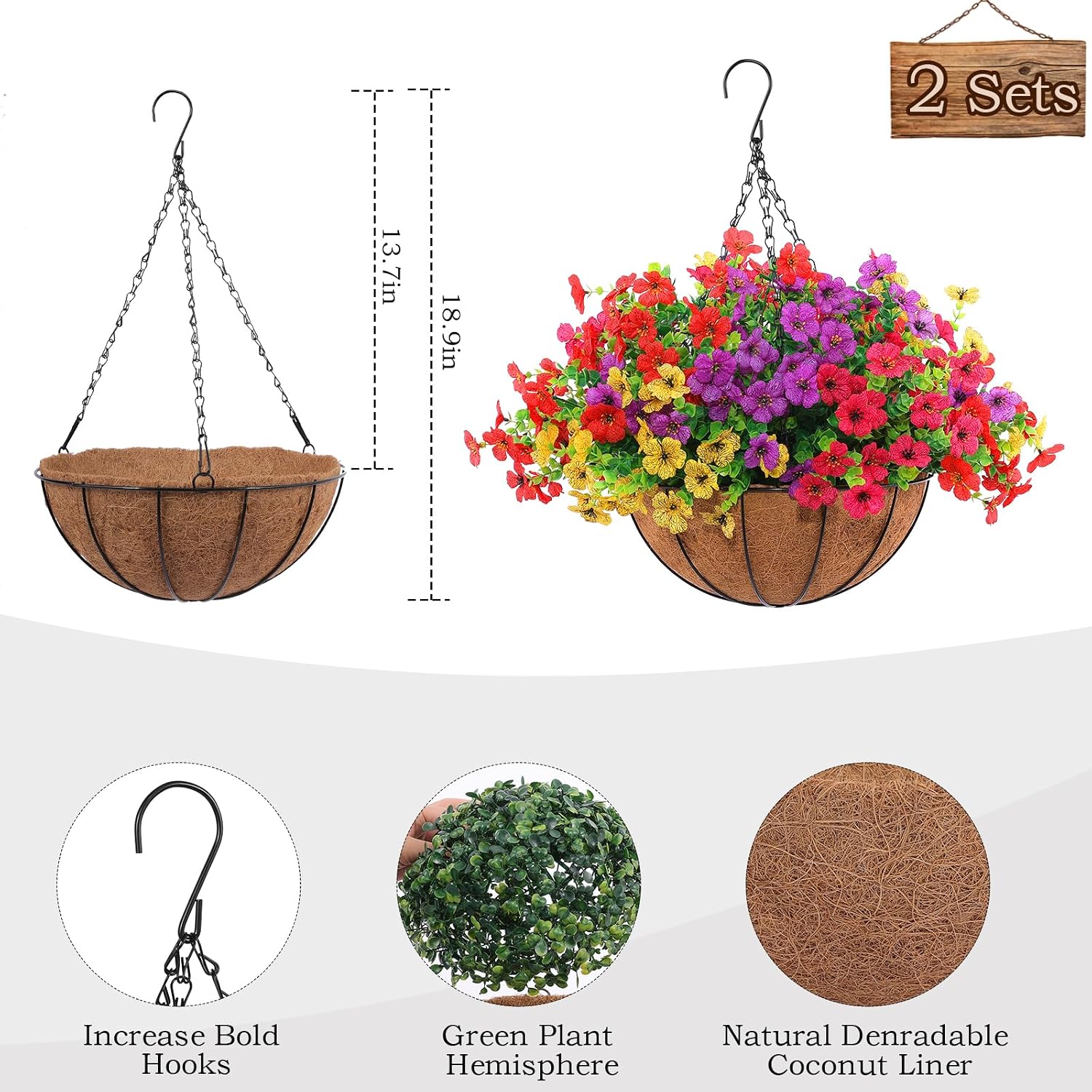
If you’ve ever watched a perfectly full petunia basket turn into a crispy tangle of brown stems by mid-July — despite watering it twice a day — you already know why faux outdoor flowers are having a serious moment. Faux hanging baskets (typically made from UV-treated polyester silk or molded polyethylene plastic) are designed to look like the real thing but require zero watering, zero deadheading, and zero replacement when a heat wave rolls through. This article is specifically about the two flower types that dominate the faux hanging basket market: petunias and geraniums. We’ll compare them on realism, durability, fade resistance, and real-world installation scenarios so you can make a confident call before you buy — whether you’re outfitting a single front porch or speccing planters for a boutique hotel entrance.
If you’re already one or two seasons into faux botanicals and you’re reading this because you’ve had a basket fade or a stem situation you didn’t anticipate — this is the article that should have existed before you clicked “add to cart.”
The Core Difference: What You’re Actually Comparing
Petunias and geraniums aren’t interchangeable aesthetics. They signal different things to the eye, and they perform differently as faux products because of how their real-plant counterparts are structured.
Faux petunias tend to cascade. The trailing growth habit of a petunia — that waterfall of trumpet-shaped blooms spilling over a basket edge — is what most buyers picture when they imagine a full, lush hanging display. In faux form, this is achieved with flexible wire-reinforced stems wound through a pre-formed basket frame. The blooms are typically made from thin polyester or polysilk (a tighter-weave fabric that holds petal shape better than basic polyester), and the overall look is voluminous but airy.
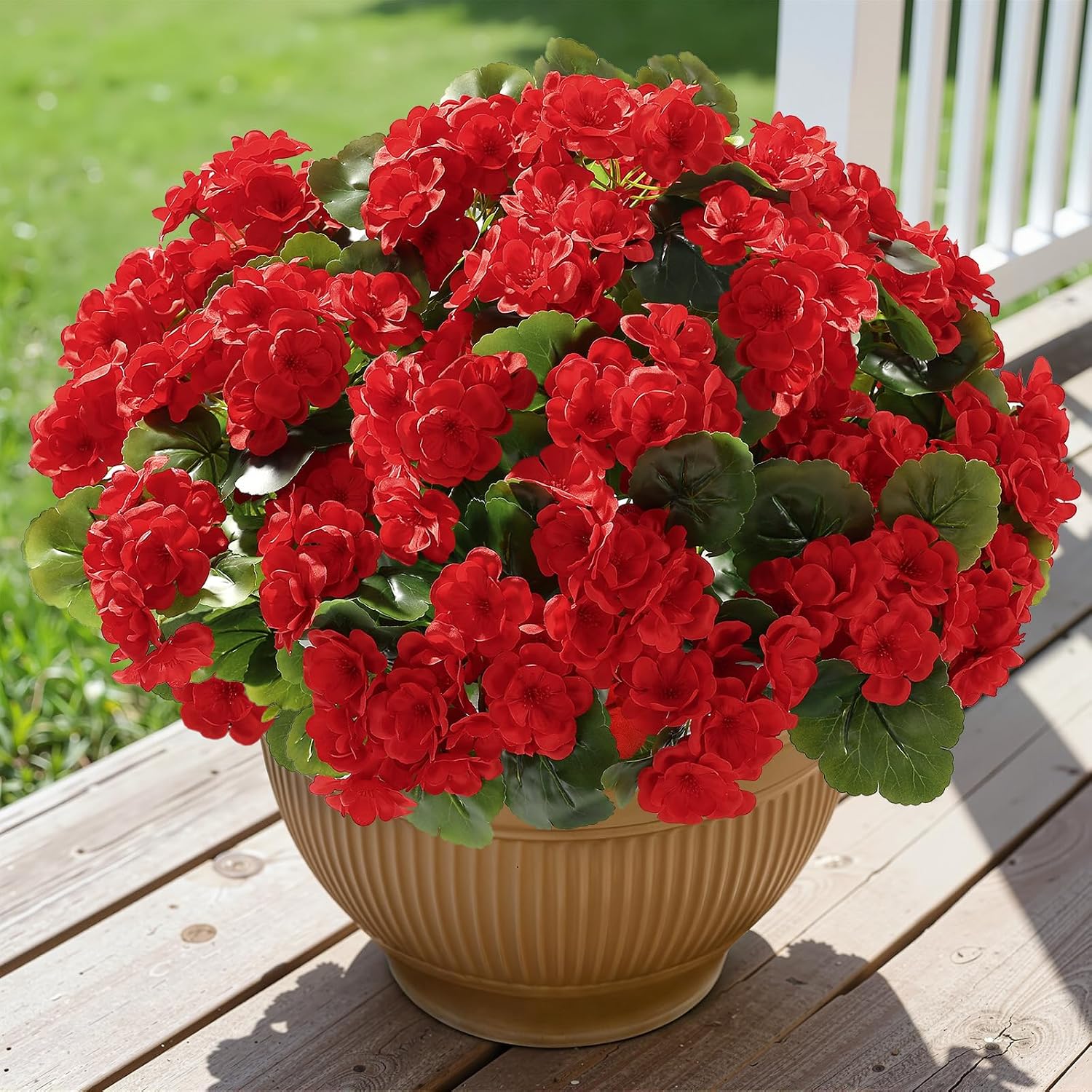
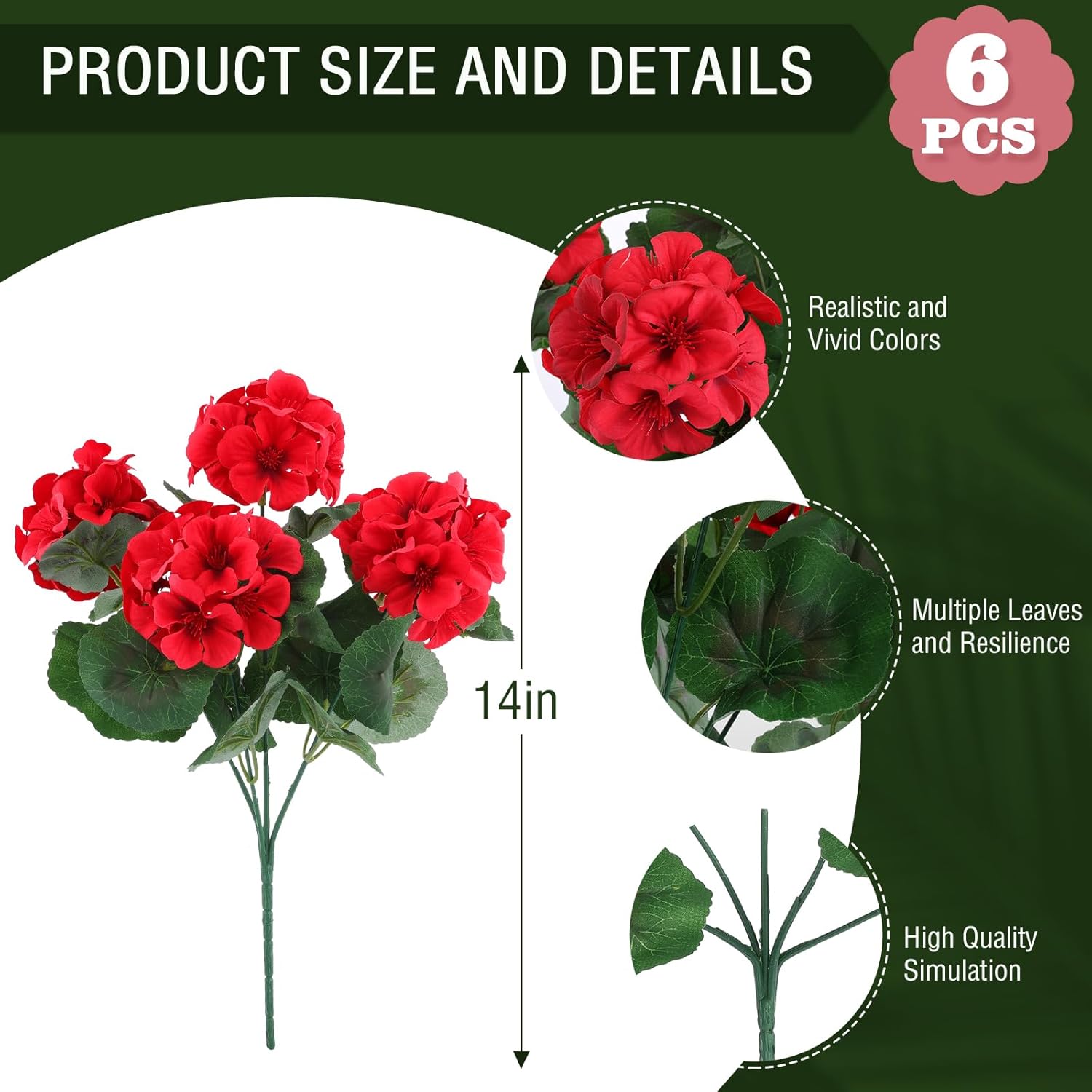
Faux geraniums read differently: more structured, more upright, with tight rounded bloom clusters (called umbels) sitting above broad, distinctively patterned leaves. Those leaves are the whole game with geraniums. Reviewers across multiple geranium product lines consistently identify leaf quality as the primary realism differentiator — more than petal detail, more than color saturation. A geranium leaf has a subtle texture, a faint circular zone pattern, and a slightly waxy surface that good manufacturers replicate in PE (polyethylene, a moldable plastic that holds fine detail better than fabric) or real-touch latex. When that leaf reads as real from ten feet away, the whole arrangement reads as real. When it’s flat and shiny, nothing else compensates.
The practitioner decision frame: If your installation is viewed primarily from a distance — street-level curb view, hotel entrance, event exterior — petunias win on visual mass and drama. If your installation is viewed up close — a porch sitting area, a boutique storefront, a residential front door flanked by planters — geranium leaf detail earns you the “wait, are those real?” reaction that justifies premium product spend.
Realism Markers to Read Before You Buy
You’re often making this call from product photos alone. Here’s what to interrogate in each category.
For faux petunias:
- Petal layering — real petunias have slightly ruffled or veined petals. Flat, uniform petals read as obviously fake from six feet.
- Stem articulation — good baskets have stems that bend and separate individually, not a rigid mass. Wire-reinforced flexible stems let you “open” the arrangement post-shipping.
- Basket backing — some baskets use a moss-lined back (real or faux sphagnum moss) that dramatically improves the illusion that the plant is growing from soil. This is worth paying for.
For faux geraniums:
- Leaf surface texture and zonal patterning — the concentric ring pattern on a geranium leaf is distinctive and hard to fake cheaply. Check the product photos for that detail at close zoom.
- Bud cluster density — real geranium umbels are dense. Sparse clusters that let you see through to the stem read as artificial immediately.
- Stem length vs. planter depth — this is a recurring complaint across multiple geranium products: stems frequently run shorter than expected for deep planters. If your planter is deeper than six inches, plan to add a filler base (floral foam, decorative rock, or a plastic pot riser) before you finalize your stem selection.
One reviewer technique worth passing along: geranium bud clusters often arrive compressed from packaging. A brief pass with a hairdryer on low heat — ten to fifteen seconds per cluster — relaxes the fabric and lets the blooms open to their natural shape. This works reliably on polyester bloom clusters without damaging the material.
Performance by Tier: Budget, Mid-Range, and Premium
The three sections below correspond to distinct performance tiers because the gap between them is significant enough to change how you plan replacements, how often you spend, and what climates each tier is actually suited for. As The Spruce notes in “Best Artificial Outdoor Plants of 2025,” UV degradation is the primary failure mode for outdoor faux botanicals — and not all “UV resistant” labeling delivers equivalent performance.
Budget Tier: Single-Treatment UV, One-Season Expectation
Entry-level faux outdoor baskets use a single UV-inhibitor treatment applied either to the dye bath or as a surface coating after construction. In practice, single-treatment products in full-sun Southern exposures show visible fade within one outdoor season — roughly 1,400 to 1,800 hours of direct sun in US South or Southwest climates. Warm tones fade fastest: the pigments used to achieve saturated reds, oranges, and deep pinks are chemically less stable under UV than whites, creams, and cool purples. A buyer who places a red faux geranium in a south-facing window box in May may have an orange geranium by September. Good Housekeeping, in “Do Artificial Plants Fade in the Sun?,” confirms that colorfast performance varies by pigment chemistry, not just surface coating — a distinction that matters most at the budget tier, where manufacturers control cost by treating the coating alone.
Who this tier is right for: Renters who can’t make permanent modifications, seasonal event decorators who need one strong visual season and then retire the product, and buyers in partially shaded installations (north-facing porches, covered entryways) where UV load is low enough to extend the product’s usable life.
Petunias vs. geraniums at this tier: Petunias hold up slightly better in the budget tier because their realism isn’t primarily carried by leaf detail. A slightly faded petunia bloom cascade still reads as lush from the street. A faded geranium leaf loses its waxy surface quality quickly, and the zonal pattern that makes the leaf convincing at close range becomes a flat smear of color.
Alupssuc
$18.98
In stock on Amazon
Check price on AmazonMid-Tier: Double UV Treatment, Two-to-Three Season Performance
Mid-range faux outdoor botanicals use a double UV-resistant process — a second UV-inhibitor treatment in the dye bath or as a second coating pass — that meaningfully extends colorfast performance. Good Housekeeping’s reporting in “Do Artificial Plants Fade in the Sun?” notes that addressing both pigment chemistry and surface coating is what separates genuine multi-season performance from single-season products with premium-sounding labels.
Buyers in punishing Southern-exposure installations who specifically sought out double UV-resistant labeled products report two to three seasons of acceptable color in climates where single-treatment products failed within one season. This is the threshold where the cost-per-season math shifts: a product that costs twice as much but lasts three times as long is genuinely more economical.
UV fade window by color and treatment tier:
| Color family | Single UV treatment | Double UV treatment |
|---|---|---|
| Red / orange / hot pink | 1 season typical | 2–3 seasons reported |
| Purple / lavender | 1–2 seasons | 2–3 seasons |
| White / cream / pale yellow | 2–3 seasons | 3+ seasons |
Based on aggregated buyer review patterns cross-referenced with reporting from The Spruce (“Best Artificial Outdoor Plants of 2025”) and Good Housekeeping (“Do Artificial Plants Fade in the Sun?”).
Storm and wind performance at this tier: A hanging basket — typically 12 to 18 inches in diameter, suspended on a chain or hook — acts as a wind sail in summer storms. Mid-tier baskets with integrated chain attachment points (where the chain is woven into the wire basket frame rather than clipped through a liner) perform meaningfully better in high-wind events than budget baskets with hooked attachments. The basket frame is the structural variable; the flowers are passengers. Check attachment point construction before you buy.
Petunias vs. geraniums at this tier: Both flower types perform well with double UV treatment. The choice defaults back to viewing distance: petunias for visual volume from the street, geraniums for close-range realism on a sitting porch or boutique entrance.
Hananona
$23.99
In stock on Amazon
Check price on AmazonPremium Tier: PE Leaf Construction, Real-Touch Latex, Structural Basket Frames
Premium faux outdoor botanicals separate themselves primarily through material science, not just UV treatment. Apartment Therapy, in “How to Make Faux Plants Look Real Outside,” specifically recommends mixed real-and-faux arrangements as a way to extend the realism illusion for close-up viewing — noting that textural contrast between real soil, live foliage, and faux blooms helps all elements read as more natural. That recommendation points toward the premium tier, where faux material quality is sophisticated enough to hold up under direct comparison with living plants.
The key material upgrades at this tier:
- PE (polyethylene) leaf construction — molded rather than cut from fabric, PE leaves hold fine surface detail including the subtle texture and zonal ring pattern that defines a convincing geranium leaf. From 18 inches away, a PE geranium leaf is genuinely difficult to distinguish from the real thing.
- Real-touch latex bloom coatings — a thin latex layer over polyester petals adds the slight waxy resistance that fabric alone can’t replicate. This is the finish that earns the “wait, can I touch it?” reaction from guests.
- Heavy-gauge integrated basket frames — premium hanging baskets use powder-coated steel frames with chain attachment points welded or crimped directly into the frame, not clipped. These survive repeated season-long wind exposure without structural fatigue.
House Beautiful, in “The Best Faux Flowers That Look Shockingly Real,” notes that the most common buyer regret isn’t choosing the wrong flower type — it’s underspecifying for light exposure and overestimating how forgiving lower-treatment products will be in direct-sun installations. The premium tier is specifically for buyers who’ve made that mistake once and don’t intend to make it again.
Anchoring stems in deep planters: Premium faux geranium stems typically run 14 to 18 inches, but planter depth still matters. For planters deeper than eight inches, use a plastic pot riser or a foam base to bring stem tips to the appropriate depth. For fixed installations — hotel planters, retail displays — quick-set cement poured around a foam base provides permanent anchoring. In mixed real-and-faux installations, push faux geranium stems into the live plant’s root mass; the root structure provides natural anchoring and the live foliage makes the faux stems read as part of a continuous planting, a technique endorsed in Apartment Therapy’s “How to Make Faux Plants Look Real Outside.”
Petunias vs. geraniums at the premium tier: Geraniums are the stronger premium-tier investment for close-range installations. The PE leaf and real-touch latex construction justify the premium price point precisely because those materials are being scrutinized up close. For distance-viewed installations, premium petunias with real-touch coatings and moss-lined basket backs are genuinely hard to distinguish from real trailing petunia baskets at 20 feet.
Hananona
$44.99
In stock on Amazon
Check price on AmazonThe Decision Frame: Matching Flower Type to Your Situation
The clean if-then logic:
Full direct sun (6+ hours/day), warm climate (Southeast, Southwest, Texas corridor): Prioritize double UV-resistant labeling over flower type. Choose white, cream, or lavender colorways if you want multi-season performance — or accept a one-season replacement cycle for warm tones and price accordingly.
Realism at close range is your primary goal — residential porch, boutique storefront, hotel entrance where guests pass at arm’s length: Geraniums, with PE or real-touch latex leaf construction. Flat polyester geranium leaves don’t survive close scrutiny.
Visual volume from a distance is your primary goal — event exterior, venue entrance, street-level curb appeal: Petunias. A full trailing petunia basket reads as lush from 30 feet in a way that a geranium cluster doesn’t. Wire-reinforced stems let you shape and maximize the cascade.
Deep planters: Build in a riser or foam base before finalizing stem-length decisions. Verify individual product stem lengths — a 12-inch stem disappears into a 10-inch-deep planter with nothing to show.
Hybrid real-plus-faux installations: Geraniums are the better candidate. Their upright structure and distinct leaf shape integrate naturally with live trailing plants, and their stem format pushes into existing root zones more cleanly than a full hanging basket format.
Frequently Asked Questions
How long do faux outdoor geraniums and petunias last in direct sun before fading? Single-treatment UV products in full-sun Southern exposures typically show visible fade within one outdoor season — approximately 1,400 to 1,800 hours of direct sun. Double-treatment products extend to two or three seasons in the same conditions, as reported across buyer review patterns and confirmed by Good Housekeeping in “Do Artificial Plants Fade in the Sun?” and The Spruce in “Best Artificial Outdoor Plants of 2025.” White and cool-toned colorways outlast reds and oranges regardless of UV treatment tier.
How do I assemble and fluff a faux hanging basket so it looks full and natural? Most compressed baskets need manual fluffing post-shipping. Separate each stem individually — don’t pull from the mass. Bend wire-reinforced stems outward and downward to create the cascade. For geranium bloom clusters, a brief pass with a hairdryer on low heat (ten to fifteen seconds per cluster) relaxes compressed buds to their open shape. Rotate the basket and evaluate from eye level and below — hanging baskets are viewed from underneath as often as straight-on.
Can I leave faux hanging baskets outside through rain and wind all summer? Yes, with caveats. Quality outdoor-rated baskets are designed for all-weather exposure. Rain doesn’t damage UV-treated polyester or PE construction. Wind is the structural variable — integrated chain attachment points outperform clipped-through-liner attachments in sustained wind. During high-wind weather advisories, bringing baskets inside remains the safest approach even for well-constructed products.
What does “UV resistant” mean, and do reds fade faster than whites? “UV resistant” means the product has been treated with a UV inhibitor that slows photodegradation. “Double UV resistant” indicates a second treatment pass, extending the fade window. Yes, color matters significantly: the pigments used for reds, oranges, and hot pinks are chemically less UV-stable than those used for whites, creams, and cool purples. Good Housekeeping’s “Do Artificial Plants Fade in the Sun?” confirms that colorfast performance varies by pigment chemistry, not just coating — buyers in high-sun climates specifically report warm-tone arrangements fading to an orange cast within a single season.
How do I anchor faux flower stems in a planter so they don’t tip or blow over? Press stems into dry floral foam, then pack decorative gravel around the foam surface for weight. For deeper planters, use a plastic pot riser to bring the foam base up to an appropriate depth. In mixed real-and-faux installations, push faux stems into the live plant’s root mass — the root structure provides natural anchoring, as noted in Apartment Therapy’s “How to Make Faux Plants Look Real Outside.” Quick-set cement poured around a foam base is the most permanent solution for fixed installations where the arrangement won’t be changed seasonally.