August 5, 2026 • Celeste Morrow • 11 min reading time • Prices verified June 6, 2026
Faux Hydrangeas for Every Budget: Silk vs. Latex Real-Touch Head-to-Head
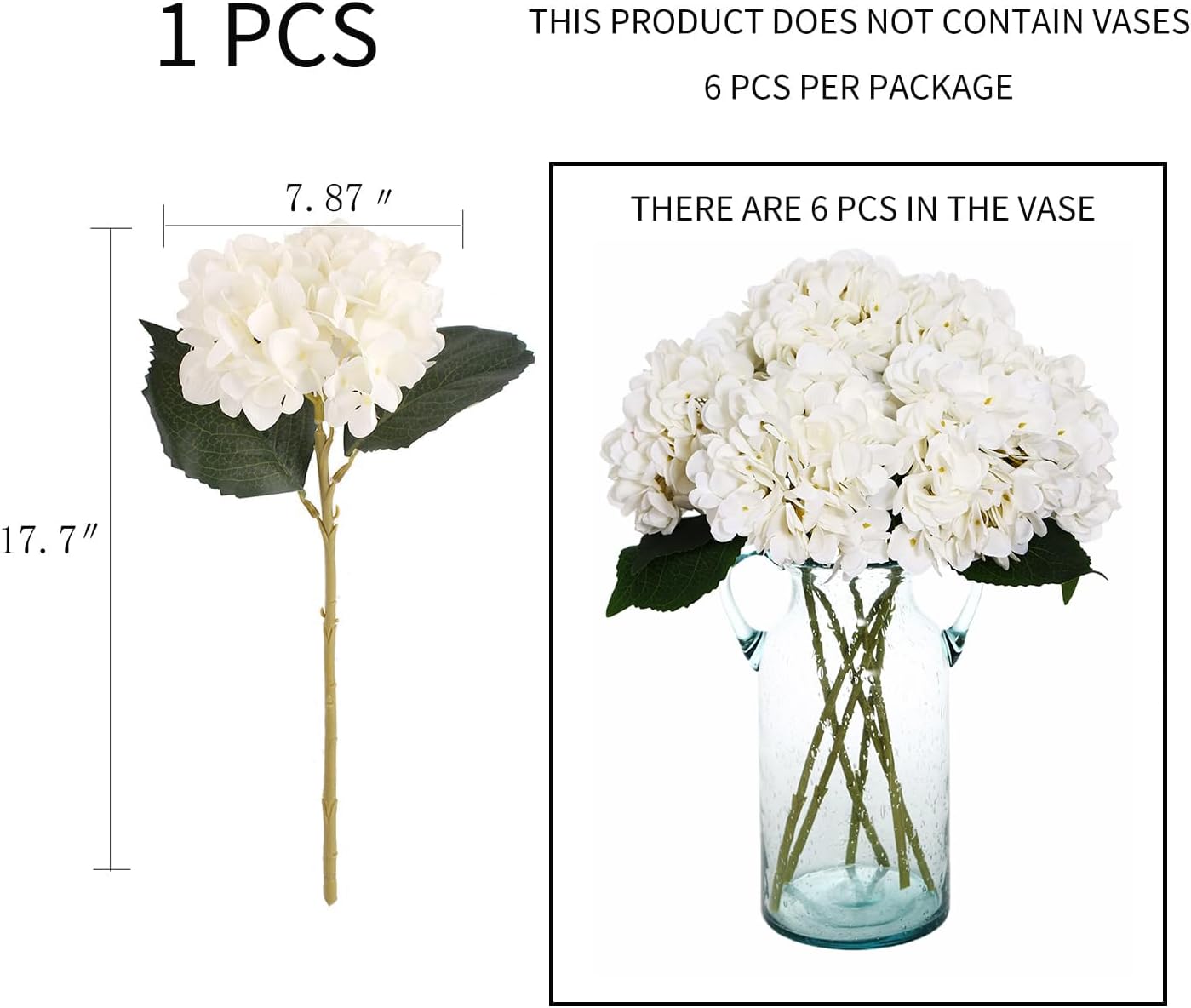
Faux hydrangeas — artificial versions of the large, globe-shaped flower heads that are a staple of both home decorating and event design — have become one of the most searched categories in the faux botanicals market. And for good reason: a single head is big enough to anchor a whole vase, they pair well with almost everything, and the real thing dies frustratingly fast. But “faux hydrangea” covers a wide range of materials and quality levels. The two you’ll encounter most often are silk (a woven polyester fabric stretched over a wire frame, sometimes called polysilk) and latex real-touch (a soft, pliable rubber-like coating applied over the fabric that mimics the waxy, slightly yielding feel of a fresh petal). That material difference turns out to matter a lot — not just for how they look, but for where they’re smart to use and what you should pay. This article compares four products that reviewers across the spectrum keep recommending, walks through the decision math for each tier, and ends with a straight answer on which material wins for which job.
The Core Material Difference, and Why It Changes Your Decision
Before running the comparison, it’s worth naming exactly what you’re buying when you choose silk versus latex real-touch, because the terminology on product pages is inconsistent enough to cause real ordering mistakes.
Standard silk stems — the category that includes products like Kimura’s Cabin silk hydrangeas — are fabric over wire. The petals are cut, dyed, and heat-pressed into shape. Quality markers to look for in product photos: visible petal-edge detail (a slightly irregular, crinkled margin looks more natural than a perfectly smooth cut), multi-tone color printing rather than a flat single hue, and stem wrapping that extends all the way down rather than stopping halfway. The Spruce, in their “Best Artificial Flowers of 2025” roundup, consistently flags stem wrapping depth as a proxy for overall construction quality — a useful filter when comparing listings side by side.
Latex real-touch products add a coating step. The latex layer gives petals a subtle give when pinched — closer to the soft resistance of a fresh hydrangea floret. It also holds color differently: buyers of Artflower real-touch stems specifically call out color vibrancy as a standout quality, and several note the texture registers as genuinely soft rather than stiff. The Martine Mall latex hydrangeas have generated some of the strongest owner language in this category — phrases like “looked and felt like real hydrangeas” — and multiple buyers report using them in actual wedding bouquets. One reviewer noted the flowers survived being dropped, which speaks directly to the coating’s durability under real handling conditions.
Vase-set products — like those from Hollyone — sit in a third category: pre-arranged stems set in a faux-water acrylic base. The acrylic is poured and hardened to simulate a water-filled vase. These aren’t competing with loose stems on realism of the flower itself; they’re competing on convenience and placement stability.
Side-by-Side: Four Products Across the Realism Spectrum
The four options below represent distinct tiers of the faux hydrangea market. Understanding where each sits helps you match product to project rather than overbuy or undersell.
Kimura’s Cabin Silk Hydrangeas — Everyday Fill and Volume Work
Kimura's
$18.99
In stock on Amazon
Check price on AmazonKimura’s Cabin is the product that buyers reach for when fullness-per-dollar is the primary decision variable. Owners consistently report satisfaction for everyday decor — a bookshelf cluster, a seasonal centerpiece that will be swapped out, a volume fill for a large venue install where per-stem cost matters. The price-to-fullness ratio is genuinely strong: the heads are substantial enough to carry a standard 6-inch vase without needing filler.
Typical price range: approximately $8–14 per stem, depending on bundle size and retailer.
What it does well: Head size, stem count per order, and color range make this the default choice for high-volume installs. For installations where guests will be at arm’s length or farther — stage backdrops, elevated shelf arrangements, ceremony arches seen from a seated position — the silk-versus-latex realism gap is functionally invisible.
The honest trade-off: Stem length runs long for shorter vases, requiring cutting. That’s a minor issue for anyone with wire cutters, but worth noting if you’re outfitting a venue with uniform low vase arrangements and need to cut 30 stems to the same height before an event. More importantly, the petal surface reads as fabric when touched up close. House Beautiful, in their “Best Faux Flowers That Look Surprisingly Real” guide, explicitly identifies touch-resistance as the key separator between arrangement-grade and bouquet-grade artificial flowers — a distinction Kimura’s Cabin straddles depending on how closely the installation will be scrutinized.
Best for: Shelf vases, dorm rooms, high-volume venue fills, any installation viewed primarily from a distance.
Kimura's
$18.99
In stock on Amazon
Check price on AmazonMartine Mall Latex Real-Touch Hydrangeas — Bouquet-Grade Handling
Hollyone
$28.99
In stock on Amazon
Check price on AmazonThe Martine Mall option occupies the mid-to-premium end of the latex real-touch tier and draws a specific kind of buyer enthusiasm: people who need stems to survive actual handling. Owner reviews are notably more likely to mention wedding use — real bouquets, real events, real people reaching out to touch the flowers — and the drop-survival anecdote is operationally meaningful. Things get handled roughly at weddings. A stem that survives being dropped and looks untouched afterward is a practical advantage that justifies the price gap over silk.
Typical price range: approximately $18–28 per stem.
What it does well: Brides magazine, in their “Best Artificial Wedding Flowers” roundup, notes that latex real-touch materials represent the current practical ceiling for faux bouquet realism, specifically because the tactile experience matches visual expectations when guests lean in close. That alignment — looking real and feeling real simultaneously — is what justifies the per-stem premium for client-facing work. Martine Mall reviewers are the segment most likely to report having used the stems in actual wedding bouquets with positive outcomes.
The honest trade-off: Cost per stem is meaningfully higher than silk. For backdrop fills or elevated installations viewed from distance, that premium buys you little. It pays off specifically in contexts where the flower will be touched, held, or photographed at close range.
Best for: Wedding bouquets, bridal table arrangements, boutonnières, close-contact tablescapes, any context where guests will handle or closely inspect the flowers.
Hollyone
$28.99
In stock on Amazon
Check price on AmazonArtflower Real-Touch Hydrangeas — Color-Forward Multi-Stem Projects
Hollyone
$28.99
In stock on Amazon
Check price on AmazonArtflower buyers gravitate toward color and multi-stem palette planning more than any other segment. The pattern in reviews: people buy one color, are satisfied with the vibrancy, and immediately plan to order additional colorways. That’s a useful signal for designers building a palette across a project — the colors appear to hold up to comparison across multiple orders rather than drifting between batches.
Typical price range: approximately $16–26 per stem.
What it does well: Apartment Therapy, in their “Best Faux Plants That Look Incredibly Real” feature, notes that the distinguishing mark of quality latex products is color depth in the shadows of the bloom — the slightly darker tone at the base of a floret cluster — rather than surface sheen alone. Artflower stems consistently receive owner praise for exactly this quality: tonal variation within a single flower head rather than flat, single-hue color. That depth reads convincingly in both ambient light and photography.
The honest trade-off: Artflower and Martine Mall occupy similar material territory. Artflower reviews skew toward color satisfaction; Martine Mall reviews skew toward durability under handling. If your primary concern is palette fidelity across a multi-stem order, Artflower earns the nod. If your primary concern is physical durability in a bouquet context, Martine Mall has the stronger track record in owner reports.
Best for: Color-forward arrangements, multi-stem palette projects, tablescapes where visual vibrancy is the primary goal.
Hollyone
$28.99
In stock on Amazon
Check price on AmazonHollyone Vase Set — Zero-Effort Placement
Real
$29.98
In stock on Amazon
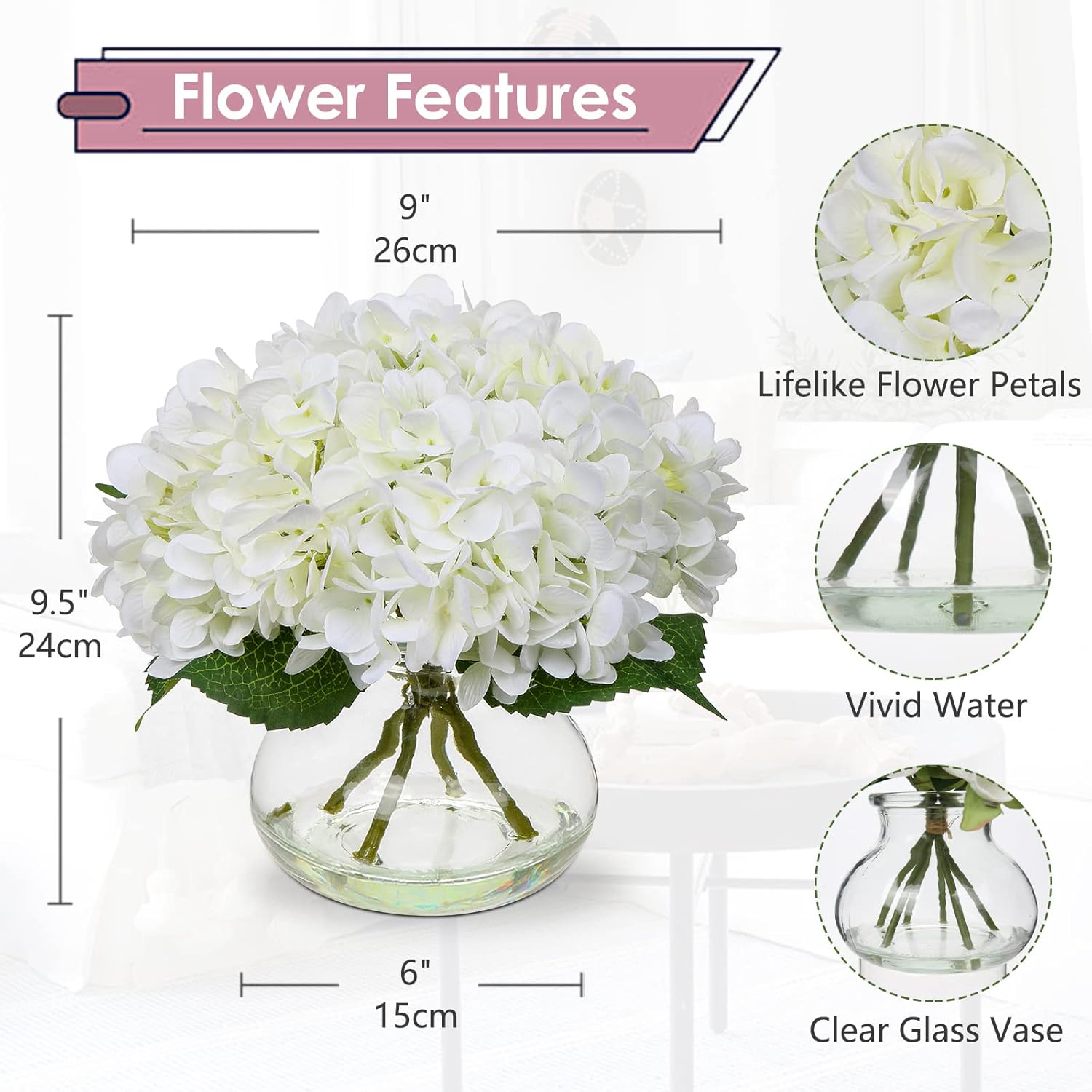
Check price on AmazonThe Hollyone vase set generates a specific kind of owner enthusiasm that’s different from the stem-by-stem products. Reviewers mention specific rooms — guest bedrooms, entry tables, nightstands — and describe the product in placement terms rather than arrangement terms. This is the product for someone who wants a finished object they can set down and walk away from, not a building block for a custom arrangement.
Typical price range: approximately $25–45 per set.
What it does well: The acrylic water illusion holds up well at normal viewing distances and in ambient light — reviewers consistently describe it as convincing from a standing position. The pre-arranged format eliminates all arrangement labor, which has real value for guest rooms, lobby side tables, or any placement context where low maintenance is the point.
The honest trade-off: Under direct light at close range, or in macro photography, the solid acrylic can be distinguishable from actual water. For a guest bedroom nightstand — a low-traffic, ambient-light context — this is a non-issue. For a bridal suite where a photographer will be shooting macro detail shots of the room, it’s a risk worth flagging to the client in advance. Stem cutting and rearrangement are also not options once the acrylic has set.
Best for: Guest bedrooms, entry tables, lobby side tables, any placement where a finished, maintenance-free object is preferred over a custom arrangement.
Real
$29.98
In stock on Amazon
Check price on AmazonMixing Stems Across Brands: Greenery, Filler, and Color Temperature
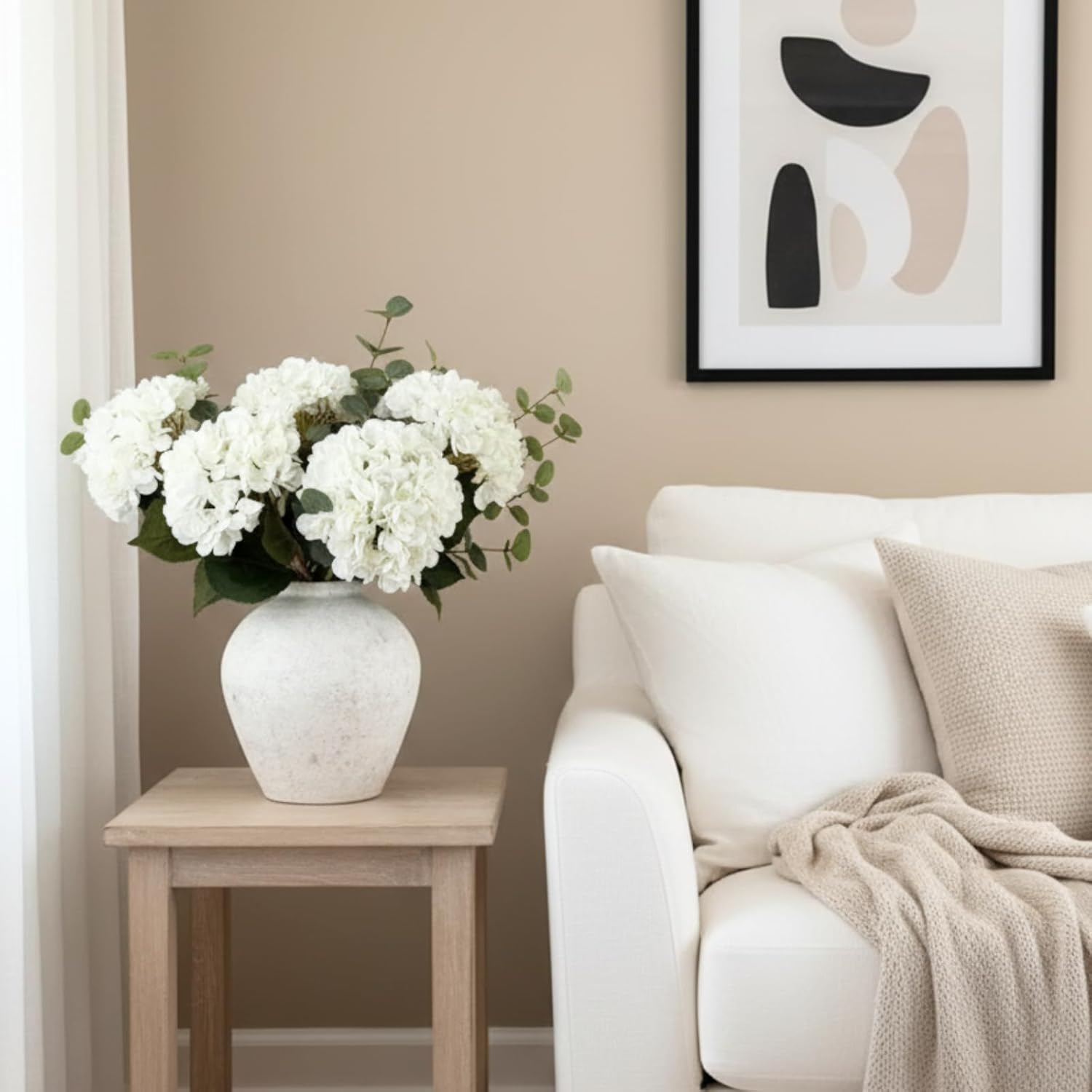
One of the most consistent patterns across reviews of all four products: buyers spontaneously mention adding eucalyptus or baby’s breath to extend their hydrangea arrangements. This isn’t a coincidence. Hydrangea heads are volumetrically generous but structurally uniform — all bloom, no textural variation. Eucalyptus adds line and leaf texture; baby’s breath adds airy depth between the large heads.
The practical question for practitioners is whether stems from different brands and material tiers mix visibly. The answer from aggregated buyer experience: at the arrangement level, stem mixing is rarely an issue. The eye resolves toward the fullest, most prominent element — usually the hydrangea head — and differences in stem construction quality below the waterline are literally invisible. Above the waterline, the main risk is color temperature mismatch: a warm-toned silk hydrangea paired with a cool-toned latex eucalyptus can read as mismatched even if both are nominally “green.” When color precision matters, order secondary filler stems from the same brand as your primary hydrangeas, or request a test stem before committing to volume.
The Decision Frame
The material gap between silk and latex real-touch is real and measurable in owner experience. The question isn’t which is better in the abstract — it’s whether your use case will reveal the difference.
- Volume fills, backdrops, elevated installations, any viewing distance beyond 3 feet: Kimura’s Cabin silk. The fullness-to-dollar math favors it, and the realism gap from latex is invisible at distance.
- Bouquets, bridal arrangements, close-contact tablescapes, any context where guests touch or photograph up close: Martine Mall or Artflower latex real-touch. The tactile realism closes the gap that visual realism alone cannot.
- Guest rooms, lobby tables, zero-effort placements: Hollyone vase set. Just brief clients about macro photography if that’s relevant to their context.
When the use case won’t reveal the difference, pay less. When it will, pay more — and explain why to your client.
Frequently Asked Questions
How many hydrangea stems do I need to fill a standard vase? For a standard 6–8 inch opening vase, three to five heads is the range most owners land on. Three creates a clean, structured look; five gives a fuller, garden-gathered effect. If you’re adding eucalyptus or baby’s breath as filler, start with three hydrangea heads and build outward.
What is the difference between silk and latex real-touch hydrangeas in terms of feel and appearance? Silk hydrangeas have fabric petals — they feel like a soft, slightly stiff textile when touched, and at close range the weave texture is sometimes visible. Latex real-touch hydrangeas have a coating that mimics the slight give and smoothness of a fresh petal. Both can photograph convincingly, but latex holds up better when someone reaches out and touches the arrangement.
Will latex real-touch hydrangeas work in a wedding bouquet? Latex real-touch options — specifically Martine Mall and Artflower — have been used in actual wedding bouquets by multiple reviewers with consistently positive results. Silk options are less well-suited to bouquet use, where handling and close-range inspection are both likely. Brides magazine’s artificial wedding flowers coverage specifically identifies latex real-touch as the practical ceiling for faux bouquet realism.
Do the vase-set hydrangeas with acrylic water look realistic? At normal viewing distances and in ambient light, the acrylic water illusion is convincing — reviewers consistently describe it as realistic from a standing position. Under direct light at close range or in macro photography, the solid acrylic can be distinguishable from actual water. For everyday home placement, it’s a non-issue. Flag it to clients in advance for photography-heavy contexts.
Can I mix hydrangea stems with faux greenery from different brands? Yes, and most experienced buyers do. The main risk is color temperature mismatch rather than material incompatibility. When color precision matters, source secondary filler stems from the same brand as your primary hydrangeas, or order a test stem before committing to volume.
Are the stems long enough to cut down for shorter vases? For Kimura’s Cabin silk, reviewers note that stems run long and cutting is often necessary for shorter vases — which means there’s plenty of length to work with, but wire cutters are useful to have on hand. Latex real-touch stems are similarly flexible for cutting. For pre-set vase products like Hollyone, cutting isn’t applicable since the stems are fixed in the acrylic base.