September 26, 2026 • Celeste Morrow • 10 min reading time • Prices verified June 6, 2026
Faux Tulips Buyer's Guide: PU Real-Touch vs. Silk and the Smell Problem Nobody Warns You About
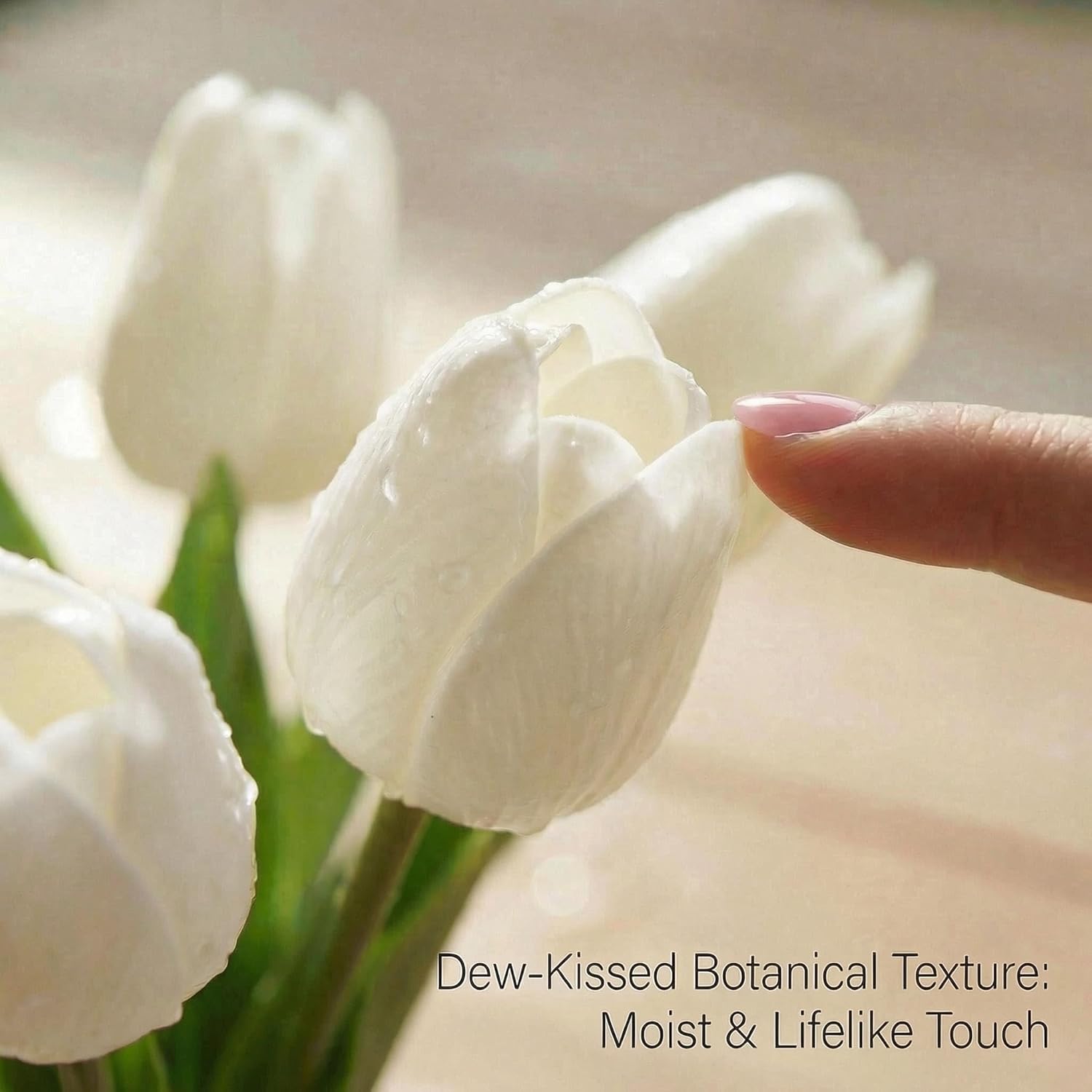
If you’ve ever bought fake flowers and been pleasantly surprised at how real they looked in the product photo — only to discover a very chemical-forward odor waiting for you inside the box — you’ve already encountered the central tension of modern faux tulips. Two dominant materials compete in this category right now. Silk (or polysilk) is the traditional choice: lightweight, matte, and soft, with a fabric-like texture that most people recognize from craft-store stems. PU, short for polyurethane, is the newer challenger: it’s a flexible rubber-foam compound molded directly around a petal shape, which is why it’s also called “real-touch” — the surface mimics the waxy, slightly cool feel of a live tulip petal far more convincingly than woven fabric ever could. This guide is for buyers who’ve moved past the basic question of “real vs. fake” and are now asking the harder one: which faux tulip, at which price point, for which situation — and what are the traps nobody puts in the product listing?
| EDITOR'S PICKSggvecsy 30 Pcs Fake Tulips Art… | Mid-tierMandy's White Artificial Tulips… | Budget pickSITUMEIZI Fake Flowers Tulips A… | |
|---|---|---|---|
| Stem count | 30 | 20 | 15 |
| Height | — | 13.5 in | 14 in |
| Colors | — | White | Assorted |
| Price | $21.99 | $19.99 | $9.99 |
| See on Amazon → | See on Amazon → | See on Amazon → |
Why the Material Difference Actually Matters at Point of Purchase
The practical case for PU over silk isn’t just tactile snobbery. It’s about the specific failure modes each material has, and which failure mode matters more for your use case.
Silk tulips hold their shape better out of the box, are lighter (easier to ship and stage), and carry essentially no odor. Their weakness is the realism ceiling: under close inspection — table settings, boutique display cases, photographed centerpieces — the fabric weave and painted petal edges tend to read as artificial. Apartment Therapy, in their guide “How to Make Fake Flowers Look Real,” consistently notes that silk botanicals benefit from mixed-media staging (real greenery, natural-fiber vessels) precisely because the material alone doesn’t close the realism gap.
PU real-touch tulips cross that realism ceiling. The molded foam petals have the slight translucency, the reflexed curl at the tip, and the waxy cool-to-the-touch quality that make people do a double-take. The Spruce, in their roundup “The Best Artificial Flowers of 2025,” flags petal coating and surface texture as the primary realism markers that distinguish premium-tier fakes from craft-store stock — and PU wins that comparison consistently.
The tradeoffs PU brings: higher per-stem cost, heavier weight, packaging compression that always requires reshaping, and — in some formulations — a meaningful chemical off-gassing odor. That last point is not minor, and it’s what the rest of this guide is largely about.
The Smell Problem: What Reviews Actually Say
Across aggregated buyer reviews, the odor issue is the sharpest dividing line in the PU tulip category — and it maps almost entirely to the specific product, not to PU as a material class. The three products most discussed in this space land in meaningfully different places on this variable, which is why a side-by-side breakdown is more useful than a general verdict.
Mandy’s PU Tulips — The Odor-Risk Option
Reviewers of Mandy’s faux tulips consistently describe a strong chemical smell requiring several days of open-air ventilation before the stems are usable indoors. Multiple independent reviewers across different purchase windows describe the same timeline: the odor is noticeable on unboxing, reduces significantly after 48–72 hours of outdoor or well-ventilated airing, and largely dissipates within a week. No one in the review pool describes it as permanent — but several note it was genuinely disqualifying for immediate-use scenarios like wedding prep or gift-giving.
Mandy’s does review well on color accuracy and petal droop naturalism once properly prepped, which is why it remains a viable option when airing time is available. But the odor is real, product-specific, and worth treating as a planning variable rather than a defect you hope to avoid.
SITUMEIZI
$9.99
In stock on Amazon
Check price on AmazonSITUMEIZI PU Tulips — The Zero-Odor Middle Option
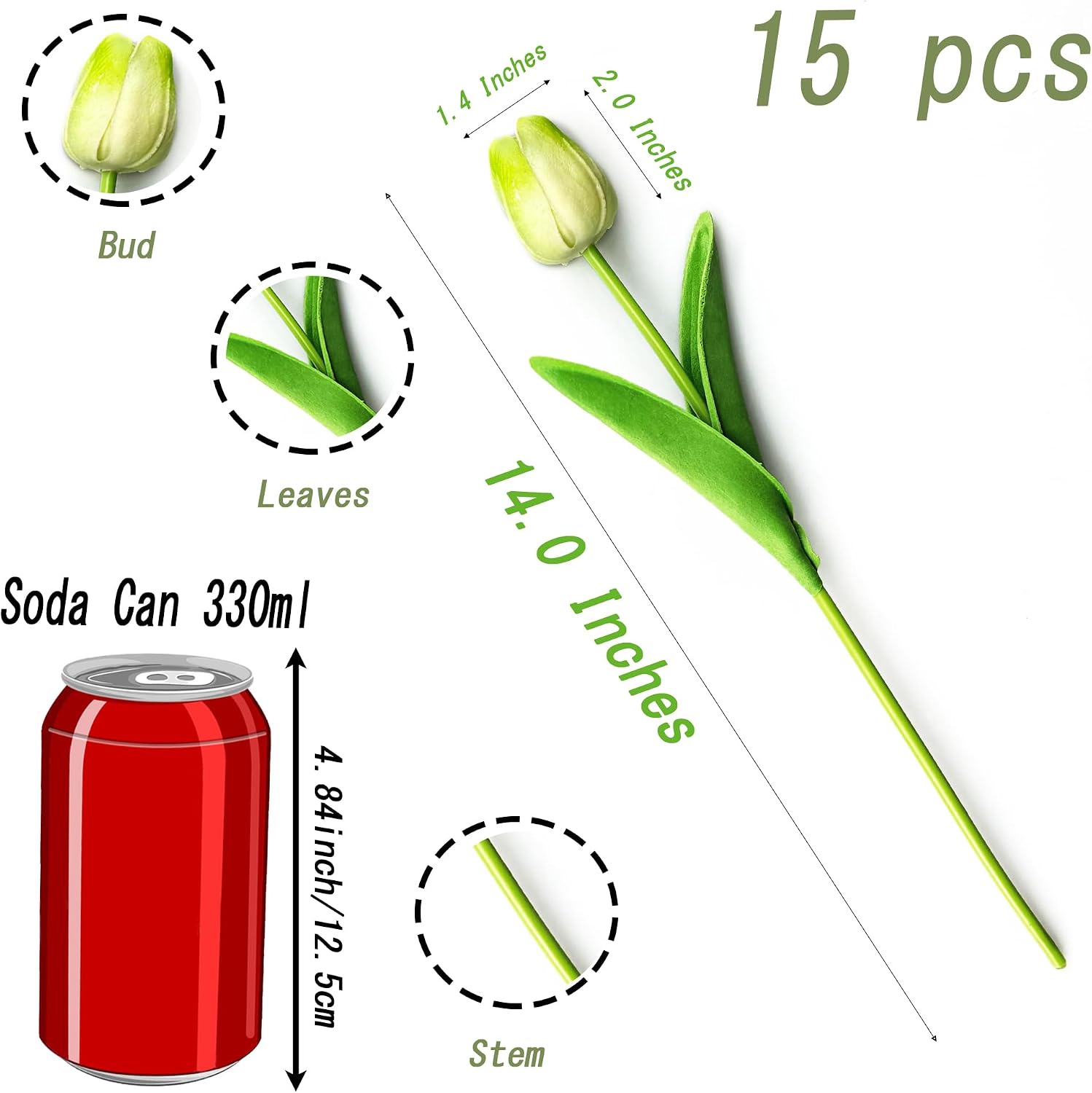
SITUMEIZI reviewers tell a markedly different story. Zero odor on arrival is called out explicitly — not just as an absence of a negative, but as a positive selling point worth mentioning. If you’re sourcing for a same-week event, a client’s home where you won’t have airing time, or a gift context where an off-gassing bundle would be embarrassing, SITUMEIZI’s track record on this specific variable matters.
One logistics detail worth flagging: a single bundle of SITUMEIZI tulips is proportioned for a smaller vessel. Reviewers specifically call out that you need two bundles to fill a standard centerpiece vase — defined in context as a medium-diameter opening, roughly the kind of cylindrical glass vase common on wedding tables. House Beautiful, in their feature “The Best Artificial Plants and Flowers,” notes that the stem-count-to-vase-diameter ratio is the most common miscalculation buyers make when purchasing faux florals online, particularly when product photography omits scale references. This directly affects your true cost calculation for SITUMEIZI.
Mandy's
$19.99
In stock on Amazon
Check price on AmazonSggvecsy PU Tulips — The High-Reorder Option
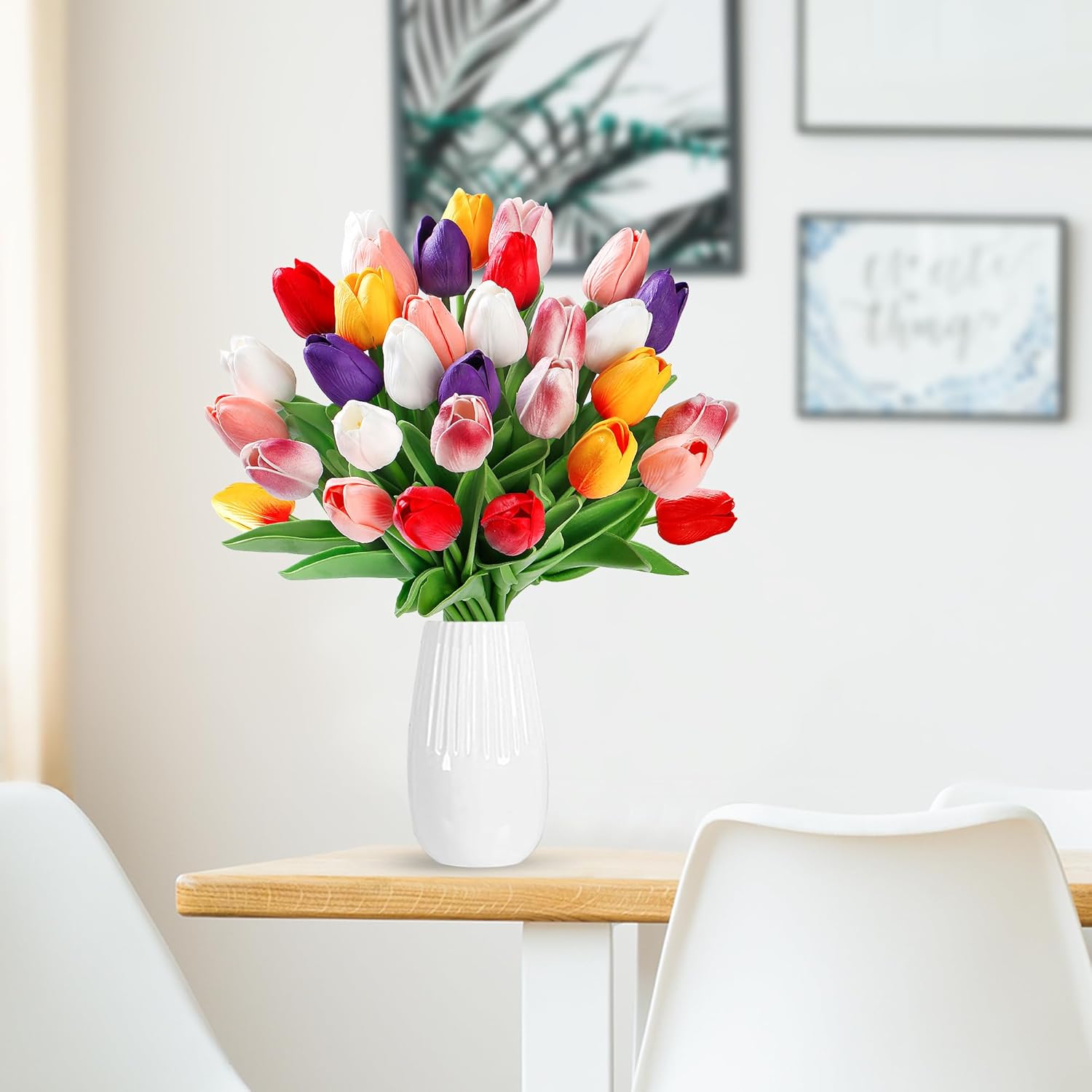
Sggvecsy reviewers don’t flag odor as a significant issue. What they do flag — repeatedly, and with evident surprise — is the foam texture itself. Reviewers describe the petal feel as “rubbery” in a way they didn’t expect from product photos, and the consistent tone is that the surprise resolved in the product’s favor: the texture reads as more realistic than traditional silk, not less. Multiple reviewers describe reordering behavior, which in aggregated review analysis is one of the stronger quality signals available when in-person evaluation isn’t possible.
Brides, in their guide “The Best Fake Flowers for Weddings,” makes a distinction that applies directly here: there’s a difference between flowers that photograph as real and flowers that hold up to handling. Sggvecsy’s reviewer pattern suggests it clears both bars — and the reorder rate is the clearest proxy for that conclusion.
Sggvecsy
$21.99
In stock on Amazon
Check price on AmazonComparison at a Glance
| Product | Odor Risk | Bundle Fill | Reorder Signal |
|---|---|---|---|
| Mandy’s | High — plan 3–7 days airing | Standard vase, single bundle | Mixed |
| SITUMEIZI | Low — reviewers flag zero odor | Needs 2 bundles for standard vase | Moderate |
| Sggvecsy | Low | Standard vase, single bundle | High reorder rate noted |
The Compression Problem and the Hair Dryer Fix
Every PU tulip bundle in this category arrives compressed. This isn’t a defect — it’s a consequence of how foam-based petals pack under shipping pressure — but it surprises first-time PU buyers who expect the stems to look display-ready on arrival, the way silk stems largely do.
The community-standard fix, appearing independently across multiple reviewer accounts for all three products: a hair dryer set to medium heat, held 6–8 inches from the petals, with gentle finger-shaping while the foam is warm. The foam’s thermoformable quality — the same property that makes PU feel lifelike — means it reshapes readily under mild heat and holds the new position as it cools. Reviewers describe this as taking 2–5 minutes per stem for fully compressed petals.
Apartment Therapy’s guide “How to Make Fake Flowers Look Real” recommends heat-reshaping as a standard prep step for any foam-based botanical, noting that the technique works because PU softens at temperatures well below what would damage the dye or the stem wire.
What this means for your workflow: If you’re building a centerpiece the morning of an event, budget 15–20 minutes of prep time for a bundle of 10 stems. If you’re staging a client install where you’d normally allow zero margin for remediation, unbox and prep the day before.
Stem count math for standard vases:
- 1 SITUMEIZI bundle: fills a bud vase or single-stem scenario
- 2 SITUMEIZI bundles: fills a standard 4–5 inch diameter centerpiece vase
- Mandy’s and Sggvecsy bundles: reviewers describe adequate single-bundle fill for standard vases, though stem count per bundle varies by product configuration
The Gift Question and the Realism Ceiling
For PU real-touch tulips, the realism bar clears the threshold that matters most in gift contexts: multiple reviewers across all three products describe situations where recipients initially weren’t certain whether the flowers were fresh. That’s the operative standard for gifting — not laboratory-grade botanical accuracy, but the moment of genuine uncertainty at arms’ length and in natural light.
Silk tulips at comparable price points don’t consistently clear that bar. The Spruce’s “The Best Artificial Flowers of 2025” identifies surface coating and petal structure as the two variables that most affect perceived realism at close range — and both favor PU over silk at equivalent price tiers.
The caveat for gifts specifically: if you’re giving Mandy’s and the recipient will open the package indoors without warning, the odor is a real risk. Either air the stems first — which means advance planning and removes the spontaneity of a same-day gift — or choose a product from the no-odor side of the comparison. SITUMEIZI and Sggvecsy both have the clean unboxing experience that gift scenarios require.
Frequently Asked Questions
Does the chemical smell go away on its own, or does it need active airing?
Based on reviewer accounts across multiple purchase windows, the odor dissipates without active intervention — but passive sitting in a closed room is much slower than active airing. Reviewers who placed stems outdoors or in a garage with airflow report the smell resolving in 2–4 days. Reviewers who left them in a bedroom describe the smell lingering for a week or more. Moving air accelerates off-gassing significantly. If time is a constraint, place stems near an open window with a fan running.
How many stems do I need for a standard centerpiece vase?
For a cylindrical vase with a 4–5 inch opening — the most common wedding centerpiece vessel — plan for 8–12 stems to achieve a full, naturalistic look. SITUMEIZI reviewers specifically flag that their bundle requires doubling up for this application. For a tighter cluster or bud-vase arrangement, 5–7 stems is usually sufficient. Tulip heads have wide, open faces compared to ranunculus or peonies, so you may need fewer stems than you’d expect at the outer edges of a full arrangement.
Can PU tulips be reshaped after shipping damage?
Yes — this is one of PU’s genuine functional advantages over silk. The foam responds to medium heat (hair dryer at medium setting, 6–8 inches away) and can be finger-shaped while warm, then holds position as it cools. Reviewers describe successfully restoring fully flattened petals to display-ready condition in under five minutes per stem. Silk stems with bent or creased petals are much harder to remediate because fabric doesn’t thermoform the same way.
What is the difference between PU and silk tulip feel?
Silk feels like fabric — light, slightly textured, warm to the touch. PU feels like the surface of a fresh petal: waxy, slightly cool, with a small amount of flex and give when pressed. Sggvecsy reviewers describe the sensation as “rubbery foam” on first contact, which sounds negative but consistently resolved as a positive surprise — the foam’s slight resistance and weight mimics the structural quality of a real petal in a way silk cannot replicate. For close-proximity arrangements — table settings, gift boxes, boutique displays — the tactile difference is substantial.
The Decision Rule
If smell is a dealbreaker (same-week event, gift context, client home you can’t revisit before install): SITUMEIZI or Sggvecsy. The no-odor reviewer pattern is consistent and product-specific.
If budget is your primary constraint and realism matters: price your true per-vase cost before choosing SITUMEIZI — two bundles per standard vase changes the math relative to the single-bundle options.
If reorder reliability and positive-surprise texture are your signals: Sggvecsy’s high reorder rate in aggregated reviews is the strongest quality proxy available short of in-person evaluation.
If you have airing time and want the widest color selection: Mandy’s odor issue is manageable with 3–7 days of ventilation, and the product reviews well on color accuracy and droop naturalism once prepped.
For any of these, budget 15–20 minutes of hair-dryer prep time per bundle. That’s not a flaw in the category — it’s the standard workflow price for foam-petal realism at this price point, and every experienced buyer treats it as routine.