September 24, 2026 • Celeste Morrow • 10 min reading time • Prices verified June 6, 2026
Mixing Real and Faux: How Buyers Are Blending Artificial Stems Into Live Arrangements
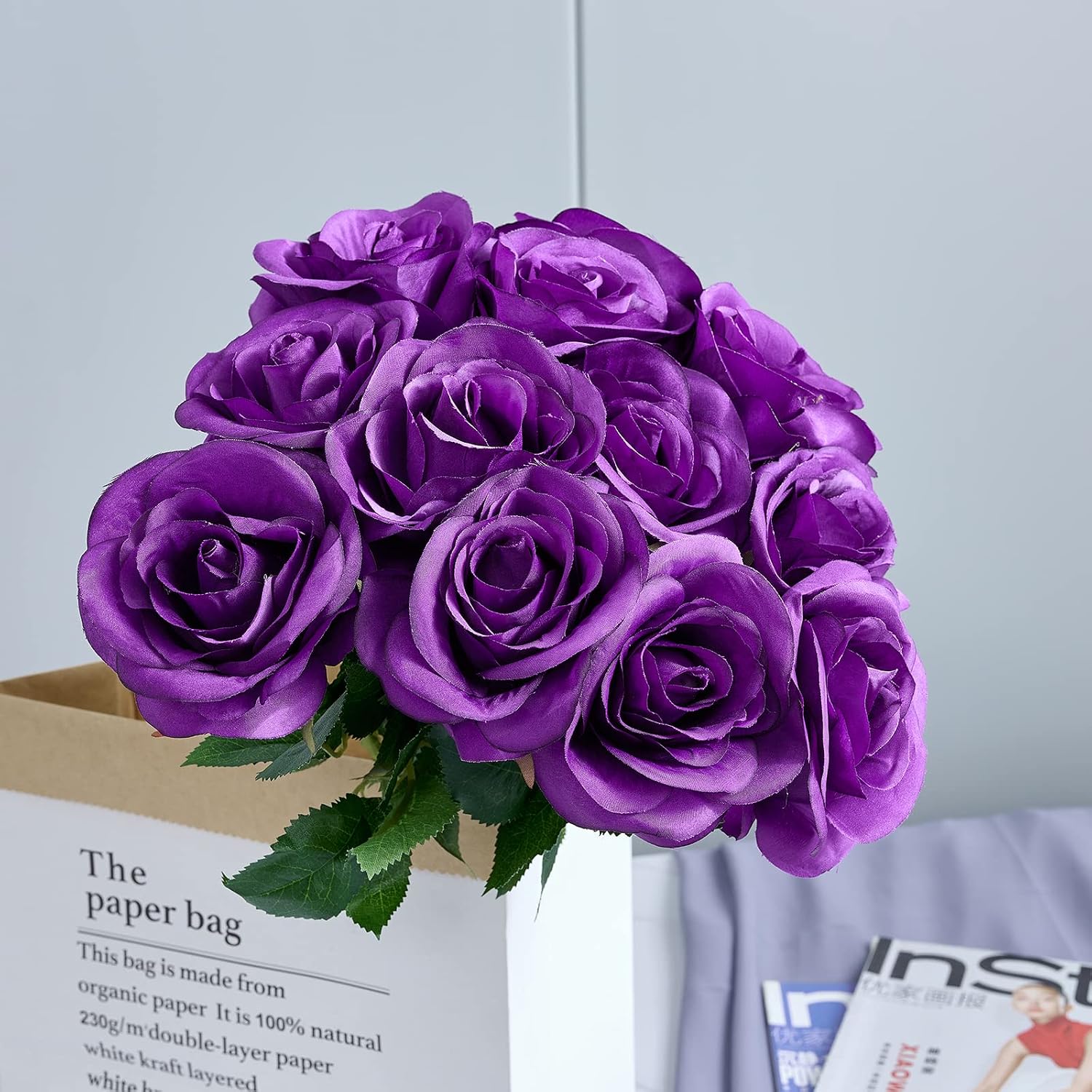
If you’ve ever stood in front of a finished centerpiece and thought, I just need three more stems of this exact shade and the florist can’t get them — you’ve already found the problem this article solves. Blending artificial flowers (also called faux, silk, or synthetic stems) into live arrangements is exactly what it sounds like: placing high-quality fake stems alongside real, fresh-cut ones in the same vase or bouquet so that the finished piece looks entirely natural. Done poorly, a single plasticky leaf can blow the whole illusion. Done well — and buyers are reporting this more and more — guests lean in for a closer look and still can’t tell. This guide is for the buyer who already understands the basics and is now trying to make the technique work reliably at the arrangement, event, or install level.
| EDITOR'S PICK12Pcs Purple Roses Artificial F… | Mid-tier6 Pcs 27" Eucalyptus Stems Gree… | Budget pickYastouay Babys Breath Artificia… | |
|---|---|---|---|
| Stem count | 12 | 6 | 6 |
| Flower type | Roses | Eucalyptus | Gypsophila |
| Stem length | — | 27" | — |
| Color | Purple | Green | White |
| Material | Silk | Silk, plastic | — |
| Real touch | ✓ | — | ✓ |
| Price | $21.99 | $19.99 | $7.99 |
| See on Amazon → | See on Amazon → | See on Amazon → |
Why the Blending Trend Is Accelerating
The sourcing math has changed. Live flower supply chains in 2025–2026 have remained volatile for specialty colors and seasonal varieties — growers at major wholesale hubs have reported allocation shortfalls on specific rose colorways (notably dusty terracotta, champagne blush, and muted mauve) that have become popular in editorial-driven event design. When a florist tells a client “I can get ivory but not terracotta,” that is a real, recurring conversation happening across the industry right now.
The practical response — one that a growing number of wedding stylists, hotel floral buyers, and DIY event planners have independently arrived at — is to fill the sourcing gap with faux stems that are close enough in texture, color, and silhouette to pass in context. Brides’ editorial coverage of wedding florals has noted that faux-fresh blending is no longer a budget workaround; it has become a legitimate design strategy for color-matching precision that live supply chains can’t always guarantee. Apartment Therapy’s interiors team has made a similar observation in home décor contexts: a long-term tablescape or console arrangement benefits from a few well-chosen faux stems that won’t wilt while the fresh flowers cycle out.
The key shift in buyer sophistication is understanding that which faux stems you choose matters enormously — and that the same pack can contain stems of wildly different realism.
The Realism Hierarchy: Which Stems Actually Fool People
Not all faux materials perform equally when placed next to live flowers. Based on patterns across aggregated buyer reviews and the sourcing guidance published by the Floral Design Institute’s materials curriculum, here is how the main categories rank for blending plausibility:
Highest blending success: real-touch latex and PE foliage Eucalyptus in particular earns consistent praise from buyers who use it in mixed arrangements. The matte, non-waxy leaf surface that quality PE eucalyptus achieves is the critical factor — reviewers repeatedly note that the stems don’t catch light the way cheaper plastic does, which is the first tell in a mixed vase. When buyers describe a faux eucalyptus as having a texture that feels “dusty” or “powdery” to the touch, that’s the PE coating doing its job. Those stems disappear into a live arrangement.
Baby’s breath is another high-performer in the blending context. Its delicate, cloud-like structure means there is almost no surface area for the eye to interrogate closely. Buyers who have arranged faux baby’s breath alongside live hydrangeas — a common pairing — report that the stems “look real and not artificial” in the finished vase. The scale works in your favor: small, airy forms are forgiving of minor material differences.
Silk roses — the category with the widest quality range — are the most conditional. Buyers of high-quality silk roses in purple and champagne colorways have reported arranging them alongside live ivory roses at wedding tables and receiving what one reviewer described as “shocked compliments” when they revealed the blended truth. The outcome depends heavily on petal coating (look for multi-layer petals with a matte finish on the outer surface), color complexity (a single flat color reads as fake immediately; graduated tones from base to tip read as real), and arrangement density (isolation exposes faux stems; clustering conceals them).
Lower blending success without intervention: standard polysilk with glossy leaves The glossy, uniform-green leaves that ship on many faux rose and peony stems are the most common blending failure point. A single shiny leaf in a vase of live foliage draws the eye. If the stem itself is convincing, it’s worth removing or trimming the attached foliage and supplementing with faux eucalyptus or live greenery instead.
A critical caution on bulk sets: Buyers of mixed eucalyptus bulk lots — the type of 100–130 piece assortment popular for event volume purchasing — have flagged an important pattern: within a single pack, material consistency varies. One reviewer of a 130-piece mixed eucalyptus assortment noted that while most varieties blended naturally, one variety in the same set read as noticeably more artificial. The implication for practitioners: before committing a full bulk lot to a high-visibility arrangement, lay the varieties out and test each one next to live stems. Identify your “hero” varieties for the foreground and use the weaker ones in back-of-arrangement or lower-sight-line positions.
The Wire Stem Advantage — and How to Cut Cleanly
One of the most consistent technical insights across buyer reviews is that bendable wire stems are not a convenience feature — they are a realism feature. Live flowers don’t grow at perfect right angles. They droop, arc, and lean. A faux stem locked in a rigid plastic or plastic-coated wire position will sit differently from every live stem around it, and the eye picks that up even when the brain doesn’t consciously register why something looks off.
Buyers who work with wire-core faux stems consistently report that shaping the stem — giving it a slight natural arc, angling the bloom head slightly down as a live rose would carry its weight — is the single highest-impact adjustment for blending success. The Floral Design Institute’s design mechanics guidance reinforces this: natural-looking stem angle and bloom orientation are as important as material quality in achieving a convincing arrangement.
Cutting wire stems cleanly: Standard floral scissors will not cut wire-core stems without damaging the blades. Use dedicated wire cutters or heavy-gauge floral snips. Cut at an angle, as you would a live stem, which serves two purposes: it matches the visual profile of the other stems in the vase, and it creates a slightly smaller cross-section that sits more naturally in floral foam or a crowded vase neck. After cutting, pinch the fabric or latex covering back over the wire end to prevent snags and maintain a clean look.
By the numbers — quick blending ratio guide:
| Arrangement type | Suggested faux ratio | Notes |
|---|---|---|
| Bridal bouquet | 10–20% faux | High scrutiny; limit to foliage + filler |
| Table centerpiece | 25–40% faux | Viewing distance >18”; stems can carry more |
| Arch / backdrop | 40–60% faux | Volume need; distance reduces scrutiny |
| Long-term home arrangement | 50–80% faux | Fresh stems cycle out; faux holds the structure |
Color-Matching Faux to Live When You Can’t See Both in Person
This is the most common practitioner frustration in the blending workflow, and it’s worth being direct about the constraint: product photography for faux stems is frequently over-saturated or shot under warm studio light that makes colors look richer than they are in natural light. A “dusty rose” silk stem photographed in golden-hour studio light can look significantly more pink in a venue with cool overhead lighting.
The Spruce’s guide to arranging artificial and fresh flowers together recommends treating faux stem color selection as a value match rather than a hue match — meaning you’re trying to match the lightness or darkness of the tone rather than the exact color family. A slightly-off hue at matched value will read as a natural color variation (which live flowers have naturally); a value mismatch reads as obviously fake.
Practical ordering strategy: when possible, order faux sample stems before committing to event volume. For roses specifically, look for product descriptions that mention gradient coloring, “real touch” petal tips, or “tipped” petals — these descriptors correlate with multi-tone construction that mimics the natural color graduation of a live rose from base to petal edge. Martha Stewart Weddings’ planning guide advises event clients to request live sample blooms from their florist before purchasing faux fill stems, so that the two can be compared under actual venue lighting conditions.
Frequently Asked Questions
Can faux stems sit in water alongside live flowers without being damaged?
Most wire-core faux stems can tolerate water exposure at the base without immediate damage, but prolonged submersion is a different matter. The risk depends on construction: stems with a tight fabric or latex wrapping over sealed wire are relatively water-tolerant at the cut end; stems with loose fabric wrapping or glued petal attachments can wick water upward, causing the fabric to stiffen, mold to form, or adhesive to fail over weeks. As a general rule, keep the water line below the lowest leaf attachment point on the faux stem. Change the water every two to three days as you would for live flowers — this limits bacterial buildup that accelerates faux stem degradation.
Which faux stem types are hardest to distinguish from live flowers in a mixed vase?
Based on aggregated buyer reports, PE or real-touch latex eucalyptus, quality faux baby’s breath, and multi-layer silk roses with matte petal finishes and graduated coloring perform best in blended arrangements. Filler and foliage stems consistently outperform bloom-forward stems in blending scenarios because they offer less surface area for close inspection.
How do I match faux flower colors to live flowers when I can’t see them in person before ordering?
Order faux samples before event volume purchases. Compare under your venue’s actual lighting, not indoor home lighting. Look for product descriptions noting gradient or tipped petals. Match value (light/dark) before matching hue. When in doubt, err toward a slightly lighter faux stem — live flowers are often viewed in low event lighting that makes all colors slightly richer.
Will faux stems start to smell or degrade if left in a water vase for weeks?
Faux stems themselves don’t degrade in the way organic material does, but the water around them will. Bacteria from decaying live stems will affect the water, and any organic adhesives or fabric dyes on the faux stem can leach slightly in warm water over time. Keep the vase clean, change water regularly, and treat faux stems the same way you’d treat any stem in the arrangement for maintenance purposes. There is no “faux bloom” smell — if an arrangement develops an unpleasant odor, it is coming from the water and decaying live material, not the synthetic stems.
How do I cut faux wire stems cleanly to match the height of live flower stems?
Use wire cutters or heavy-gauge floral snips — not scissors. Cut at a diagonal angle matching your live stems. After cutting, press any fabric or latex covering back down over the wire end. If the cut wire end is visible above the waterline, wrap it with floral tape in a color matching the stem for a finished look.
The blending technique rewards preparation more than talent. Identify your realism-tier stems before the event, test them against live samples under actual lighting, shape the wire before placing, and manage the water line carefully. When all of those variables are controlled, the gap between “this is obviously fake” and “wait, which ones are real?” closes faster than most buyers expect.