September 19, 2026 • Celeste Morrow • 10 min reading time • Prices verified June 6, 2026
Neutral and Beige Faux Florals for Farmhouse Decor: The Complete Styling and Stem-Count Guide
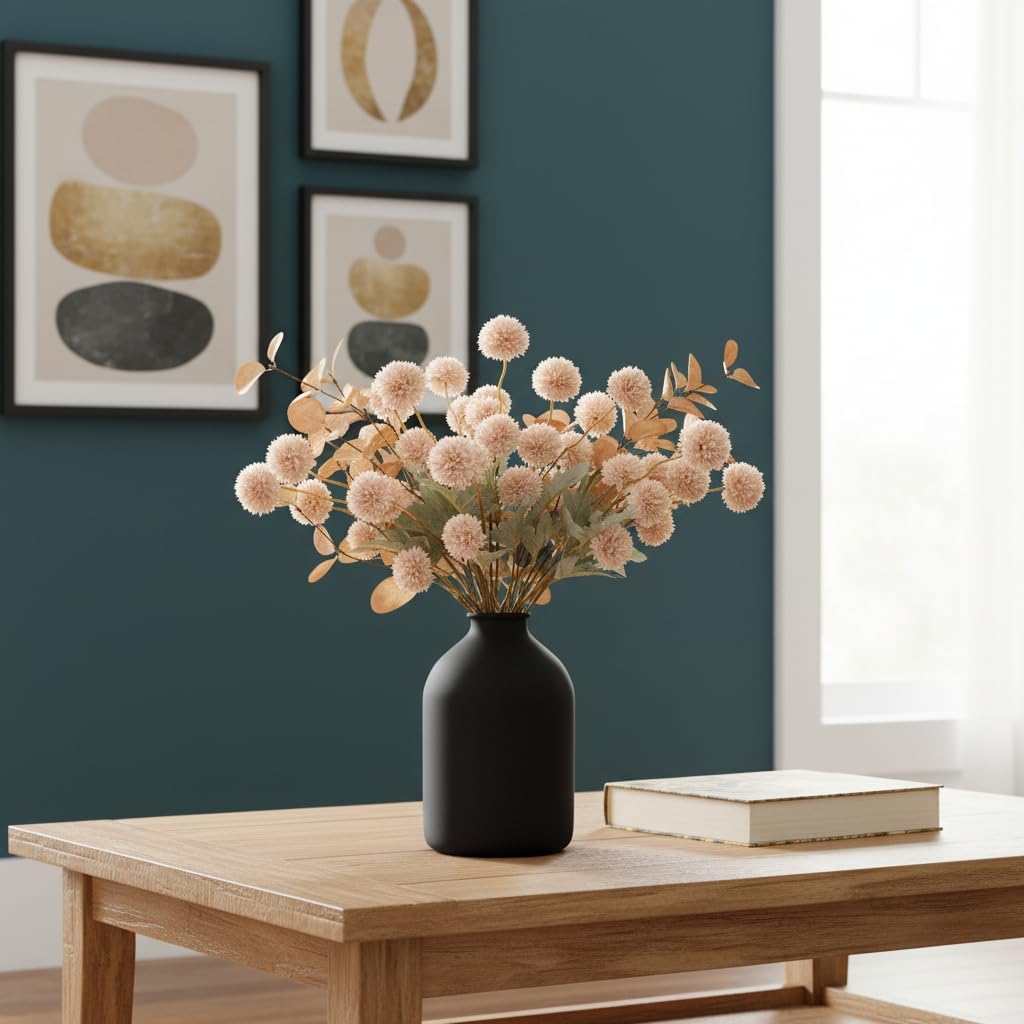
If you’ve ever looked at a farmhouse-style room and wondered how the flowers manage to look soft and lived-in without being actual, dying blooms — the answer is almost always neutral and beige faux florals paired with filler greenery. “Faux florals” simply means artificial flowers made from silk, polyester, or latex; “farmhouse decor” refers to the warm, textured, slightly rustic aesthetic that dominates a huge share of American home interiors right now. Neutral stems — creams, tans, dusty whites, and the various shades that get sold under the word “beige” — are what make that look work. They read expensive regardless of price point, they don’t fight with paint colors or furniture, and they photograph beautifully. This guide covers which neutral stem types to use, how many you actually need, the one color-accuracy trap that catches buyers constantly, and a practical arrangement framework you can apply to any vase size starting today.
| EDITOR'S PICKMISSPIN Artificial Flowers with… | Mid-tierRyddeligHome White Faux Kiku Fl… | Budget pickVIERENA 6 Pcs Faux Silk Pompon… | |
|---|---|---|---|
| Stem count | 13 pcs | 10 pcs | 6 pcs |
| Flower type | Hydrangea | Kiku | Pompon mum |
| Stem height | — | — | 27 in |
| Greenery | ✓ | ✓ | ✗ |
| Material | — | — | Faux silk |
| Price | $41.99 | $29.99 | $27.37 |
| See on Amazon → | See on Amazon → | See on Amazon → |
The Beige Color Trap: What You’re Actually Buying
Let’s get the honest part out first, because it will save you a return shipment.
Across aggregated buyer reviews for several popular neutral mum and kiku stems — including those sold under the VIERENA, BLOSMON, and similar labels — one complaint surfaces with enough consistency to be treated as a category-wide warning rather than a one-off: the color listed as “beige” frequently reads in person as “dusty pinkish peach.” One reviewer described the gap bluntly: what arrived was distinctly warmer and pinker than the product photo suggested.
This is not a quality defect. It’s a calibration problem between how neutral silk flowers photograph under studio lighting and how they actually look under warm residential light or natural daylight. Here’s the framework for navigating it:
Warm beige vs. cool beige — and why it matters for your room:
| Light Condition | What Warm Beige (pink undertone) Does | What Cool Beige (gray/greige undertone) Does |
|---|---|---|
| Warm incandescent / Edison | Reads peachy-pink; deepens warmth | Reads taupe; stays neutral |
| Cool natural daylight | Closer to true cream | Can read slightly lavender-gray |
| Farmhouse shiplap (white) | Pops warmly; may feel “romantic” | Stays crisp and modern-neutral |
| Warm wood tones (oak, pine) | Harmonizes; blends naturally | Slight contrast; slightly more formal |
The practical rule: if your room runs warm — wood floors, amber lighting, linen textiles — the dusty pinkish-peach undertone will likely feel right at home and may actually be the better choice. If you’re working with a cooler palette (white walls, gray stone, chrome hardware), specifically filter for “ivory,” “cream,” or “greige” in product titles rather than “beige,” and look for reviewer photos taken in home settings rather than studio shots.
Apartment Therapy’s styling guide on faux flowers notes that color matching under real-world light is consistently the top source of buyer disappointment in the faux floral category — and recommends requesting or searching for reviewer-uploaded photos taken indoors rather than relying on hero product images.
Mum vs. Kiku vs. Pompon Mum: Know What You’re Ordering
These three terms appear across nearly every neutral faux stem listing, and they’re related but not interchangeable. Getting the distinction right changes how you use them in an arrangement.
Chrysanthemum (mum): The broad category. Any of the layered, multi-petal blooms descended from or styled after the Chrysanthemum flower. Used generically in product listings to mean a large, full bloom with many petals. In faux versions, these range from 3–5 inches across and are typically your statement focal flowers.
Kiku: The Japanese word for chrysanthemum, but in floral design (and in faux floral product listings specifically) it usually signals a more refined, densely petaled form — tighter, more symmetrical, and with petals that curve inward or remain more uniform in length. Reviewers of kiku-labeled stems consistently note they read as “formal but still soft,” making them slightly more versatile across both farmhouse and transitional-modern spaces.
Pompon mum (or pom mum): A spherical bloom where the petals curve uniformly inward to create a near-perfect round shape. This is the distinctive one. Reviewers of VIERENA’s pompon mum specifically call out the spherical form as unusual and visually interesting — it functions as a statement stem in an arrangement, not a background filler. One reviewer described it as “the kind of bloom that makes people ask where it’s from.” If you’re building a centerpiece that needs one or two focal points among more subdued greenery, the pompon is your best tool.
The Spruce’s overview of artificial flower types confirms the general distinction: rounder, more uniform bloom shapes command visual attention and work best used in odd numbers (one or three per arrangement) rather than clustered en masse.
Stem-Count Math: How Many Do You Actually Need?
This is where most DIY buyers underestimate, and where intermediate practitioners often over-order. Here’s a grounded framework based on aggregated reviewer consensus and standard arrangement proportions.
The core principle: Neutral mum or kiku stems are focal flowers. They account for roughly 30–40% of your total stem count. The remaining 60–70% should be greenery — and reviewers across nearly every product in this neutral-mum category specifically and repeatedly pair these stems with eucalyptus. Not as an optional add-on. Reviewers treat eucalyptus as structurally essential: it fills negative space, softens stem lines, and provides the visual contrast that makes the neutral blooms read as more expensive than they are.
By the numbers — quick reference:
- Small bud vase (4–6” opening): 3–5 total stems (1–2 mums/kiku + 2–3 eucalyptus)
- Medium centerpiece vase (6–8” opening): 9–12 stems (3–4 blooms + 5–8 eucalyptus)
- Large statement vase (8–12” opening): 15–20 stems (5–7 blooms + 10–13 eucalyptus)
- Oversized floor vase (12”+ opening): 25–35+ stems (8–10 blooms + 15–25 eucalyptus/filler)
One practical note from reviewing the BLOSMON product feedback: large-leaf stems in that line have a tendency to arrive slightly compressed from packaging. The reviewer-discovered technique — using a low-heat iron on a thin cloth barrier directly on the leaves — is not documented in any product instruction set, but multiple owners report it works cleanly for restoring a natural drape. The heat is applied briefly and indirectly; direct high heat will damage polyester or silk immediately. We address this more specifically in the FAQ below.
House Beautiful’s roundup of realistic faux flowers echoes what buyers consistently report: volume and layering, not individual stem quality alone, determine whether an arrangement reads as real. An arrangement of twelve stems almost always looks more convincing than six premium stems in the same vase.
Arrangement Strategy: Making Neutral Stems Work Year-Round
One of the practical advantages of beige and neutral faux florals — and something reviewers flag repeatedly — is their genuine year-round usability. Unlike deep burgundy or blush-pink arrangements that read as seasonally specific, neutrals shift with the surrounding decor. A cream pompon mum with eucalyptus reads autumnal in October when you add a dried cotton stem and a few preserved leaves; it reads fresh and spring-like in April next to a sprig of faux white blossom.
Architectural Digest’s guidance on making faux flowers look real emphasizes context layering: the more real elements (dried grasses, preserved pods, natural wood vessels) surround a faux stem, the more convincingly the artificial piece reads. Neutrals facilitate this better than saturated colors because they don’t create a contrast boundary that signals “different material.”
Practical arrangement principles for neutral stems:
-
Height variation first. Cut or bend stems so your tallest bloom sits at roughly 1.5x the height of your vase. Every other stem should vary from that point. Uniform height is the single fastest tell that an arrangement is artificial.
-
Face blooms outward and slightly downward. Silk and polyester petals often arrive facing straight up. Gently bend the neck of each bloom 15–20 degrees forward so the bloom faces a viewer at standing or seated eye level rather than the ceiling.
-
Use the pompon as your anchor, not your filler. Place one pompon mum at the center-front of your arrangement before adding anything else. Build the eucalyptus outward from it. Add kiku or standard mum stems to the sides and rear.
-
Odd numbers only for focal blooms. One, three, or five large blooms per arrangement. Even numbers create visual competition rather than a focal point.
Frequently Asked Questions
Is the beige color warm or cool, and will it match my existing decor?
Most stems sold as “beige” in this category run warm — pink or peach undertone rather than gray or greige. For warm-toned rooms (wood, linen, amber light), this works naturally. For cooler rooms, search “ivory” or “cream” instead of “beige,” and prioritize listings with buyer-uploaded home photos over studio shots.
How many stems do I need for a large centerpiece vase?
For a vase with an 8–12 inch opening — the size that anchors a dining table or entry console — plan for 15–20 total stems. Roughly 5–7 of those should be your focal blooms (mums, kiku, or pompon mums); the remaining 10–13 should be eucalyptus or similar soft greenery filler. Going lighter than this tends to look sparse; eucalyptus is what sells the arrangement as full and natural.
Do these look good year-round or just for a specific season?
Year-round, with styling adjustments. Neutral mum and kiku tones don’t read as seasonally coded the way deep burgundies or pastels do. Swap supporting elements — dried cotton for fall, white blossom for spring — while keeping your neutral stems as the constant anchor.
What is the difference between a mum, a kiku, and a pompon mum?
All three are chrysanthemum family. A mum is the general category — any large, layered bloom. A kiku specifically refers to a dense, symmetrical, inward-curving form that reads slightly more refined. A pompon mum is the spherical variant where petals curve uniformly to form a near-perfect round bloom. Pompon mums are statement stems that draw the eye; kiku work as mid-arrangement supporting blooms; standard mums are versatile across both roles.
Can I use a low-heat iron on faux flower leaves?
Yes, with precautions. This technique, surfaced by reviewers of the BLOSMON line (not included in any product instructions), involves placing a thin cloth barrier over the leaf and applying brief, light pressure from a cool-to-warm iron setting. It restores compressed or creased large leaves to a natural drape. Never apply the iron directly to the leaf, never use a high heat setting, and test a single leaf before committing to the whole stem. Polyester and silk both have lower heat tolerances than cotton — the barrier cloth is mandatory, not optional.
Neutral and beige faux florals are among the most forgiving stems in any faux floral inventory precisely because they do so much quiet work without demanding attention. The color-calibration issue is real and worth knowing going in, but it’s a one-time calibration exercise — once you’ve matched your specific room’s light temperature to the right undertone, these stems will outlast every trend cycle that passes through your space. The decision rule is simple: if you want a stem that functions as a statement piece, the pompon mum is your buy; if you want a workhorse filler-focal hybrid that disappears into an arrangement until you need it to sing, the kiku is the smarter stock choice. Build your eucalyptus base first, drop in your focal blooms third, and let the neutral palette do the rest.