August 20, 2026 • Celeste Morrow • 11 min reading time • Prices verified June 6, 2026
Artificial Flowers for Outdoor Planters: A Complete Fluffing, Anchoring, and Longevity Guide
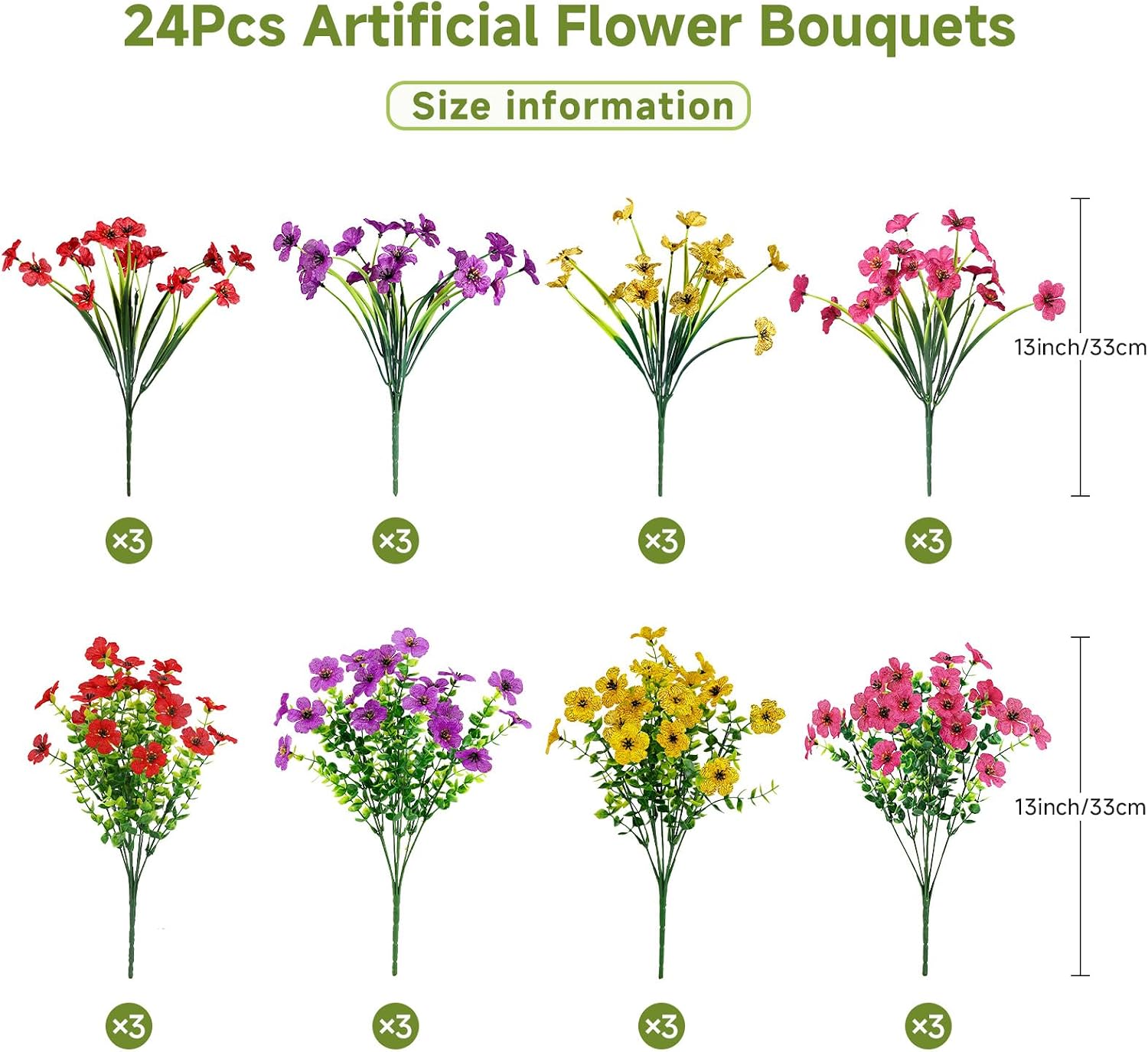
If you’ve ever watched a pot of real geraniums crisp up in a heat wave — or come home after two weeks away to a planter that used to look great — you already understand the appeal of outdoor artificial flowers. “Artificial flowers” here simply means fabric or plastic blooms manufactured to look like real ones, engineered specifically to tolerate sun, rain, and wind without watering. The better versions are labeled UV-resistant (meaning the colorants are stabilized against ultraviolet light breakdown) and made from polyethylene or polysilk — material terms that describe the plastic or woven-fabric construction used for petals and leaves. This guide covers the three things that separate a convincing outdoor planter from a disappointing one: fluffing the blooms so they open up properly, anchoring stems so they survive wind, and choosing and storing product so your investment lasts more than one season. Whether you’re refreshing a front porch with two $15 bundles or outfitting a boutique hotel’s entry planters with a $400 order, the same fundamentals apply.
| EDITOR'S PICKGeegoods Artificial Plants Flow… | Mid-tiertrytuny Artificial Flowers for… | Budget pickAlupssuc 24 Bundles Artificial… | |
|---|---|---|---|
| Bundle count | 24 | 20 | 24 |
| Material | — | Silk | Silk / plastic |
| Flower type | Lavender | — | Daisy |
| Color | Purple | Yellow/Purple/Pink | — |
| Price | $23.99 | $18.99 | $15.29 |
| See on Amazon → | See on Amazon → | See on Amazon → |
Why Outdoor Faux Flowers Behave Differently Than Indoor Ones
The gap between indoor and outdoor artificial flowers is larger than most buyers expect the first time. Indoor silk arrangements — the kind you’d place in a living room vase — are optimized for visual softness: delicate petal coatings, subtle color gradients, light wire stems. Move those indoors-only products onto a sun-exposed patio and you’ll see why the distinction matters. UV rays bleach unprotected dyes within a single summer. Moisture works into fabric petals and creates a mildewed, matted look. Wind leverages long stems like lever arms and tips arrangements out of shallow containers.
Outdoor-rated bundles solve these problems differently at each price point. Entry-level bundles (the $8–$20 range) typically use a basic UV inhibitor baked into the plastic at the factory. They hold color adequately for one full season in moderate sun exposure, per aggregated buyer reviews on major retail platforms — but reviewers who placed them in south-facing, full-sun positions consistently report visible fading by mid-August. Mid-tier bundles ($25–$60 per stem cluster) use a higher-concentration UV stabilizer and sometimes double-layer petal construction, which both improves realism and adds a marginal physical buffer against wind abrasion. Premium outdoor product — the $80–$200+ territory from brands focused on commercial hospitality applications — often specifies multi-year UV ratings and uses sealed stem ends to prevent water ingestion into the wire core.
By the numbers:
| Tier | Typical UV rating | Expected color-hold | Best use case |
|---|---|---|---|
| Entry ($8–$20 bundle) | 1 season (moderate sun) | May fade in full south-facing exposure | Seasonal refresh, partial shade |
| Mid ($25–$60 bundle) | 1–2 seasons | Reliable in most residential exposures | Porch planters, patio urns |
| Premium ($80–$200+) | 2–3+ seasons (commercial-rated) | Designed for full-sun, high-traffic installs | Hotel entries, event venue permanent installs |
The Spruce’s overview of outdoor artificial plants notes that direct, all-day sun is the single most aggressive condition any outdoor faux product faces, and recommends treating even UV-rated product as having a finite service life rather than a permanent one — a framing that maps well onto how professional hospitality buyers already budget for seasonal refreshes.
The Fluffing Step: Why It’s Non-Negotiable and How to Do It Right
Every outdoor artificial flower bundle is compressed for shipping. Petals fold flat, stems kink, and leaves press together into a shape that looks nothing like what the product photo showed. Buyers who skip the fluffing step and drop bundles directly into a planter almost universally report disappointment. Reviewers across geranium, petunia, and begonia bundles consistently describe the same process — and the same reward for taking the time.
The basic fluffing sequence:
- Release the bundle completely. Remove all twist ties, rubber bands, and packing wire before doing anything else. Leaving even one restraint on creates an unnatural cluster.
- Work from the base upward. Start at the main stem junction and gently rotate each branch outward. You’re redistributing the wire skeleton inside each branch, not just fanning the petals.
- Open individual florets by hand. Each flower head has layered petals that compress in transit. Use two fingers to gently pry the center open and curve the outer petals back. The goal is to approximate the cupped, slightly irregular shape of a real bloom — not a perfectly symmetrical artificial one.
- Address the leaves separately. Leaves are often the detail that reads as fake from a distance. Bend each leaf slightly off its stem plane, vary the angle, and curl the tips very slightly downward. Real leaves don’t sit parallel to their stem.
The hair dryer step: Multiple reviewers describe using a hair dryer on a low-heat setting to soften compressed petal material and help it hold a more open shape after hand-forming. The heat softens the polymer or fabric construction just enough to allow repositioning. The key word is low: high heat can melt thin petal edges on polysilk product or cause PE petals to curl unnaturally. A 10–15 second pass from 6–8 inches away on the lowest warm setting is the pattern reviewers describe. Good Housekeeping’s roundup of artificial plant care notes that gentle heat application is a legitimate technique for reshaping compressed faux botanicals, provided you work in short intervals and keep the dryer moving.
Total fluffing time for a single bundle: expect 10–20 minutes the first time. It gets faster once you develop a feel for the wire structure inside each stem.
Anchoring: Keeping Stems Upright Through Real Weather
One buyer in an aggregated review thread documented a 79 mph wind event. Their outdoor faux flower arrangement survived. Another described hail. The common factor in both survival stories wasn’t the product — it was how the stems were anchored. Wind failure in outdoor planters is almost always an anchoring failure, not a product failure.
The core problem: Most faux flower bundles come with stems sized for a vase or foam floral block. Outdoor planters filled with potting soil or gravel give the stems a loose fit. Any lateral wind load leverages the stem against that loose grip and tips it over or pulls it out entirely.
Anchoring methods, in order of reliability:
Floral foam (wet or dry): Dense floral foam — the brick-like material used by professional florists to hold real arrangements — is also effective for faux stems. Cut it to fit your planter snugly, soak it if using around live trailing plants (more on that below), and insert stems with a slight downward angle toward the center mass of the planter. The foam grips the wire stem and resists lateral pull. House Beautiful’s coverage of outdoor planter design consistently recommends foam as the baseline anchoring substrate for mixed or faux arrangements.
Gravel ballast + foam collar: For heavy planters or taller stems (12 inches and above), layer 2–3 inches of pea gravel at the bottom of the planter before adding foam or soil. The weight lowers the planter’s center of gravity and reduces tip-over risk in high wind.
Cable tie to a center stake: For very tall or top-heavy arrangements — the kind used in event arches or large urn installations — a thin bamboo or metal stake zip-tied to the main faux stem provides a rigid anchor point. Sink the stake 6–8 inches into foam or soil. This is the technique most event designers use for arrangements that need to survive outdoor ceremonies in variable weather.
Silicone adhesive plug: For permanent or semi-permanent commercial installs where the arrangement won’t need to be repositioned, a small plug of clear silicone sealant around the stem base creates a rigid anchor. It’s not reversible without cutting, so it’s the right tool for hotel lobby planters, not seasonal home refreshes.
Blending Faux Bundles With Live Trailing Vines
This is one of the most useful techniques that experienced outdoor decorators describe and novice buyers rarely try: placing faux flower bundles in the same container as live trailing vines. The logic is straightforward. Live trailing plants like sweet potato vine, vinca, or ivy don’t need much attention — they’re vigorous and drought-tolerant once established — but they don’t produce the showy upright blooms that give a planter its focal point. Faux flower bundles provide that focal point without the dead-heading, fertilizing, and heat stress that real petunias or geraniums require.
The practical mechanics: plant your live vines in the potting soil as normal, then anchor faux flower stems in wet floral foam positioned at the center or back of the planter, raised slightly above the soil level. The live vines trail forward and over the planter edge while the faux blooms hold their shape upright. Apartment Therapy’s coverage of mixed live-and-faux plant arrangements notes that the visual key to making the blend convincing is ensuring the faux blooms match the scale and color temperature of the surrounding live foliage — oversized or harshly colored faux blooms read as artificial next to fine-leafed live plants.
One honest caveat: the soil and irrigation needs of the live vines can affect faux stem longevity. Wire cores that stay permanently wet will eventually rust, and rust stains can bleed into foam and soil. Sealing exposed wire stem ends with a dab of clear nail polish or silicone before planting extends the life of the anchor dramatically.
Seasonal Storage: Protecting Your Investment Over Winter
The cost-per-year math on outdoor faux flowers only works if the product survives to the second and third season. Reviewers who get multiple seasons out of their bundles almost always describe a consistent storage protocol.
End-of-season steps:
- Remove bundles before the first hard frost. Cold itself doesn’t damage most PE or polysilk product, but freeze-thaw cycles in wet foam or soil can deform stem wire and crack plastic petal bases.
- Rinse gently with lukewarm water to remove dust, pollen, and any mildew beginning to form. Pat dry — don’t wring or compress — and allow to air dry completely before storing.
- Re-fluff lightly before storing, not after. Storing in an open shape (petals extended, branches spread) prevents the compression creases that make next-season re-fluffing more work.
- Store in a breathable container — a paper bag, a fabric storage bin, or a cardboard box with a loose lid. Airtight plastic traps residual moisture and promotes mildew. Include a silica gel packet if storing in a humid basement or garage.
- Keep away from direct light sources during storage. UV damage doesn’t stop just because the product isn’t outdoors.
Frequently Asked Questions
How long does it take to fluff outdoor artificial flower bundles to look full and natural? Plan 10–20 minutes per bundle the first time, working each branch, floret, and leaf individually. Repeat-season fluffing goes faster — usually 5–10 minutes — because the wire has already been shaped once and holds a memory of the open position.
What is the best way to anchor faux flower stems in outdoor planters so they don’t fall over in wind? Dense floral foam cut to fit the planter snugly is the most reliable residential solution. For taller or heavier arrangements, add a bamboo stake zip-tied to the main stem for a rigid anchor point. Gravel ballast at the planter base lowers the center of gravity and reduces tip-over risk in high-wind conditions.
Can I mix artificial flower bundles with live trailing vines in the same pot? Yes, and it’s one of the most effective ways to create a convincing display. Plant live trailers (sweet potato vine, vinca, ivy) in the soil, anchor faux upright blooms in wet floral foam at the center of the planter. Seal exposed wire stem ends before planting to prevent rust bleed. Match faux bloom scale to the live foliage scale for a convincing result.
How do I store outdoor faux flowers over winter so they’re reusable next season? Rinse, dry completely, re-fluff before storing, and keep in a breathable container (not airtight) away from light and moisture. A silica gel packet in the storage container helps in humid environments.
Do UV-resistant outdoor faux flowers actually hold their color through a full summer, or is fading inevitable? At mid-tier and above, reviewers consistently report acceptable color-hold through a single season in normal residential exposures. Full-sun, south-facing positions accelerate fading at every tier. The honest caveat — which reviewers themselves raise — is that true multi-season performance can’t be confirmed until the second season passes. Premium commercial-rated product is the only category where multi-year UV stability is a published specification.
Is a hair dryer really useful for opening up compressed faux flowers, and at what setting? Yes — reviewers describe it organically without being prompted. Low heat, 6–8 inches from the bloom, in 10–15 second moving passes. The gentle heat softens the polymer or fabric enough to hold a reshaped position. High heat risks melting thin petal edges on polysilk product. Keep the dryer moving and work in short intervals.