August 24, 2026 • Celeste Morrow • 12 min reading time • Prices verified June 6, 2026
Preserved Roses vs. Forever Roses in a Box: Decoding the Gift That's Actually Worth the Price
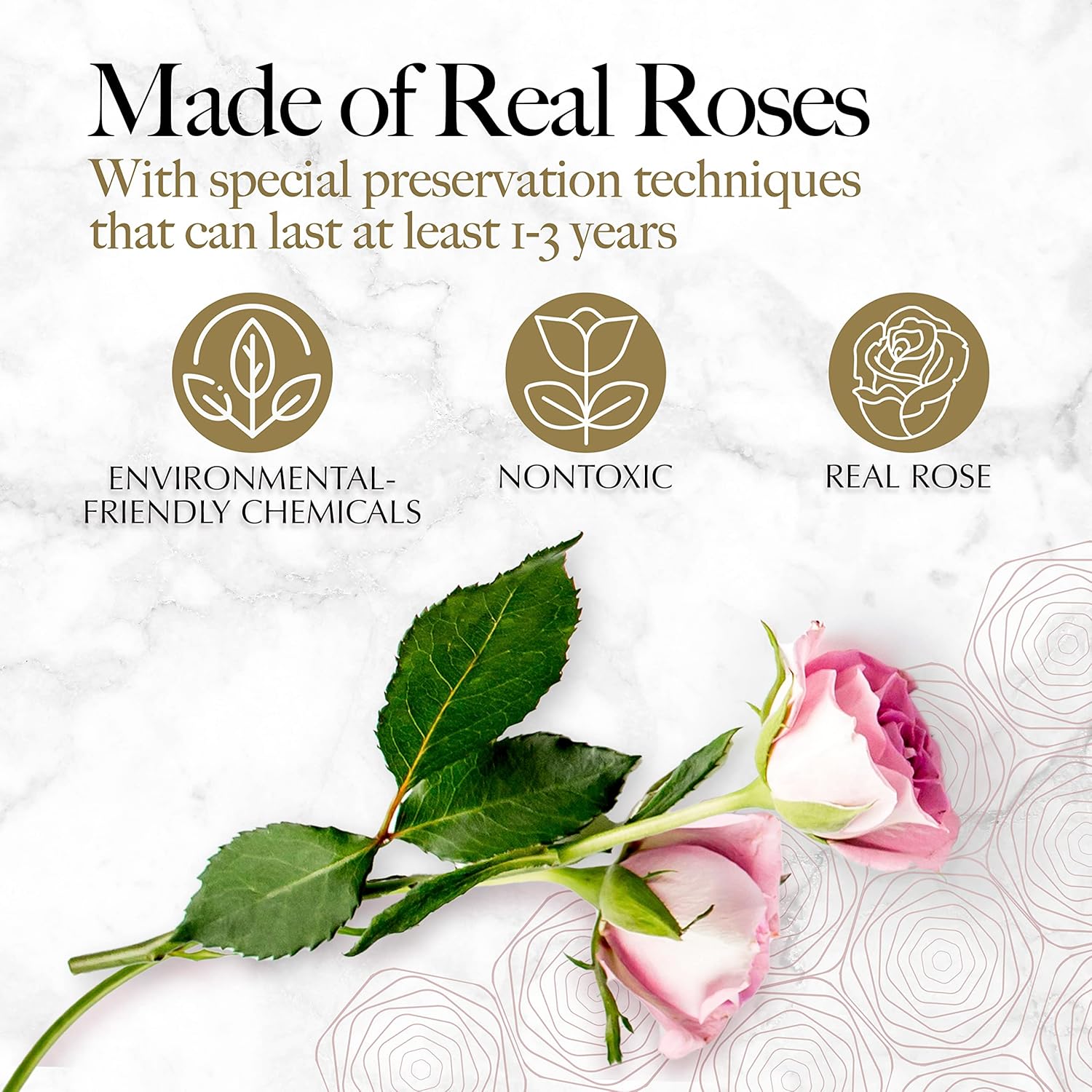
If someone told you a rose could sit on a nightstand for a year without water, without wilting, and still hold its shape and color, you’d probably be skeptical. That’s the promise of preserved roses — real roses that have been harvested at peak bloom, then treated with a glycerin-based solution that replaces the water inside the petals to halt the aging process and lock in softness. The result isn’t a dried flower or a silk imitation; it’s the actual rose, chemically stabilized. Forever roses are the same thing — just the marketing name that luxury boxed-rose brands popularized. If you’ve seen heart-shaped hatboxes packed with velvety blooms arranged in tight grid rows, that’s the format. This article is a practical buying guide for anyone deciding between the different sizes, configurations, and price tiers of these products: what the real differences are, where the trade-offs live, and how to choose without second-guessing yourself the morning after checkout.
| EDITOR'S PICK50 Piece Roses in a Velvet Box | Mid-tierForever Preserved Rose - Eterna… | Budget pickImpouo 16-Piece Preserved Rose… | |
|---|---|---|---|
| Rose count | 50 | — | 16 |
| Container | Velvet box | Glass dome | — |
| Color | Dusty Rose | Red | Red |
| Height | — | 9 in | — |
| Price | $129.99 | $39.99 | $36.99 |
| See on Amazon → | See on Amazon → | See on Amazon → |
What “Preserved” Actually Means — and Why It Changes the Value Equation
The preservation process matters because it determines almost everything you care about downstream: how long the flowers last, whether they hold fragrance, and whether the color stays true.
The standard commercial method involves replacing the plant’s internal moisture with a glycerin-and-dye solution under controlled conditions. Done well, this keeps petals pliable rather than brittle, which is why a quality preserved rose still feels like a fresh rose when you touch it — that slight resistance and softness is glycerin, not a cellophane coating. Done cheaply, you get a rose that looks fine in photographs but feels papery and begins to crumble at the petal edges within a few months.
The Spruce, in their guide “How to Care for Preserved Flowers,” draws this distinction clearly: the quality of the preservation process varies significantly by producer, and the two main accelerants of preserved flower degradation are dust accumulation and humidity fluctuation around the bloom. Apartment Therapy, in their overview “Preserved Flowers: Everything You Need to Know,” makes a related point: the price gap between an $18 single-stem dome and a $150-plus multi-rose hatbox isn’t arbitrary — it reflects processing time, bloom selection, and colorfast dye quality.
The practical implication for buyers: you are not comparing a cheap version to a luxury version of the same product. You are comparing products that may have meaningfully different shelf lives, tactile quality, and color fidelity. The sections below break down the specific formats by what reviewer patterns and published product specifications actually reveal about each tier.
Comparing the Three Main Formats: Single Dome, Heart Box, and Velvet Box
The preserved-rose market has settled into three distinct format tiers. Each one occupies a different position on the scale of intimacy versus visual impact, and the decision between them is less about budget than it is about use case. The subsections below walk through each tier with the specificity that format-level decisions require.
The Glass Dome Single Rose: Personal Keepsake, Not Room Statement
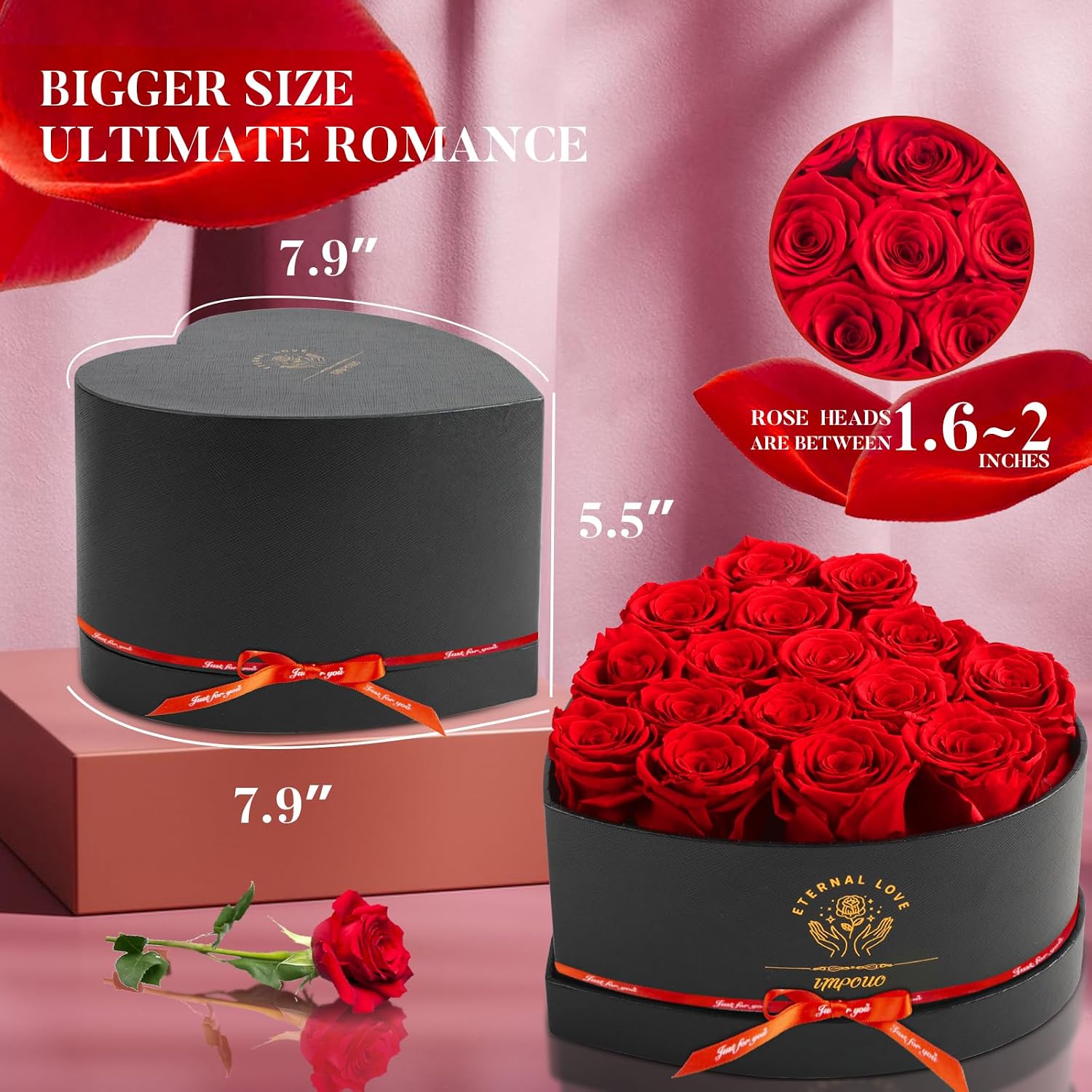
The single preserved rose under a glass dome is the most recognizable format in this category, and it carries specific cultural weight — reviewers consistently reach for the Beauty and the Beast reference because the product is almost designed to evoke it. One stem, a glass cloche, often a wooden or mirrored base.
What reviewers consistently report: The emotional response at unboxing is almost universally strong. The concern that surfaces repeatedly is one Brides, in their preserved flower overview “What Are Preserved Flowers — And Are They Worth It?,” raises directly: a single stem is visually impactful but spatially limited. It works as a keepsake on a vanity or shelf; it reads as thin on a dining table or as a standalone gift to someone who was expecting a bouquet experience.
The honest trade-off: This format wins on storytelling and loses on visual scale. If the recipient has a specific spot in mind — a bookshelf, a desk, a bedside table — and the gifter knows it, this is close to perfect. If the gift is meant to make an impression from across a room or photograph well, the multi-rose formats below do that job better.
Longevity note: Published product specifications for glass-dome single roses typically list a lifespan of one to three years under ideal indoor conditions. The glass dome itself helps: it reduces dust accumulation and limits humidity fluctuation around the bloom, which The Spruce’s preserved flower care guide identifies as the two primary accelerants of degradation.
Best for: Personal, intimate gifts where the keepsake quality matters more than visual scale; small spaces where a larger arrangement would overwhelm the surface.
Impouo
$36.99
In stock on Amazon
Check price on AmazonHeart Box Formats: The 16-Rose vs. 27-Rose Decision
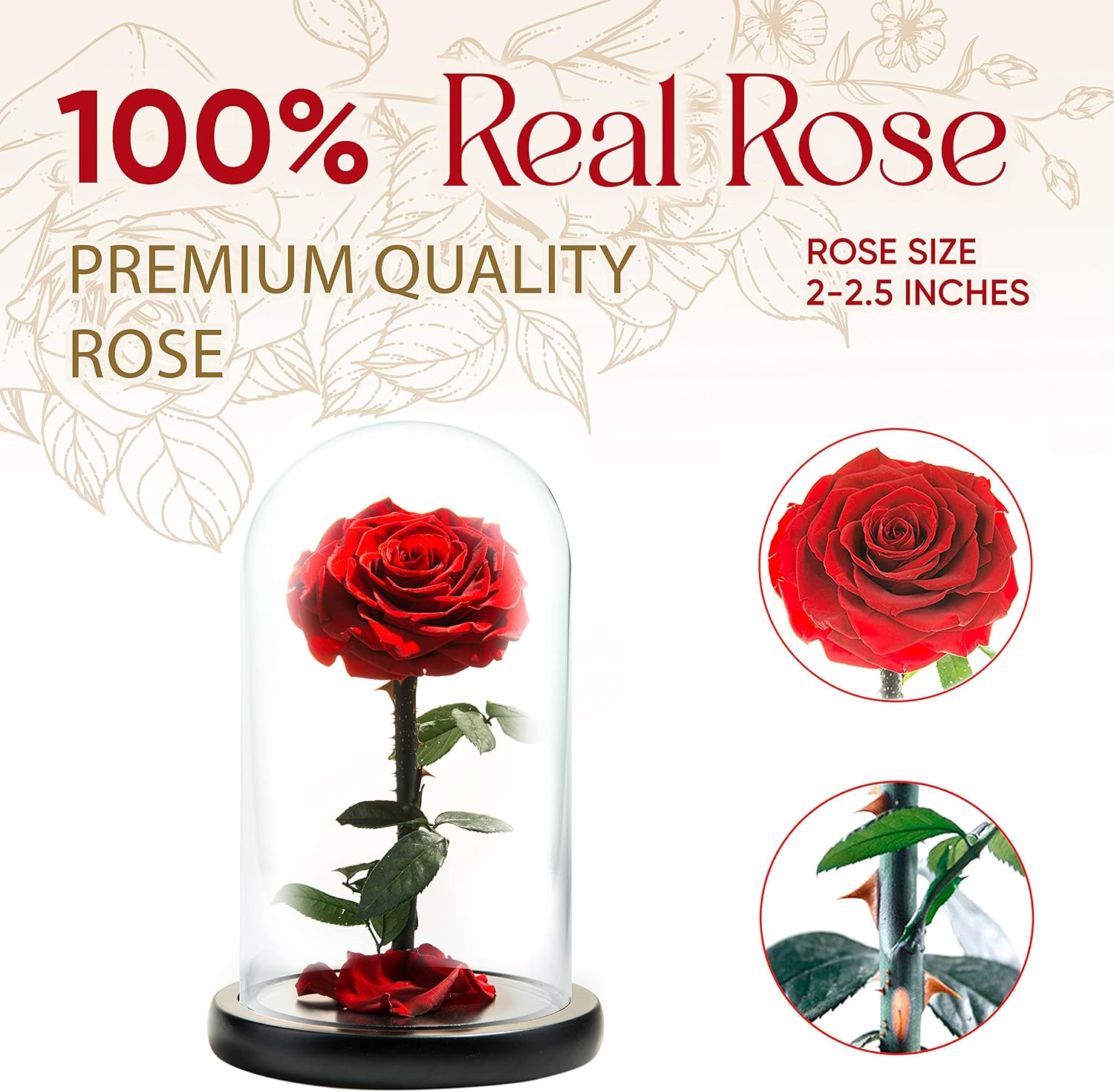
The heart-shaped hatbox packed with preserved roses in a tight grid arrangement is the format that drove the forever-rose category into mainstream gifting. Two sizes dominate the buyer conversation: 16-rose and 27-rose configurations. They are similar in concept but meaningfully different in what they communicate and where they work.
The 16-rose format is the entry point for the boxed heart style. Reviewers of this configuration consistently describe it as fuller than expected in person — the three-dimensional grid density reads better live than flat photography suggests. The common praise is the value reframe this format enables: you’re not buying something that replaces a $30 grocery-store bouquet for a week; you’re buying something that sits on display for six months to a year without intervention. House Beautiful, in their roundup “The Best Artificial Flowers That Look Real,” identifies this sustained presence as the central differentiator for preserved arrangements compared to fresh-cut alternatives.
The 27-rose format is the same concept with meaningfully more visual weight. The additional stems don’t just add volume — they change the proportion relationship between the box and the blooms. A 16-rose box reads as a gift; a 27-rose box reads as an arrangement. If the purchase is for a prominent surface — a mantle, a console table, a hotel room feature piece — the larger format justifies its price premium purely on display presence.
Decision rule: If the recipient has a defined small space and the gifter wants a personal, intimate gesture, the 16-rose format is the smarter buy. If the goal is visual impact — either for the recipient’s home or for event photography — the 27-rose configuration earns its premium.
Comparison at a glance:
| Format | Bloom count | Approx. footprint | Best use case | Tier |
|---|---|---|---|---|
| 16-rose heart box | 16 stems | ~10–11 inches wide | Personal gift, desk or vanity display | Forever — $39.99 |
| 27-rose heart box | 27 stems | ~13–14 inches wide | Statement gift, centerpiece, photography | Forever — $39.99 |
| 50-piece velvet box | 50 stems | ~16–18 inches wide | Luxury gifting, event design, residential install | 50 — $129.99 |
Best for: Anyone who wants the classic forever-rose gift experience with room-appropriate scale; the 16-rose suits personal spaces and the 27-rose suits larger surfaces or event gifting.
Forever
$39.99
In stock on Amazon
Check price on AmazonThe 50-Piece Velvet Box: When Scale Is the Point
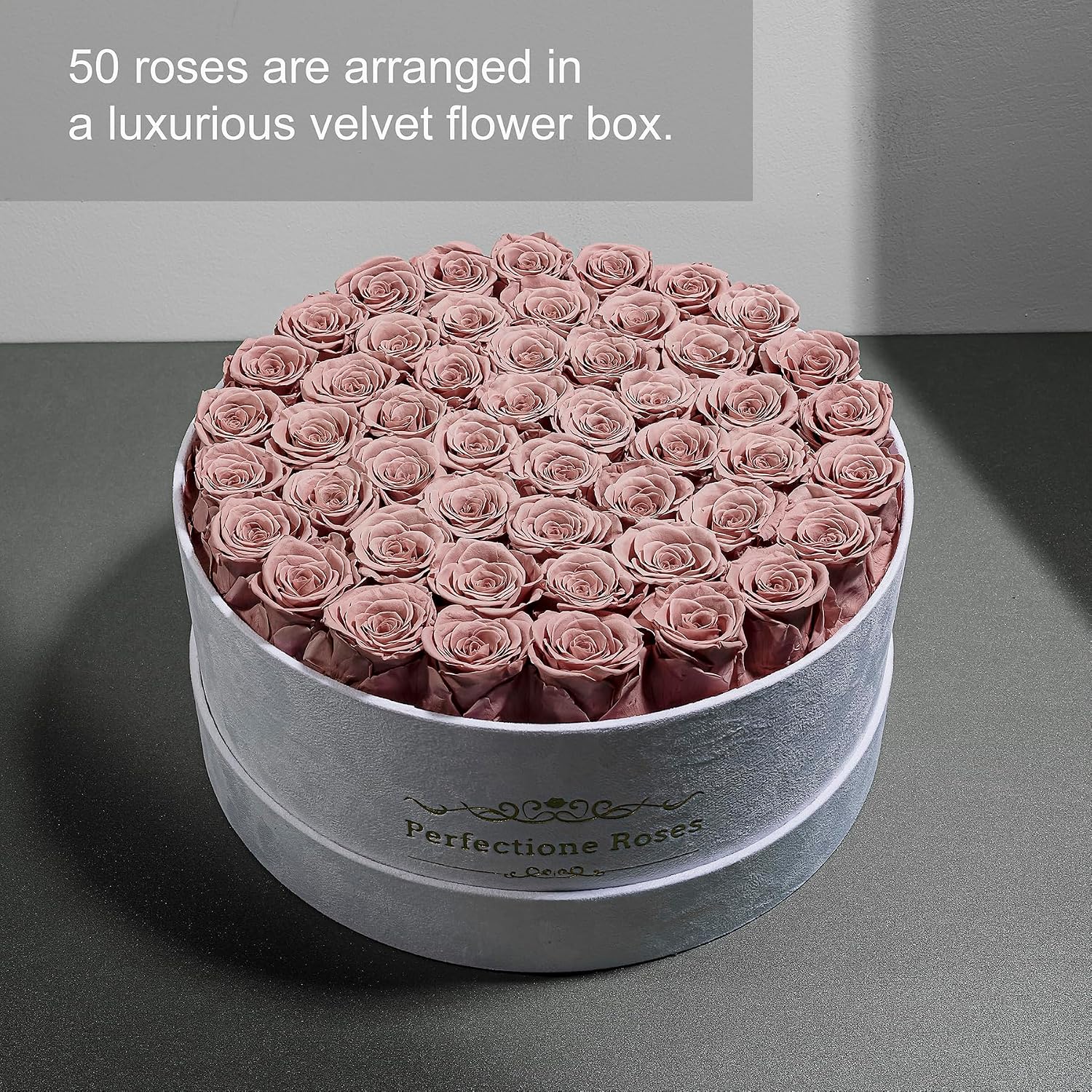
At 50 blooms in a velvet-lined box, this format is a different category of object. It sits closer to a luxury décor piece than a traditional gift. Reviewers of this configuration treat the unboxing itself as the event — the density of blooms, the weight of the box, and the visual impact when the lid is lifted are all part of what they’re describing.
One concrete data point worth noting: reviewers of higher-quality 50-piece configurations specifically mention fragrance persistence as a surprise. Most buyers assume preserved flowers lose scent within weeks; well-processed blooms at this tier have been reported to hold a detectable floral scent for three months or more — a figure that outlasts the expectations of almost everyone who hasn’t bought preserved roses before. Fragrance does fade eventually; the blooms’ visual longevity outlasts the scent by a significant margin.
Where this format makes sense:
- Hospitality gifting where the presentation needs to signal significant investment
- Event design where the box becomes part of the tablescape or display
- High-end residential settings where a preserved floral feature with real dimension is required
Where it doesn’t: If the goal is an intimate personal gift, 50 roses in a velvet box can read as overwhelming rather than romantic. Good Housekeeping, in their guide “How to Make Fresh Flowers Last Longer,” notes that floral arrangements in enclosed containers benefit from some air circulation to prevent moisture buildup — a principle that applies to preserved roses as well. A very dense, closed-lid velvet box left in a humid environment will degrade faster than an open-format arrangement. Practical care instructions matter here more than they do for single-dome or modest heart-box formats.
Best for: Hospitality gifting, luxury event design, or a statement residential install where scale and presentation are the primary communication.
50
$129.99
In stock on Amazon
Check price on AmazonColor Accuracy, Fade Resistance, and the Sunlight Question
This is where preserved roses part ways with both fresh flowers and silk artificials, and it’s worth being precise about what the evidence actually says.
Color accuracy at purchase: The most common complaint across reviewer patterns for boxed preserved roses isn’t quality — it’s color variance between product photos and delivered blooms. The glycerin-and-dye process absorbs color unevenly across individual blooms, and the same batch can include roses that are slightly darker or more saturated than the hero image. Brides, in their preserved flower overview “What Are Preserved Flowers — And Are They Worth It?,” notes this is an industry-wide characteristic, not a defect specific to any brand. For casual gifting, this is usually a non-issue. For event design where you’re matching a specific color palette, order a sample stem before committing to volume.
Fade over time: UV exposure is the primary enemy of preserved rose color. The Spruce’s guide “How to Care for Preserved Flowers” is explicit on this point: keep preserved flowers away from direct sunlight and heat sources. In a north-facing room or interior display location with indirect light, color holds well for twelve to eighteen months on average. In a south-facing window or under strong directional lighting, expect noticeable fading within three to six months. This is not a product defect — it’s a physics reality that applies to all dyed organic material.
Humidity: Preserved roses reabsorb moisture from the air, which can cause blooms to become sticky or lose shape in consistently humid conditions — generally above 60 to 65 percent relative humidity. In normal household environments, this isn’t a practical problem. In coastal climates, bathrooms, or non-climate-controlled storage, it matters enough to factor into placement decisions. Apartment Therapy’s overview “Preserved Flowers: Everything You Need to Know” reinforces this point, recommending that preserved floral arrangements be kept in stable interior conditions to maximize display lifespan.
Frequently Asked Questions
How long do preserved roses actually last? The honest answer is one to three years under reasonable indoor conditions — meaning away from direct sun, not in high humidity, and not handled constantly. Some reviewers report blooms holding shape and color well past the eighteen-month mark. The range exists because preservation quality varies by producer and environmental conditions vary by household.
Do preserved roses have a scent, and does it fade? Some preserved roses retain a mild floral scent, though it is usually softer than a fresh rose at peak bloom. Higher-quality preserved roses — particularly in the 50-piece velvet box tier — have been reported by reviewers to hold detectable fragrance for three months or more. The visual longevity of the blooms significantly outlasts the scent in all cases.
What is the difference between the 16-rose and 27-rose heart box sizes? Bloom count and display presence, primarily. The 16-rose format is a personal, intimate gift suited to smaller surfaces. The 27-rose format reads as a full arrangement suitable for a statement surface. The box footprint increases by roughly three to four inches in each direction, and the visual density of the grid changes the overall impression substantially.
Will the color look exactly like the product photos? Probably close, but not exact. The glycerin-dye process creates natural variation across individual blooms, and photography lighting emphasizes saturation. For casual gifting, this is rarely an issue. For color-matched event design, request a sample before ordering in volume.
Do preserved roses need to stay out of sunlight and humidity? Yes, meaningfully so. Direct sunlight causes color fading within months. High humidity above 60 to 65 percent consistently can cause blooms to soften or become tacky. Normal interior conditions in a temperate climate are fine; a sunny windowsill or bathroom shelf is not ideal. The glass dome format has a built-in advantage here — the cloche limits dust and moderates the microclimate immediately around the bloom.
The Clear Decision Framework
If you’re choosing between these formats right now, here’s the clean version:
- Single dome rose → choose when the gift is personal, the space is small, and the story matters more than scale Impouo — $36.99
- 16-rose heart box → choose when you want a genuine arrangement feel without overwhelming the recipient or the surface it will live on Forever — $39.99
- 27-rose heart box → choose when visual impact is the primary goal, or when the arrangement needs to hold its own in a larger space Forever — $39.99
- 50-piece velvet box → choose when you need a statement object — for hospitality gifting, event design, or a luxury residential install where scale and presentation carry the most weight 50 — $129.99
The reviewer pattern across all of these formats tells a consistent story: buyers who were skeptical about preserved roses compared to fresh flowers became converts after seeing how the blooms held up over weeks and months. That conversion narrative is meaningful data — the category earns its reputation, but only when you match the format to the actual use case. A glass dome in a 500-square-foot studio apartment is a near-perfect object. That same glass dome at the center of a twelve-person dining table is a missed opportunity. Scale your choice to the space, and the preserved rose delivers on its promise.