September 1, 2026 • Celeste Morrow • 9 min reading time • Prices verified June 6, 2026
Vase-Ready Faux Arrangements Under $40: Do You Actually Need Stems and a Vase Separately?
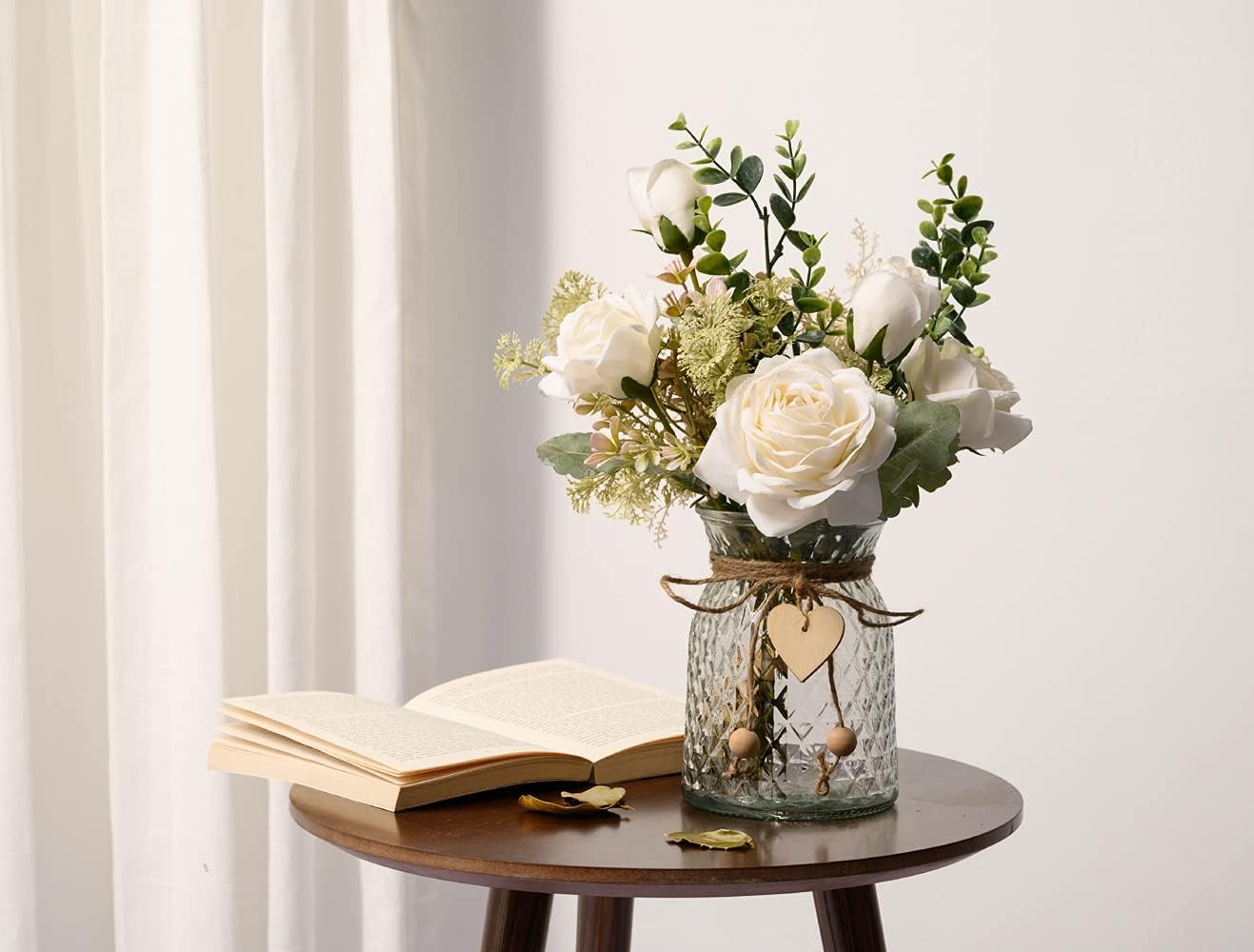
If you’ve ever stared at a bundle of loose faux stems and an empty vase wondering how the product photo made it look so effortless — you’re not alone. Faux flowers, meaning silk or synthetic blooms made to mimic real ones, have gotten genuinely good in the last few years. But the gap between “a bunch of stems and a vessel” and “a finished arrangement that looks intentional” is real, and it takes either design intuition or a fair amount of trial and error to close. That’s where vase-included sets come in: a pre-arranged faux floral display, flowers already positioned (or easily positioned) in a coordinated vase, priced under $40 and ready to place. This guide is for buyers who are past the “are fake flowers worth it?” question and are now asking a sharper one: is a bundled vase set actually a better buy than sourcing stems and a vessel separately? The answer depends on your use case — and the math is closer than you’d think.
| EDITOR'S PICKBLOSMON Fake Flowers in Vase fo… | Mid-tierYJ Fake Flowers with Vase | Budget pickFake Flowers with Vase | |
|---|---|---|---|
| Stem count | 12 | — | — |
| Flower type | Mums, eucalyptus | Roses | Dahlia |
| Vase material | Metal | — | — |
| Flower color | White | White | Pink |
| Price | $31.31 | $26.99 | $21.99 |
| See on Amazon → | See on Amazon → | See on Amazon → |
The Real Decision: Bundle vs. Build
Let’s frame the tradeoff honestly, because it cuts both ways.
The case for buying separately: When you source stems and a vase independently, you control every variable — stem height, bloom count, vase diameter, material finish. For a designer working on a hospitality install or a stylist building repeatable tablescapes, that control matters. You can also swap components later without replacing the whole unit. The Spruce’s artificial flower buyer’s guide consistently notes that stem-and-vase flexibility is the primary argument for DIY builds when the arrangement needs to match a specific brief.
The case for the bundle: For personal desk or bathroom spaces, gifting contexts, and no-window offices where you need something that looks finished immediately, the bundle wins on time and coordination risk. The hardest part of a DIY faux arrangement isn’t picking the flowers — it’s achieving the right stem height, density, and visual balance in a vase you haven’t tested together. Pre-arranged sets solve that problem by design. Good Housekeeping’s faux flower roundups note that the “beginner frustration zone” is almost always proportion, not flower quality.
There’s also a hidden cost-of-error factor in DIY builds. If you buy four stem bundles and a vase and the proportions are off, you’ve spent $35–$55 with nothing finished. A bundled set at $22–$38 gives you a resolved starting point.
By the numbers:
| Approach | Avg. spend (entry-level) | Variables you control | Time to finished look |
|---|---|---|---|
| Stems + separate vase | $28–$55 | High | 30–90 min of styling |
| Vase-included bundle | $15–$38 | Low-medium | 5–15 min of fluffing |
| Premium bundle (realism-focused) | $35–$80 | Medium | 10–20 min |
The bundle isn’t a compromise for everyone. For the use cases most buyers in this segment actually have — desk styling, gifting, bathroom ledges, no-light offices — it’s frequently the right tool.
What Separates a Good Bundle from a Box of Plastic
Not all vase-included sets are equal, and the details that matter most are rarely the ones that get top billing in product listings. Here’s what to look for before you click buy.
Acrylic Faux-Water: The Single Biggest Realism Upgrade
This is the differentiating detail that buyers most consistently call out after purchase — meaning they didn’t know to look for it beforehand. Acrylic faux-water (a hardened, clear resin poured into the vase base) simulates the look of water in a glass or clear vase. When it’s done well, it creates the illusion that the stems are actually sitting in water, which dramatically elevates the “is this real?” read from across a room.
Hollyone’s hydrangea-vase set has generated a specific pattern of buyer feedback around this feature: reviewers keep coming back to the faux-water detail as the thing that sold the realism, not the blooms themselves. Apartment Therapy’s styling guide on making faux flowers look real specifically flags transparent vases with faux-water resin as one of the highest-leverage realism moves available, even for budget arrangements.
If a product listing doesn’t mention acrylic faux-water and shows an opaque vase, you’re looking at a set where the vase base isn’t doing realism work for you. That’s not automatically a dealbreaker — opaque vessels can look intentional and design-forward — but you should know you’re relying entirely on the bloom quality.
Stem Arrangement and Bloom Visibility
The Der Rose navy blue vase set has collected feedback that points to something specific: reviewers consistently note that what made it feel elevated was the internal arrangement — each bloom visible as an individual element, not bunched and hidden, but contributing to a cohesive whole. This is the difference between “flowers in a vase” and “a composed arrangement.”
When reading product listings, look for language like “natural layered look” or check whether the product photo shows individual blooms at varying heights. If every flower is at the same level or completely hidden behind the others, the set likely requires significant rearrangement to look intentional. That’s fine, but it means you’re buying materials, not a finished look.
The Fluffing Factor
BLOSMON’s mum and kiku metal vase set earns what reviewers describe as a “way better than expected” response — and the reason is consistent: the stems arrive compressed for shipping and a short fluffing session (bending individual petals and leaves outward away from the stem) reveals a density that reads as professionally full. Brides’ guides on faux florals note that mum-style blooms (dense, many-petaled, round-headed flowers) are among the highest-reward fluff candidates because even modest adjustments dramatically change the silhouette.
If you’re buying a set with chrysanthemums, dahlias, or hydrangeas, plan for 10–15 minutes of shaping. The bloom you see in the listing is achievable, but it’s not how it arrives out of the box.
Use-Case Decision Rules
This is where the “if X, then Y” framing pays off. Here’s how to map your actual situation to the right buying approach.
If you’re buying for a no-window office or desk: A vase-included bundle is your best tool, full stop. Faux arrangements aren’t a compromise in windowless spaces — they’re the only viable option. Reviewers purchasing for friends’ promotions or low-light workplaces frame this not as settling but as the only category that actually works. Prioritize acrylic faux-water and a vase finish that reads “intentional decor” rather than “placeholder.” Clear glass with faux-water or a well-finished matte ceramic both work.
If you’re buying as a gift: Bundled sets win here too, for a practical reason: they arrive as a resolved object. The recipient doesn’t need to style anything. The Der Rose and Hollyone sets specifically have gift-framing in their reviews — buyers comment that it arrived looking presentable enough to give directly. Check the FAQ section below for notes on gift-readiness out of the box.
If you’re outfitting multiple matching spaces (hotel rooms, event tables, retail displays): This is where the calculus shifts. Bundled sets offer less control over exact stem count and vase dimensions, and unit-to-unit consistency can vary. Buying stems and vessels separately — even at slightly higher per-unit cost — gives you repeatable results and the ability to replace individual components. The Spruce’s commercial floral install guidance consistently recommends component sourcing for volume applications over 8–10 identical units.
If you’re a first-time decorator buying for a single room: Start with a bundle. The downside risk (proportion mismatch, empty-looking vase) is removed. If you decide you want more control after living with it, you’ve spent $20–$35 to learn what you like.
Frequently Asked Questions
Does the acrylic faux-water stay in place if the vase is moved or tilted?
In properly manufactured sets, yes — the acrylic resin is fully cured and hardened before shipping, so it behaves as a solid, not a liquid. It won’t slosh, spill, or shift. The caveat is low-quality sets where the resin was poured thin or incompletely cured; those can show bubbling or separation over time. Reviewers who call out faux-water quality specifically tend to flag this if it’s a problem, so aggregated review patterns are a useful signal. If a listing has meaningful review volume and no complaints about the resin separating, it’s generally cured correctly.
Can I remove the flowers from the included vase and use them in a different one?
Sometimes — but not always, and rarely cleanly. If the stems are embedded in faux-water resin, they’re permanently fixed to that vase. If the arrangement is held in floral foam or simply set into the vase opening, removal is straightforward. Check whether the listing mentions faux-water: if it does, assume the stems are fixed. If it doesn’t, the flowers are likely removable. Buyers who need flexibility should look for sets that describe foam or friction-fit arrangements rather than resin.
How large are these vase sets in real life compared to the product photos?
Consistently smaller than they appear. This is a near-universal pattern in faux arrangement reviews. Product photography typically uses wide-angle framing and minimal surrounding context, which makes vases read larger. A set listed at 10 inches tall will often feel compact on a standard desk. The practical fix: always read the product dimensions (listed in centimeters or inches in the spec section) and compare to something physical you own — a book, a mug, a monitor stand. If dimensions aren’t listed, that’s a red flag.
Are these appropriate to give as gifts directly in the box, or do they need to be styled first?
Most bundled sets in the $20–$40 range arrive in functional but not gift-presentation packaging — think corrugated mailer with tissue paper, not a ribbon-tied gift box. The arrangement itself usually looks close to finished after a light fluff, but the outer packaging typically needs supplementing (a gift bag, tissue, or simple ribbon) if you’re giving it directly. The Der Rose navy set and Hollyone hydrangea set specifically have reviewer notes about gifting, and the consensus is: the flowers look gift-ready, the box does not.
What is the difference between buying a pre-arranged vase set versus buying stems and a vase separately in terms of final look?
In skilled hands with good source material, DIY builds can look more intentional and more customized than any bundle. But the honest answer for most buyers is: a well-designed bundle, properly fluffed, is indistinguishable from a DIY build to anyone who isn’t a floral stylist. The gap closes further when the bundle includes acrylic faux-water (which most DIY vase setups skip) and a coordinated vessel finish. Where DIY wins is in scale — a large statement arrangement for a mantel or entryway benefits from stem-by-stem control that bundles can’t provide. For desk and tabletop scale, the bundle gap is negligible.
The bottom line: under $40, the question isn’t “real or fake flowers” — it’s whether a solved, finished object serves your use case better than a flexible kit. For most personal and gifting applications, it does. Know what acrylic faux-water looks like in a listing, check whether stems are fixed or removable before you buy, and measure the dimensions twice. The rest is fluffing.